
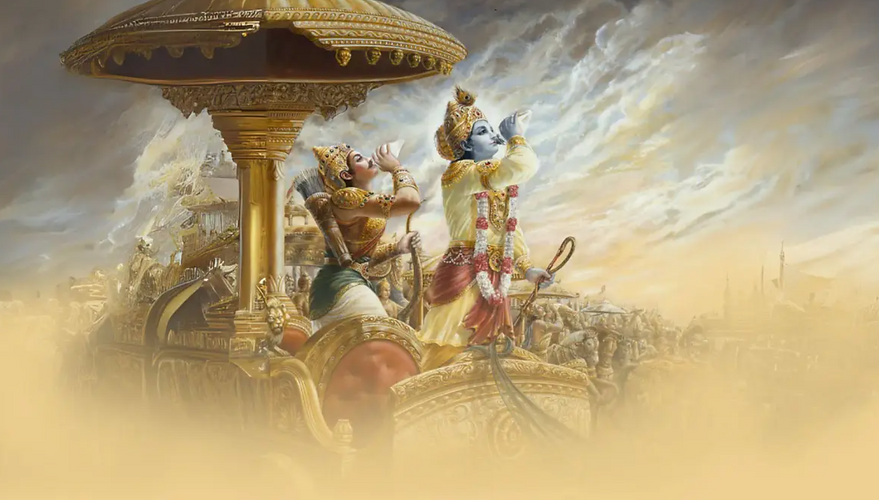
Bhagvad Gita Chapter 6
भगवद् गीता अध्याय ६
Bhagvad Gita Chapter 6 - Dhyan yog
भगवद् गीता अध्याय ६ ध्यान योग
Chapter 6 of the Bhagavad Gita, titled “Dhyan yog” that delves into the practice of Dhyan (meditation).
It discusses meditation as a way to connect with the divine. Shri Krishna highlights the need & importance of self-discipline, focus, and detachment from material desires . He states that the best yogis are those who have strong faith in the Supreme and remain focused on their ultimate goal - The Absolute Truth.
भगवद गीता का अध्याय 6, जिसका शीर्षक “ध्यान योग”, ध्यान के अभ्यास पर प्रकाश डालता है।
यह ध्यान को परमात्मा से जुड़ने के तरीके के बारे में चर्चा करता है। श्री कृष्ण अनुशासन, ध्यान और भौतिक इच्छाओं से वैराग्य की आवश्यकता और महत्व पर प्रकाश डालते हैं। उनका कहना है कि सर्वश्रेष्ठ योगी वे हैं जिनका ईश्वर में दृढ़ विश्वास है और वे अपने अंतिम लक्ष्य - परम सत्य - पर केंद्रित रहते हैं।
श्रीभगवानुवाच |
अनाश्रित: कर्मफलं कार्यं कर्म करोति य: |
स संन्यासी च योगी च न निरग्निर्न चाक्रिय: || 1||
Lord Krishna says a true spiritual person, a true yogi is not someone who leaves everything & renounces the world. A true yogi is someone who does his work without getting attached to the rewards. This person does his duty just because it's the right thing to do, not because he wants something in return. This attitude is what makes someone a true seeker of spiritual wisdom.
This detachment from the fruits of actions is a key principle of Karm Yog, which teaches that one should act according to their dharm (duty) without being motivated by the results of those actions. This approach helps in cultivating a state of inner peace and steadiness, which is essential for attaining the ultimate goal.
भगवान कृष्ण कहते हैं कि एक सच्चा आध्यात्मिक व्यक्ति, एक सच्चा योगी वह नहीं है जो सब कुछ छोड़ देता है और दुनिया को त्याग देता है। सच्चा योगी वह है जो फल की चिंता किए बिना अपना कार्य करता है। यह व्यक्ति अपना कर्तव्य सिर्फ इसलिए करता है क्योंकि यह सही काम है, इसलिए नहीं कि वह बदले में कुछ चाहता है। यह रवैया ही किसी को आध्यात्मिक ज्ञान का सच्चा साधक बनाता है।
कर्मों के फल से अनासक्ति कर्म योग का एक प्रमुख सिद्धांत है, जो सिखाता है कि व्यक्ति को उन कर्मों के परिणामों से प्रेरित हुए बिना अपने धर्म (कर्तव्य) के अनुसार कार्य करना चाहिए। यह दृष्टिकोण आंतरिक शांति और स्थिरता की स्थिति विकसित करने में मदद करता है, जो अंतिम लक्ष्य प्राप्त करने के लिए आवश्यक है।
यं संन्यासमिति प्राहुर्योगं तं विद्धि पाण्डव |
न ह्यसंन्यस्तसङ्कल्पो योगी भवति कश्चन || 2||
“Renunciation is the same as yog or connecting oneself with the Supreme. No one can become a yogi if he has not renounced the worldly desires.”
Here Shri Krishna explains that true Yog involves renunciation, which means giving up the attachment to sensory pleasures and desires. The essence of Yog is to connect with the divine, and this connection cannot be established if one is still deeply attached to the material world. One needs to let go off the materialistic pleasures to advance on the spiritual path and truly practice yog.
“त्याग योग या स्वयं को परमात्मा से जोड़ने के समान है। कोई भी व्यक्ति योगी नहीं बन सकता यदि उसने सांसारिक इच्छाओं का त्याग नहीं किया है।”
यहां श्री कृष्ण बताते हैं कि सच्चे योग में त्याग शामिल है, जिसका अर्थ है इंद्रियो से मिलने वाले सुखों और इच्छाओं के प्रति लगाव को त्यागना। योग का सार परमात्मा से जुड़ना है, और यदि कोई अभी भी भौतिक संसार से गहराई से जुड़ा हुआ है तो यह संबंध स्थापित नहीं किया जा सकता है। आध्यात्मिक पथ पर आगे बढ़ने और सही मायने में योग का अभ्यास करने के लिए व्यक्ति को भौतिक सुखों को त्यागना होगा।
आरुरुक्षोर्मुनेर्योगं कर्म कारणमुच्यते |
योगारूढस्य तस्यैव शम: कारणमुच्यते || 3||
"For the soul who wishes to attain to Yog, action without attachment is said to be the means; for the one who has attained Yog, tranquility in meditation is said to be the means."
This verse shows the importance of action (karm) in the initial stages of one's spiritual journey, suggesting that diligent effort and disciplined actions are necessary for those who are aspiring to reach the state of Yog, or union with the divine. Once the person reaches a state of Yog, where a deeper spiritual union and understanding have been achieved, tranquility and inner peace become the means to maintain and deepen that state. This state is attained through meditation.
This verse means that for someone starting on their spiritual journey, actively doing their duties is important. But once they've advanced in their spiritual path, finding peace and staying calm becomes more important.
"जो आत्मा योग को प्राप्त करना चाहती है, उसके लिए आसक्ति रहित कर्म को साधन कहा जाता है; जिसने योग को प्राप्त कर लिया है, उसके लिए ध्यान में शांति को साधन कहा जाता है।”
यह श्लोक किसी की आध्यात्मिक यात्रा के प्रारंभिक चरणों में कर्म के महत्व को दर्शाता है, यह सुझाव देता है कि उन लोगों के लिए मेहनती प्रयास और अनुशासित कार्य आवश्यक हैं जो योग की स्थिति तक पहुंचने, या परमात्मा के साथ मिलन की इच्छा रखते हैं। एक बार जब व्यक्ति योग की स्थिति में पहुंच जाता है, जहां एक गहरा आध्यात्मिक मिलन और समझ हासिल हो जाती है, तो शांति और आंतरिक शांति उस स्थिति को बनाए रखने और गहरा करने का साधन बन जाती है। यह अवस्था ध्यान से प्राप्त होती है।
इस श्लोक का अर्थ है कि अपनी आध्यात्मिक यात्रा शुरू करने वाले किसी व्यक्ति के लिए सक्रिय रूप से अपने कर्तव्यों का पालन करना महत्वपूर्ण है। लेकिन एक बार जब वे अपने आध्यात्मिक पथ पर आगे बढ़ जाते हैं, तो शांति पाना और शांत रहना अधिक महत्वपूर्ण हो जाता है।
यदा हि नेन्द्रियार्थेषु न कर्मस्वनुषज्जते |
सर्वसङ्कल्पसंन्यासी योगारूढस्तदोच्यते || 4||
"When a person is no longer attached to sense objects or to actions, and has renounced all thoughts of the world, he is said to have attained Yog."
This verse further elaborates on the state of being in Yog. It describes a stage where an individual leaves attachment to the sensory world and actions. This detachment isn't about abandoning action or responsibilities but relates to inner freedom from desires and outcomes. It signifies a profound inner transformation where one's actions are no longer driven by personal gain but by a sense of duty and connection to the divine.
It means that when someone no longer cares about physical pleasures or personal achievements and stops planning their life around them, they have truly reached a deep state of spiritual connection and inner peace.
"जब कोई व्यक्ति इन्द्रिय विषयों या कार्यों से आसक्त नहीं रहता है, और संसार के सभी विचारों को त्याग देता है, तो उसे योग प्राप्त हुआ कहा जाता है।"
यह श्लोक योग में स्थित होने की स्थिति के बारे में और विस्तार से बताता है। यह एक ऐसे चरण का वर्णन करता है जहां एक व्यक्ति इंद्रियो और कार्यों से लगाव छोड़ देता है। यह जिम्मेदारियों को छोड़ने के बारे में नहीं है बल्कि इच्छाओं और परिणामों से आंतरिक स्वतंत्रता से संबंधित है। यह एक गहन आंतरिक परिवर्तन का प्रतीक है जहां किसी के कार्य व्यक्तिगत लाभ से नहीं बल्कि कर्तव्य की भावना और परमात्मा से जुड़ाव से प्रेरित होते हैं।
इसका मतलब यह है कि जब कोई अब भौतिक सुखों या व्यक्तिगत उपलब्धियों की परवाह नहीं करता है और उनके आसपास अपने जीवन की योजना बनाना बंद कर देता है, तो वह वास्तव में आध्यात्मिक संबंध और आंतरिक शांति की गहरी स्थिति में पहुंच गया है।
उद्धरेदात्मनात्मानं नात्मानमवसादयेत् | आत्मैव ह्यात्मनो बन्धुरात्मैव रिपुरात्मन: || 5||
बन्धुरात्मात्मनस्तस्य येनात्मैवात्मना जित: | अनात्मनस्तु शत्रुत्वे वर्ते तात्मैव शत्रुवत् || 6||
Elevate yourself through the power of your mind, and let it not degrade you, because the mind can be the best friend and also the worst enemy of the self.
The one who has conquered the mind, the mind is the best of friends; but for the one who has failed to do so, his very mind will be his greatest enemy.
This verse highlights the power of self-effort and self-discipline in spiritual growth. It encourages one to be their own supporter in the journey of self-improvement and cautions against being one's own obstacle. Essentially, it teaches that we have the power to be our best ally or our worst enemy, depending on how we manage our thoughts, actions, and discipline.
The concept that mastering one's own mind is crucial for spiritual progress. It is suggested that a controlled and disciplined mind acts as a supportive friend, leading to peace and fulfillment. But on the other side an uncontrolled mind behaves like an enemy, causing distress and hindrance in one's spiritual journey.
अपने मन की शक्ति के माध्यम से स्वयं को ऊपर उठाएं, और इसे आपको नीचा न दिखाने दें, क्योंकि मन स्वयं का सबसे अच्छा दोस्त और सबसे बड़ा दुश्मन भी हो सकता है।
जिसने मन को जीत लिया है,मन उसका सबसे अच्छा मित्र है; लेकिन जो ऐसा करने में असफल रहा, उसका मन ही उसका सबसे बड़ा शत्रु होगा।
यह श्लोक आध्यात्मिक विकास में प्रयास और अनुशासन की शक्ति पर प्रकाश डालता है। यह व्यक्ति को आत्म-सुधार की यात्रा में अपना स्वयं का समर्थक बनने के लिए प्रोत्साहित करता है और स्वयं की बाधा बनने के प्रति सावधान करता है। आध्यात्मिक प्रगति के लिए अपने स्वयं के दिमाग पर काबू पाना महत्वपूर्ण है। नियंत्रित और अनुशासित दिमाग एक सहायक मित्र के रूप में कार्य करता है, जिससे शांति और संतुष्टि मिलती है। लेकिन दूसरी तरफ एक अनियंत्रित मन एक दुश्मन की तरह व्यवहार करता है, जिससे व्यक्ति की आध्यात्मिक यात्रा में परेशानी और बाधा उत्पन्न होती है।हमारे पास अपना सबसे अच्छा सहयोगी या सबसे बड़ा दुश्मन होने की शक्ति है, यह इस पर निर्भर करता है कि हम अपने विचारों, कार्यों और अनुशासन को कैसे नियंत्रित करते हैं।
जितात्मन: प्रशान्तस्य परमात्मा समाहित: |
शीतोष्णसुखदु:खेषु तथा मानापमानयो: || 7||
"For one who has conquered the mind, the Supreme Self is already reached. For such a person, heat and cold, pleasure and pain, honor and dishonor are all the same."
This verse means that someone who has control over their thoughts and emotions has reached a high level of spiritual understanding. They stay calm and unaffected by extreme conditions or situations, whether good or bad, or whether they're being praised or insulted.It describes a person who remains unaffected by dualities, signifies a profound inner peace and unity with the Supreme Self.
"जिसने मन पर विजय प्राप्त कर ली है, वह परम सत्य तक पहुंच चुका है। ऐसे व्यक्ति के लिए गर्मी और सर्दी, सुख और दुख, सम्मान और अपमान सभी समान हैं।"
इस श्लोक का अर्थ है कि जिस व्यक्ति का अपने विचारों और भावनाओं पर नियंत्रण है, वह आध्यात्मिक समझ के उच्च स्तर तक पहुंच गया है। वे चरम स्थितियों या परिस्थितियों से शांत और अप्रभावित रहते हैं, चाहे अच्छी हो या बुरी, या चाहे उनकी प्रशंसा की जा रही हो या अपमान। यह एक ऐसे व्यक्ति का वर्णन करता है जो द्वंद्वों से अप्रभावित रहता है, सर्वोच्च आत्म के साथ गहन आंतरिक शांति और एकता का प्रतीक है।
ज्ञानविज्ञानतृप्तात्मा कूटस्थो विजितेन्द्रिय: |
युक्त इत्युच्यते योगी समलोष्टाश्मकाञ्चन: || 8||
"A soul satisfied by knowledge and wisdom, steady and unshaken, who has mastered the senses, is called a yogi who sees equality in a piece of earth, a stone, and gold."
This verse describes a person who has achieved a state of enlightenment through knowledge and wisdom. It says, that someone who is content with their understanding and insight, who remains steady in any situation and who has control over their desires and senses, is considered a true yogi. This yogi treats everything equally, whether it's something as common as dirt or as valuable as gold, showing no attachment or preference. This teaches us about the importance of inner peace, wisdom, and seeing the world without bias or attachment.
"ज्ञान और बुद्धि से संतुष्ट, स्थिर और अचल, जिसने इंद्रियों पर विजय प्राप्त कर ली है, जो मिट्टी, पत्थर और सोने के टुकड़े में समानता देखता है वह योगी कहलाता है ।"
यह श्लोक एक ऐसे व्यक्ति का वर्णन करता है जिसने ज्ञान और बुद्धि के माध्यम से आत्मज्ञान की स्थिति प्राप्त की है। इसमें कहा गया है कि जो व्यक्ति अपनी समझ और अंतर्दृष्टि से संतुष्ट है, जो किसी भी स्थिति में स्थिर रहता है और जो अपनी इच्छाओं और इंद्रियों पर नियंत्रण रखता है, वह सच्चा योगी माना जाता है। यह योगी हर चीज को समान रूप से मानता है, चाहे वह मिट्टी जैसी सामान्य चीज हो या सोने जैसी मूल्यवान, कोई लगाव या प्राथमिकता नहीं दिखाता। यह हमें आंतरिक शांति, ज्ञान और दुनिया को बिना किसी पूर्वाग्रह या लगाव के देखने के महत्व के बारे में सिखाता है।
सुहृन्मित्रार्युदासीनमध्यस्थद्वेष्यबन्धुषु |
साधुष्वपि च पापेषु समबुद्धिर्विशिष्यते || 9||
"A person excels when they remain unbiased towards friends, enemies, the indifferent, mediators, those who dislike them, and relatives, as well as the virtuous and the sinful."
This verse from the Bhagavad Gita teaches the virtue of equanimity by maintaining a balanced perspective towards all types of people.
This teaching encourages us to rise above our biases and treat all individuals with equality, understanding, and compassion, promoting peace and harmony in our interactions.
This verse advises us to treat everyone equally, regardless of their behaviour or our personal relationship with them. Whether someone is a close friend, a complete stranger, or even someone who has done wrong, this person views them all with an equal eye. It emphasises the importance of inner peace and wisdom, suggesting that true excellence in character comes from viewing everyone with the same level of understanding and compassion, without letting personal feelings cloud our judgment. This approach fosters harmony and reduces conflict in our interactions with others.
"एक व्यक्ति तभी श्रेष्ठ होता है जब वह मित्रों, शत्रुओं, उदासीन लोगों, मध्यस्थों, नापसंद करने वालों और रिश्तेदारों के साथ-साथ पुण्य और पापियों के प्रति निष्पक्ष रहता है।"
भगवद गीता का यह श्लोक सभी प्रकार के लोगों के प्रति संतुलित दृष्टिकोण बनाए रखते हुए समभाव का गुण सिखाता है।
यह शिक्षा हमें अपने पूर्वाग्रहों से ऊपर उठने और सभी व्यक्तियों के साथ समानता, समझ और करुणा के साथ व्यवहार करने, हमारी बातचीत में शांति और सद्भाव को बढ़ावा देने के लिए प्रोत्साहित करती है।
यह स्थिति में हमें हर किसी के साथ समान व्यवहार करने की सलाह देती है, चाहे उनका व्यवहार कुछ भी हो या उनके साथ हमारा व्यक्तिगत रिश्ता कुछ भी हो। चाहे कोई करीबी दोस्त हो, बिल्कुल अजनबी हो, या फिर जिसने गलत किया हो, यह व्यक्ति उन सभी को समान नजर से देखता है। यह आंतरिक शांति और ज्ञान के महत्व पर जोर देता है, यह सुझाव देता है कि चरित्र में सच्ची उत्कृष्टता सभी को समान स्तर की समझ और करुणा के साथ देखने से आती है, बिना व्यक्तिगत भावनाओं को हमारे निर्णय पर हावी होने दिए। यह दृष्टिकोण सद्भाव को बढ़ावा देता है और दूसरों के साथ हमारी बातचीत में संघर्ष को कम करता है।
योगी युञ्जीत सततमात्मानं रहसि स्थित: |
एकाकी यतचित्तात्मा निराशीरपरिग्रह: || 10||
A yogi should constantly engage in meditating, remaining in solitude, alone, with a controlled mind and self, devoid of desires and possessions."
This verse from the Bhagavad Gita advises on the practice of yog and meditation. To truly practice yog and reach a state of deep meditation, one should find a quiet place to be alone, focus their mind, and let go of all desires and material attachments. The verse emphasizes the importance of self-discipline and the need to detach from worldly distractions to achieve inner peace and self-realization. It suggests that solitude and a clear, focused mind are key to successful meditation.
एक योगी को लगातार एकांत में रहकर, नियंत्रित मन और स्वयं के साथ, इच्छाओं और संपत्ति से रहित होकर ध्यान में लगे रहना चाहिए।
भगवद गीता का यह श्लोक योग और ध्यान के अभ्यास की सलाह देता है। वास्तव में योग का अभ्यास करने और गहन ध्यान की स्थिति तक पहुंचने के लिए, व्यक्ति को अकेले रहने के लिए एक शांत जगह ढूंढनी चाहिए, अपने दिमाग को केंद्रित करना चाहिए और सभी इच्छाओं और भौतिक लगाव को छोड़ देना चाहिए। यह कविता आत्म-अनुशासन के महत्व और आंतरिक शांति और आत्म-बोध प्राप्त करने के लिए सांसारिक विकर्षणों से अलग होने की आवश्यकता पर जोर देती है। यह बताता है कि एकांत और स्पष्ट, केंद्रित दिमाग सफल ध्यान की कुंजी हैं।
शुचौ देशे प्रतिष्ठाप्य स्थिरमासनमात्मन: |
नात्युच्छ्रितं नातिनीचं चैलाजिनकुशोत्तरम् || 11||
In a clean and peaceful place, one should establish a steady seat for oneself, neither too high nor too low, covered with cloth, deer skin, and kusha grass. This verse suggests preparing a stable and modest space for meditation, emphasizing the importance of simplicity and purity in the environment. The aim is to create a conducive setting for concentration and inner peace, avoiding extremes in elevation that might disturb the mind's balance. The specific materials mentioned—cloth, deer skin, and kusha grass—serve to insulate the meditator from the ground, symbolizing a connection to nature and tradition.
किसी स्वच्छ और शांतिपूर्ण स्थान पर, अपने लिए एक स्थिर आसन स्थापित करना चाहिए, न बहुत ऊँचा, न बहुत नीचे, वस्त्र, मृगचर्म तथा कुशा घास से ढका हुआ। प्राचीन ग्रंथों का यह श्लोक वातावरण में सादगी और पवित्रता के महत्व पर जोर देते हुए ध्यान के लिए एक स्थिर और विनम्र स्थान तैयार करने का सुझाव देता है। इसका उद्देश्य एकाग्रता और आंतरिक शांति के लिए अनुकूल माहौल तैयार करना है, ऊंचाई में चरम सीमा से बचना है जो मन के संतुलन को बिगाड़ सकता है। उल्लेखित विशिष्ट सामग्री-कपड़ा, हिरण की खाल, और कुशा घास-ध्यानकर्ता को जमीन से बचाने का काम करती है, जो प्रकृति और परंपरा से जुड़ाव का प्रतीक है।
तत्रैकाग्रं मन: कृत्वा यतचित्तेन्द्रियक्रिय: | उपविश्यासने युञ्ज्याद्योगमात्मविशुद्धये || 12||
समं कायशिरोग्रीवं धारयन्नचलं स्थिर: | सम्प्रेक्ष्य नासिकाग्रं स्वं दिशश्चानवलोकयन् || 13||
Upon establishing a stable and comfortable seated position as described earlier, one should then focus their mind singularly, reigning in thoughts and sensory actions, to engage in the practice of yog aimed at purifying the self. This process involves sitting still with the body, head, and neck aligned in a straight line, maintaining immobility to achieve mental steadiness and concentration.
The practitioner is advised to gently fix their gaze upon the tip of their nose, avoiding distractions from the external world. This discipline of the body and mind helps in cultivating a singular focus, essential for deep meditation. The practice is not merely physical; it's a profound journey inward, aiming for self-purification and the ultimate realization of one's true essence. By controlling physical posture, directing the gaze, and stabilizing the mind, one sets the foundation for achieving a higher state of consciousness and inner peace.
इन श्लोकों में ध्यानयोग की विधि और मानसिक शुद्धि के लिए आवश्यक स्थिति का वर्णन किया गया है। योगी को एकान्त स्थान पर बैठकर मन को एकाग्र करना चाहिए और चित्त तथा इन्द्रियों की गतिविधियों को नियंत्रित रखना चाहिए। वह स्थिर होकर अपने शरीर, सिर और गर्दन को सीधा रखे, बिना हिले-डुले स्थिर मुद्रा में बैठे। दृष्टि अपनी नासिका के अग्रभाग पर केंद्रित होनी चाहिए और चारों दिशाओं में देखने से बचना चाहिए। इस प्रकार ध्यानस्थ होकर योगी आत्मशुद्धि के मार्ग पर अग्रसर होता है और आंतरिक शांति व दिव्यता प्राप्त करता है।
प्रशान्तात्मा विगतभीर्ब्रह्मचारिव्रते स्थित: |
मन: संयम्य मच्चित्तो युक्त आसीत मत्पर: || 14||
This verse speaks about the serene state of being that comes from inner peace and the absence of fear, rooted in a life of discipline and purity. It highlights the importance of self-restraint and focus on the divine or a higher purpose. The individual who practices this way of life, dedicated to maintaining a vow of celibacy and controlling the mind, aligns their thoughts and actions towards a higher consciousness. By doing so, they become fully immersed in spirituality, with their consciousness attuned to the divine. This state of being, marked by tranquility and dedication, leads to a profound connection with the universal spirit, transcending ordinary experiences and achieving a deep sense of fulfilment and purpose.
यह श्लोक उस शांत स्थिति की बात करती है जो आंतरिक शांति और भय की अनुपस्थिति से आती है, जो अनुशासन और पवित्रता के जीवन में निहित है। यह आत्म-संयम के महत्व और दिव्य या उच्च उद्देश्य पर ध्यान केंद्रित करने पर प्रकाश डालता है। जो व्यक्ति ब्रह्मचर्य का व्रत बनाए रखने और मन को नियंत्रित करने के लिए समर्पित होकर इस जीवन शैली का अभ्यास करता है, वह अपने विचारों और कार्यों को उच्च चेतना की ओर संरेखित करता है। ऐसा करने से, वे पूरी तरह से आध्यात्मिकता में डूब जाते हैं और उनकी चेतना ईश्वर के प्रति समर्पित हो जाती है। शांति और समर्पण से चिह्नित होने की यह स्थिति, सार्वभौमिक आत्मा के साथ गहरा संबंध स्थापित करती है, सामान्य अनुभवों से परे जाकर पूर्णता और उद्देश्य की गहरी भावना प्राप्त करती है।
युञ्जन्नेवं सदात्मानं योगी नियतमानस: |
शान्तिं निर्वाणपरमां मत्संस्थामधिगच्छति || 15||
This verse emphasizes the profound peace and ultimate liberation a yogi achieves through consistent practice and self-discipline. By continuously engaging in yog with a controlled and focused mind, the practitioner reaches a state of peace that is akin to nirvana, the highest form of tranquility and liberation. This peace is not just a temporary relief from worldly troubles but a deep, enduring state of bliss that exists within the divine essence or presence. It suggests that through dedicated practice, one can transcend the limitations of the physical world and the mind, finding solace in the eternal. This ultimate peace is described as residing within the divine realm, attainable by those who are steadfast in their spiritual journey.
यह श्लोक उस गहन शांति और परम मुक्ति पर जोर देता है जो एक योगी लगातार अभ्यास और आत्म-अनुशासन के माध्यम से प्राप्त करता है। नियंत्रित और एकाग्र मन के साथ लगातार योग में संलग्न रहने से, अभ्यासकर्ता शांति की स्थिति तक पहुँच जाता है जो निर्वाण, शांति और मुक्ति का उच्चतम रूप है। यह शांति केवल सांसारिक परेशानियों से एक अस्थायी राहत नहीं है, बल्कि आनंद की एक गहरी, स्थायी स्थिति है जो दिव्य सार या उपस्थिति के भीतर मौजूद है। यह सुझाव देता है कि समर्पित अभ्यास के माध्यम से, व्यक्ति भौतिक संसार और मन की सीमाओं को पार कर शाश्वत में सांत्वना पा सकता है। इस परम शांति को दिव्य क्षेत्र के भीतर रहने के रूप में वर्णित किया गया है, जो उन लोगों द्वारा प्राप्त किया जा सकता है जो अपनी आध्यात्मिक यात्रा में दृढ़ हैं।
नात्यश्नतस्तु योगोऽस्ति न चैकान्तमनश्नत: |
न चाति स्वप्नशीलस्य जाग्रतो नैव चार्जुन || 16||
Many people do Yog but how many of them actually attains the ultimate purpose of Yog? And who are the ones who attains it?
Yog is not for the ones who are doing the extremes - either too much or too less. Yog is possible on when you do things in moderation, in right amount. For example, if you are eating, eat only that much that fills your stomach, don’t overeat. Same for sleep, sleep should be for the body to rest. Once body is ready to wake up, you must immediately get up, not laze around. Ultimate purpose of Yog can be attained through discipline.
बहुत से लोग योग करते हैं लेकिन उनमें से कितने लोग वास्तव में योग के अंतिम उद्देश्य को प्राप्त कर पाते हैं? और इसे प्राप्त करने वाले कौन हैं?
योग उन लोगों के लिए नहीं है जो अति कर रहे हैं - या तो बहुत अधिक या बहुत कम। योग तभी संभव है जब आप चीजों को संयमित, सही मात्रा में करते हैं। उदाहरण के लिए, अगर आप खा रहे हैं तो उतना ही खाएं जिससे आपका पेट भर जाए, ज्यादा न खाएं। नींद के लिए भी, नींद शरीर को आराम देने के लिए होनी चाहिए। एक बार जब शरीर जागने के लिए तैयार हो जाए, तो आपको तुरंत उठ जाना चाहिए, आलस नहीं करनी चाहिए। योग का अंतिम उद्देश्य अनुशासन के माध्यम से ही प्राप्त किया जा सकता है।
युक्ताहारविहारस्य युक्तचेष्टस्य कर्मसु |
युक्तस्वप्नावबोधस्य योगो भवति दु:खहा || 17||
Yog is easy for those who follow the path of righteousness. The one who lacks discipline, for him following yog will be a challenge. The one who eats proper, who sleeps proper & is focused on his karm, only he can achieve true purpose through Yog. So if you want to achieve anything in life, discipline is the key.
योग उन लोगों के लिए आसान है जो धर्म के मार्ग पर चलते हैं। जिसमें अनुशासन का अभाव है, उसके लिए योग का पालन करना एक चुनौती होगी। जो उचित भोजन करता है, जो उचित नींद लेता है और अपने कर्म पर ध्यान केंद्रित करता है, वही योग के माध्यम से सच्चा उद्देश्य प्राप्त कर सकता है। इसलिए यदि आप जीवन में कुछ भी हासिल करना चाहते हैं तो अनुशासन ही कुंजी है।
यदा विनियतं चित्तमात्मन्येवावतिष्ठते |
नि:स्पृह: सर्वकामेभ्यो युक्त इत्युच्यते तदा || 18||
The one who has controlled his mind & who has dedicated himself complete to The Supreme, is when he moves from Bhog to Yog - that is from materialistic world to spiritual world, from outside to inside. There comes a point during meditation when your mind is completely in your control. It is during this situation, you can give yourself completely to The Supreme. In such a state, you are away from the desires of your senses. And this is the condition of Yog.
जिसने अपने मन को नियंत्रित कर लिया है और जिसने स्वयं को पूर्ण रूप से परमात्मा को समर्पित कर दिया है, वह भोग से योग की ओर बढ़ता है - अर्थात भौतिक जगत से आध्यात्मिक जगत की ओर, बाहर से भीतर की ओर। ध्यान के दौरान एक समय ऐसा आता है जब आपका मन पूरी तरह से आपके नियंत्रण में होता है। इस स्थिति के दौरान, आप अपने आप को पूरी तरह से सर्वोच्च को समर्पित कर सकते हैं। ऐसी अवस्था में आप अपनी इंद्रियों की इच्छाओं से दूर हो जाते हैं और यही योग की स्थिति है।
यथा दीपो निवातस्थो नेङ्गते सोपमा स्मृता |
योगिनो यतचित्तस्य युञ्जतो योगमात्मन: || 19||
This shlok talks about Yogi’s chitt (mind). The light of diya doesn’t move in the absence of air (wind), it is steady. Similarly, the chitt of a yogi is also steady, he is so lost in his sadhna that his mind never gets diverted. This is what concentration is all about - getting lost in something that you are doing & are not aware about anything else.
यह श्लोक योगी के चित्त की बात करता है। दीये की रोशनी हवा के अभाव में नहीं चलती, स्थिर रहती है। इसी प्रकार योगी का चित्त भी स्थिर होता है, वह अपनी साधना में इतना खो जाता है कि उसका ध्यान कभी नहीं भटकता। एकाग्रता का मतलब ही यही है - आप जो कर रहे हैं उसमें खोए रहना और किसी और चीज के बारे में पता नहीं होना।
यत्रोपरमते चित्तं निरुद्धं योगसेवया |
यत्र चैवात्मनात्मानं पश्यन्नात्मनि तुष्यति || 20||
Constant practice by yogi can help his mind reach to a stage from where it doesn’t get distracted by anything. When mind reaches at the this stage, our intellect can experience The Supreme, The Absolute Truth, The Power. That is when a yogi gets true satisfaction because his ultimate goal is to focus on The Supreme all the time. To get your mind in your control, practice focusing. That will only lead you to the ultimate goal of reaching The Supreme.
योगी द्वारा लगातार अभ्यास करने से उसका मन उस स्थिति तक पहुंच सकता है जहां से वह किसी भी चीज से विचलित नहीं होता है। जब मन इस स्तर पर पहुंचता है, तो हमारी बुद्धि सर्वोच्च, परम सत्य, ईश्वर का अनुभव कर सकती है। तभी एक योगी को सच्ची संतुष्टि मिलती है क्योंकि उसका अंतिम लक्ष्य हर समय ईश्वर पर ध्यान केंद्रित करना होता है। अपने मन को अपने वश में करने के लिए ध्यान केंद्रित करने का अभ्यास करें। केवल ध्यान ही तुम्हें सर्वोच्च तक पहुँचने के अंतिम लक्ष्य तक ले जाएगा।
सुखमात्यन्तिकं यत्तद्बुद्धिग्राह्यमतीन्द्रियम् |
वेत्ति यत्र न चैवायं स्थितश्चलति तत्त्वत: || 21||
Some form of happiness comes through our senses, these are the worldly pleasures that we desire in this materialistic world. While there are other form of joy, pleasures that we are not even aware about. These are the pleasures that we get only when we move inward & work towards our ultimate goal of connecting with The Absolute. And it is attained through our intellect only when we are able to detach from our senses & become a Yogi. The pleasures that we experience in this materialistic world are short lived. The true happiness, the true peace is experienced only by very few - the ones who have detached from this materialistic world & have move inwards. If you wish to experience this peace, only way to it is through Yog.
खुशी का कुछ रूप हमारी इंद्रियों के माध्यम से आता है, ये सांसारिक सुख हैं जो हम इस भौतिकवादी दुनिया में चाहते हैं। जबकि आनंद के और भी रूप हैं, वे सुख जिनके बारे में हमें पता भी नहीं चलता। ये वे सुख हैं जो हमें तभी मिलते हैं जब हम अंदर की ओर बढ़ते हैं और परम से जुड़ने के अपने अंतिम लक्ष्य की ओर काम करते हैं। और यह हमारी बुद्धि के माध्यम से तभी प्राप्त होता है जब हम अपनी इंद्रियों से अलग होने और योगी बनने में सक्षम होते हैं। इस भौतिकवादी संसार में हम जो सुख अनुभव करते हैं, वे अल्पकालिक होते हैं। सच्चा सुख, सच्ची शांति केवल बहुत कम लोगों को अनुभव होती है - जो इस भौतिकवादी दुनिया से अलग हो गए हैं और अंदर की ओर बढ़ गए हैं। यदि आप इस शांति का अनुभव करना चाहते हैं तो इसका एकमात्र रास्ता योग है।
यं लब्ध्वा चापरं लाभं मन्यते नाधिकं तत: |
यस्मिन्स्थितो न दु:खेन गुरुणापि विचाल्यते || 22||
What is the biggest profit in this world? For us, living in this materialistic world, any monetary or materialistic profits are the profits for us. This ignorance is our stupidity. The biggest & only profit for any being is connecting with The Ultimate, The Supreme. The one who gets this profit doesn’t require any other materialistic profit. No amount of good or bad in this materialistic world will affect him anymore. And to attain this state, one has to become a Yogi.
इस दुनिया में सबसे बड़ा मुनाफ़ा क्या है? हमारे लिए, इस भौतिकवादी दुनिया में रहते हुए, कोई भी भौतिक लाभ हमारे लिए मुनाफ़ा है। यह अज्ञानता ही हमारी मूर्खता है। किसी भी इंसान के लिए सबसे बड़ा और एकमात्र लाभ परम, सर्वोच्च से जुड़ना है। जिसे यह लाभ मिलता है उसे किसी अन्य भौतिक लाभ की आवश्यकता नहीं होती। इस भौतिकवादी दुनिया में कुछ भी अच्छा या बुरा अब उसे प्रभावित नहीं करेगा। और इस अवस्था को प्राप्त करने के लिए व्यक्ति को योगी बनना होगा।
तं विद्याद् दु:खसंयोगवियोगं योगसञ्ज्ञितम् |
स निश्चयेन योक्तव्यो योगोऽनिर्विण्णचेतसा || 23||
This world is a place for all the miseries due to all our attachments. Yog is something that will separate you from the miseries of this world & hence it is very important to understand what Yog is. Not only understand but put Yog into practice to live a life of true & higher purpose. Yog is the only way that will connect you to The Absolute Truth.
यह संसार हमारी सभी आसक्तियों के कारण होने वाले सभी दुखों का स्थान है। योग एक ऐसी चीज़ है जो आपको इस दुनिया के दुखों से अलग कर देगी और इसलिए यह समझना बहुत महत्वपूर्ण है कि योग क्या है। सच्चे और उच्च उद्देश्य वाला जीवन जीने के लिए योग को न केवल समझें बल्कि उसको अभ्यास में भी लाएं। योग ही एकमात्र रास्ता है जो आपको परम सत्य से जोड़ेगा।
सङ्कल्पप्रभवान्कामांस्त्यक्त्वा सर्वानशेषत: |
मनसैवेन्द्रियग्रामं विनियम्य समन्तत: || 24||
Sanyog is to get something & Viyog is to lose something. The one that is beyond sanyog & viyog is Yog. The attainment of the ultimate goal is yog. One is capable of doing Yog only when he detaches from the materialistic pleasures of this world. And for that one needs to control their desires. So if one wants to be in the permanent state of Yog, he has to leave his desires, greed, lust, anger, relationships, selfishness, profits & everything that binds him to this materialistic world. Now it is upto you - you want to have small benefits of this materialistic world or the biggest benefit of connecting to The Ultimate.
संयोग कुछ पाना है और वियोग कुछ खोना है। जो संयोग और वियोग से परे है वह योग है। परम लक्ष्य की प्राप्ति ही योग है। कोई व्यक्ति तभी योग करने में सक्षम होता है जब वह इस संसार के भौतिक सुखों से अलग हो जाता है। और इसके लिए व्यक्ति को अपनी इच्छाओं पर नियंत्रण रखना होगा। इसलिए यदि कोई योग की स्थायी स्थिति में रहना चाहता है, तो उसे अपनी इच्छाएं, लालच, वासना, क्रोध, रिश्ते, स्वार्थ, लाभ और वह सब कुछ छोड़ना होगा जो उसे इस भौतिकवादी दुनिया से बांधता है। अब यह आप पर निर्भर है - आप इस भौतिकवादी दुनिया के छोटे लाभ चाहते हैं या परम से जुड़ने का सबसे बड़ा लाभ।
शनै: शनैरुपरमेद्बुद्ध्या धृतिगृहीतया |
आत्मसंस्थं मन: कृत्वा न किञ्चिदपि चिन्तयेत् || 25||
Water doesn’t have any shape or identity, it will take the shape of anything that you put it into. But the same water if keeps dropping on the rock, then it will leave a permanent mark on it. Similarly to achieve something great, one needs to practice it daily. To attain the condition of Yog, one needs to start focusing & meditating. Once you start practicing it daily, you will see the change & you will start getting results too.
Same is with all the areas of life. Focus on what you really want to achieve & daily disciplined actions will definitely give you results.
पानी का कोई आकार या पहचान नहीं होती, आप इसे जिस भी चीज़ में डालेंगे, वह उसी का आकार ले लेगा। लेकिन वही पानी यदि चट्टान पर गिरता रहे तो उस पर स्थाई निशान छोड़ देगा। इसी तरह कुछ बड़ा हासिल करने के लिए व्यक्ति को रोजाना इसका अभ्यास करने की जरूरत होती है। योग की स्थिति प्राप्त करने के लिए, व्यक्ति को ध्यान केंद्रित करना और ध्यान करना शुरू करना होगा। एक बार जब आप इसका रोजाना अभ्यास करना शुरू कर देंगे तो आपको बदलाव नजर आएगा और आपको परिणाम भी मिलने लगेंगे। यही बात जीवन के सभी क्षेत्रों में भी लागू होती है। आप वास्तव में क्या हासिल करना चाहते हैं उस पर ध्यान केंद्रित करें और दैनिक अनुशासित कार्य निश्चित रूप से आपको परिणाम देंगे।
यतो यतो निश्चरति मनश्चञ्चलमस्थिरम् |
ततस्ततो नियम्यैतदात्मन्येव वशं नयेत् || 26||
It usually happens that we cannot concentrate on what we actually have to do & mind keeps wandering on unnecessary stuff. That’s why they say that mind is flickering. It never stops. But constant practice of yog can help you overcome this & make your mind stable. This world keeps mind busy, it never lets it rest. But if you have a strong will then through yog you will be able to control your mind & focus on what you want to achieve.
आमतौर पर ऐसा होता है कि हम उस पर ध्यान केंद्रित नहीं कर पाते जो हमें वास्तव में करना है और दिमाग अनावश्यक चीज़ों पर भटकता रहता है। इसीलिए कहते हैं कि मन चंचल है। यह कभी नहीं रुकता. लेकिन योग का निरंतर अभ्यास आपको इससे उभरने और अपने दिमाग को स्थिर बनाने में मदद कर सकता है। ये दुनिया दिमाग को व्यस्त रखती है, कभी आराम नहीं करने देती. लेकिन अगर आपके पास दृढ़ इच्छाशक्ति है तो योग के माध्यम से आप अपने मन को नियंत्रित कर पाएंगे और उस पर ध्यान केंद्रित कर पाएंगे जो आप हासिल करना चाहते हैं।
प्रशान्तमनसं ह्येनं योगिनं सुखमुत्तमम् |
उपैति शान्तरजसं ब्रह्मभूतमकल्मषम् || 27||
No matter how slow it is, but if you do constant practice of Yog / meditation, you will realise that silencing your mind is very much possible. Once this happens, your mind will stop wandering & it will focus on what matters the most. And this is the first step of the journey that will take you to The Absolute Truth. If you want to attain the ultimate then you have to start here only. Meditation is the door to the ultimate truth.
चाहे यह कितना भी धीमा हो, लेकिन यदि आप योग/ध्यान का निरंतर अभ्यास करते हैं, तो आपको एहसास होगा कि अपने मन को शांत करना संभव है। एक बार ऐसा होने पर, आपका मन भटकना बंद कर देगा और उस पर ध्यान केंद्रित करेगा जो सबसे ज्यादा मायने रखता है। और यह उस यात्रा का पहला कदम है जो आपको परम सत्य तक ले जाएगा। यदि आप परम को पाना चाहते हैं तो आपको यहीं से शुरुआत करनी होगी। ध्यान ही परम सत्य का द्वार है।
युञ्जन्नेवं सदात्मानं योगी विगतकल्मष: |
सुखेन ब्रह्मसंस्पर्शमत्यन्तं सुखमश्नुते || 28||
The one who learns to control his mind by constantly practicing meditation & attains the state of a Yogi, gets cleared of all his sins. Such a yogi can only know the truth about the supreme. This is the ultimate peace / happiness. Most people find happiness in small small materialistic things like sleeping eating traveling etc. But these are momentarily happiness. Connecting with the ultimate, the supreme gives you peace & happiness that never ends.
जो व्यक्ति लगातार ध्यान का अभ्यास करके अपने मन को नियंत्रित करना सीख जाता है और योगी की स्थिति प्राप्त कर लेता है, उसके सभी पाप मुक्त हो जाते हैं। ऐसा योगी ही परम सत्य को जान सकता है। यही परम शांति / सुख है. ज्यादातर लोग छोटी-छोटी भौतिकवादी चीजे जैसे सोना, खाना, यात्रा करना आदि में खुशी ढूंढते हैं, लेकिन ये क्षणिक खुशी होती हैं। परम, सर्वोच्च से जुड़ने से आपको वो शांति और खुशी मिलती है जो कभी खत्म नहीं होती।
सर्वभूतस्थमात्मानं सर्वभूतानि चात्मनि |
ईक्षते योगयुक्तात्मा सर्वत्र समदर्शन: || 29||
We have an infinite consciousness around us. We have to focus on this consciousness. The Yogi who is capable of doing this, understands his soul. Knowledge is required to understand our soul & this knowledge comes from Yog. The ultimate state of consciousness is Yog.
हमारे चारों ओर एक अनंत चेतना है। हमें इसी चेतना पर ध्यान केन्द्रित करना है। जो योगी ऐसा करने में सक्षम है, वह अपनी आत्मा को समझता है। अपनी आत्मा को समझने के लिए ज्ञान की आवश्यकता होती है और यह ज्ञान योग से आता है। चेतना की चरम अवस्था योग है।
यो मां पश्यति सर्वत्र सर्वं च मयि पश्यति |
तस्याहं न प्रणश्यामि स च मे न प्रणश्यति || 30||
One of the biggest questions mankind ever had, still has & will have in future is - is there God? If he is there they why can’t we see him because if something is there, we can see it. This is what this materialistic world tells us. Science has not progressed so much that it can reach the level of spirituality. When your attempts are only in the wrong direction then how will you see Him? To see God, one needs to move inwards & be in the state of Yog. When you are in this state, you will get to know God was never invisible.
मानव जाति के सबसे बड़े प्रश्नों में से एक, जो अभी भी है और भविष्य में भी रहेगा, वह है - क्या ईश्वर है? अगर वह वहां है तो हम उसे क्यों नहीं देख सकते क्योंकि अगर वहां कुछ है तो हम उसे देख सकते हैं। यह भौतिकवादी दुनिया हमें यही बताती है। विज्ञान ने अभी इतनी प्रगति नहीं की है कि वह अध्यात्म के स्तर तक पहुँच सके। जब आपकी कोशिशें गलत दिशा में ही होंगी तो आप उसे कैसे देखेंगे? भगवान को देखने के लिए व्यक्ति को अंदर की ओर बढ़ने और योग की स्थिति में रहने की आवश्यकता है। जब आप इस अवस्था में होंगे, तो आपको पता चलेगा कि भगवान कभी अदृश्य नहीं थे।
सर्वभूतस्थितं यो मां भजत्येकत्वमास्थित: |
सर्वथा वर्तमानोऽपि स योगी मयि वर्तते || 31||
There are lot of activities & pleasures in this world but to reach The Supreme you have to leave all these pleasures & focus on just meditation. The one who can control his mind through meditation is a true Yogi. Discipline yourself by focusing on just one thing or else you mind will keep wandering everywhere. The one who can focus is only capable of attaining The Supreme.
इस दुनिया में बहुत सारी गतिविधियाँ और सुख हैं लेकिन सर्वोच्च तक पहुँचने के लिए आपको इन सभी सुखों को छोड़ना होगा और केवल ध्यान पर ध्यान केंद्रित करना होगा। जो ध्यान के द्वारा अपने मन को वश में कर लेता है वही सच्चा योगी है। सिर्फ एक चीज पर ध्यान केंद्रित करके खुद को अनुशासित करें अन्यथा आपका मन हर जगह भटकता रहेगा। जो ध्यान केंद्रित कर सकता है वही परम को प्राप्त करने में सक्षम है।
आत्मौपम्येन सर्वत्र समं पश्यति योऽर्जुन |
सुखं वा यदि वा दु:खं स योगी परमो मत: || 32||
The yogi who can see happiness & sadness in the same way is considered to be the best. The one who discriminates, the one who doesn’t accept all equally - is that person fit to be called a yogi? No.
Yogi is the one who is same in all situations. Yogi sees God in everything & everyone.
जो योगी सुख-दुःख को समान रूप से देख सकता है, वह सर्वश्रेष्ठ माना जाता है। जो भेदभाव करता है, जो सभी को समान रूप से स्वीकार नहीं करता - क्या वह व्यक्ति योगी कहलाने योग्य है? नहीं। योगी वही है जो हर स्थिति में एक समान रहता है। योगी हर चीज़ और हर व्यक्ति में भगवान को देखता है।
अर्जुन उवाच |
योऽयं योगस्त्वया प्रोक्त: साम्येन मधुसूदन |एतस्याहं न पश्यामि चञ्चलत्वात्स्थितिं स्थिराम् || 33||
चञ्चलं हि मन: कृष्ण प्रमाथि बलवद्दृढम् |तस्याहं निग्रहं मन्ये वायोरिव सुदुष्करम् || 34||
Arjun asks a very common question that comes to all of us as well - How does the mind stay in equanimity when its basic nature is to wander? It is easy to say that one should see happiness & sadness as equal. But how to get to such a state?
Mind keeps wandering, it is very stubborn & strong. To control the mind is as difficult as stopping the wind. He asks how to control the mind - the most challenging of all ?
अर्जुन एक बहुत ही सामान्य प्रश्न पूछते हैं जो हम सभी के मन में भी आता है - जब मन का मूल स्वभाव भटकना है तो वह समता में कैसे रहता है? यह कहना आसान है कि व्यक्ति को सुख और दुख को समान रूप से देखना चाहिए। लेकिन ऐसी स्थिति तक कैसे पहुंचें? मन भटकता रहता है, यह बहुत जिद्दी और मजबूत होता है। मन को वश में करना उतना ही कठिन है जितना वायु को रोकना। वह पूछते हैं कि मन को कैसे नियंत्रित करें - जो सबसे चुनौतीपूर्ण कार्य है ?
श्रीभगवानुवाच |
असंशयं महाबाहो मनो दुर्निग्रहं चलम् |
अभ्यासेन तु कौन्तेय वैराग्येण च गृह्यते || 35||
Mind doesn’t come in anyone’s control. But it can be controlled through practice & detachment. This is one of the most important advice if taken seriously. Through practice & detachment, one can win over mind & can achieve whatever he wants to. Keep practicing you will see for yourself how your senses come in your control & how your desires & greed disappears.
मन किसी के वश में नहीं आता. लेकिन इसे अभ्यास और वैराग्य के माध्यम से नियंत्रित किया जा सकता है। अगर गंभीरता से लिया जाए तो यह सबसे महत्वपूर्ण सलाह में से एक है। अभ्यास और वैराग्य के माध्यम से, व्यक्ति मन पर विजय प्राप्त कर सकता है और जो कुछ भी वह चाहता है उसे प्राप्त कर सकता है। अभ्यास करते रहिए, आप स्वयं देखेंगे कि आपकी इंद्रियाँ आपके नियंत्रण में कैसे आती हैं और आपकी इच्छाएँ और लालच कैसे गायब हो जाते हैं।
असंयतात्मना योगो दुष्प्राप इति मे मति: |
वश्यात्मना तु यतता शक्योऽवाप्तुमुपायत: || 36||
The one whose mind is not in his control, such a person finds it very difficult to attain yog. But if he keeps learning & practicing & is not ready to give up, can achieve whatever he wants to. It is very important to take the first step, which is usually the most difficult. Here also, in this journey of Yog, controlling the mind is first step. Take it & see how it helps you live your true purpose.
जिसका मन उसके वश में नहीं होता, ऐसे व्यक्ति को योग प्राप्त करना बहुत कठिन होता है। लेकिन अगर वह सीखना और अभ्यास करना जारी रखता है और हार मानने के लिए तैयार नहीं है, तो वह जो चाहे हासिल कर सकता है। पहला कदम उठाना बहुत महत्वपूर्ण है, जो आमतौर पर सबसे कठिन होता है। यहां भी योग की इस यात्रा में मन को नियंत्रित करना पहला कदम है। इसे लें और देखें कि यह आपको अपना वास्तविक उद्देश्य जीने में कैसे मदद करता है।
अर्जुन उवाच |
अयति: श्रद्धयोपेतो योगाच्चलितमानस: | अप्राप्य योगसंसिद्धिं कां गतिं कृष्ण गच्छति || 37||
कच्चिन्नोभयविभ्रष्टश्छिन्नाभ्रमिव नश्यति | अप्रतिष्ठो महाबाहो विमूढो ब्रह्मण: पथि || 38||
Arjun said: "What is the fate of a person who, though endowed with faith, engages in yog but whose mind is disturbed and who does not achieve perfection in yog? What is their destination? Does such a person, being confused and without proper foundation, perish like a broken cloud or does he go astray on the path of Brahman ?"
Here Arjun asks about the destiny of someone who starts practicing yog with faith but fails to achieve success. He is concerned about the individual whose mind wavers and who does not reach the ultimate goal of yog. Arjun wants to know what happens to such a person after death and what their spiritual journey will be like.
Arjun is concerned whether a failed yogi, who has not established themselves firmly in their practice, will be lost like a disintegrated cloud or whether they will wander aimlessly on the spiritual path. He is worried about the spiritual and existential fate of such a person, wondering if they will be utterly lost or find their way eventually.
अर्जुन ने कहा, "जो मनुष्य श्रद्धा से युक्त होकर भी योगाभ्यास करता है, परंतु जिसका मन अशांत है और जो योग में सिद्धि प्राप्त नहीं कर पाता, उसका भाग्य क्या होगा? उनकी मंजिल क्या है? क्या ऐसा व्यक्ति भ्रमित होकर तथा उचित योग के अभाव में योगाभ्यास करता है? क्या वह टूटे हुए बादल की तरह नष्ट हो जाता है या क्या वह ब्रह्म के मार्ग से भटक जाता है?"
यहां अर्जुन उस व्यक्ति के भाग्य के बारे में पूछते हैं जो विश्वास के साथ योग का अभ्यास शुरू करता है लेकिन सफलता प्राप्त करने में विफल रहता है। उन्हें उस व्यक्ति की चिंता है जिसका मन डगमगाता है और जो योग के अंतिम लक्ष्य तक नहीं पहुंच पाता है। अर्जुन जानना चाहते हैं कि मृत्यु के बाद ऐसे व्यक्ति का क्या होता है और उनकी आध्यात्मिक यात्रा कैसी होगी।
अर्जुन को चिंता है कि क्या एक असफल योगी, जिसने खुद को अपने अभ्यास में दृढ़ता से स्थापित नहीं किया है, एक विघटित बादल की तरह खो जाएगा या क्या वे आध्यात्मिक पथ पर लक्ष्यहीन रूप से भटकेंगे। वह ऐसे व्यक्ति के आध्यात्मिक और अस्तित्वगत भाग्य के बारे में चिंतित है, सोच रहा है कि क्या वे पूरी तरह से खो जाएंगे या अंततः अपना रास्ता खोज लेंगे।
एतन्मे संशयं कृष्ण छेत्तुमर्हस्यशेषत: |
त्वदन्य: संशयस्यास्य छेत्ता न ह्युपपद्यते || 39||
O Krishna, please completely dispel this doubt of mine. There is no one other than you who can remove this doubt.
Arjun tells Shri Krishna that no one except you can solve my doubts about Yog. He knows that The Supreme Himself is standing in front of him. God is standing in the middle of the battlefield with all humans & is advising Arjun to pick up his weapon & fight. Arjun knows there is no one more knowledgable than Shri Krishna & whatever He says is ultimate truth. That’s why he wants to understand all about Yog from Shri Krishna & follow his advice.
This verse highlights that when we face deep spiritual or moral crises, we need a guide or guru who can eliminate our doubts and show us the path of truth.
हे कृष्ण, कृपया मेरे इस संदेह को पूरी तरह दूर कर दें। आपके सिवा दूसरा कोई नहीं है जो इस शंका को दूर कर सके।
अर्जुन श्रीकृष्ण से कहते हैं कि योग के विषय में मेरी शंकाओं का समाधान आपके अतिरिक्त कोई नहीं कर सकता। वह जानता है कि परमात्मा स्वयं उसके सामने खड़ा है। भगवान सभी मनुष्यों के साथ युद्ध के मैदान के बीच में खड़े हैं और अर्जुन को अपने हथियार उठाने और लड़ने की सलाह दे रहे हैं। अर्जुन जानता है कि श्री कृष्ण से अधिक ज्ञानी कोई नहीं है और वे जो भी कहते हैं वह परम सत्य है। इसलिए वह श्रीकृष्ण से योग के बारे में सब कुछ समझना और उनकी सलाह पर अमल करना चाहते हैं।
यह श्लोक इस बात पर प्रकाश डालता है कि जब हम गहरे आध्यात्मिक या नैतिक संकट का सामना करते हैं, तो हमें एक मार्गदर्शक या गुरु की आवश्यकता होती है जो हमारे संदेहों को दूर कर सके और हमें सच्चाई का मार्ग दिखा सके।
श्रीभगवानुवाच |
पार्थ नैवेह नामुत्र विनाशस्तस्य विद्यते |
न हि कल्याणकृत्कश्चिद्दुर्गतिं तात गच्छति || 40||
O Parth, there is no destruction for him either in this world or in the next; for the doer of good.
Shri Krishna tells Arjun - the person who follows the path of karma yog will never face any misery in his life. The one who has started Yog but couldn’t continue it, such a person had the intention to liberate his soul & connect with the Absolute. Such a person will never be destroyed. The one who has started to walk on the path of attaining God through Yog, can never fail & eventually attains liberation.
हे पार्थ, भलाई करने वाले के लिए न तो इस लोक में और न ही परलोक में उसका कोई विनाश है.
श्रीकृष्ण अर्जुन से कहते हैं- जो व्यक्ति कर्मयोग के मार्ग पर चलता है उसे जीवन में कभी कोई दुख नहीं होता। जिसने योग शुरू तो किया लेकिन जारी नहीं रख सका, ऐसे व्यक्ति का इरादा अपनी आत्मा को मुक्त करने और निरपेक्ष से जुड़ने का था। ऐसे व्यक्ति का कभी नाश नहीं होता। जिसने योग के माध्यम से ईश्वर प्राप्ति के मार्ग पर चलना शुरू कर दिया है, वह कभी असफल नहीं हो सकता और अंततः मुक्ति प्राप्त कर लेता है।
प्राप्य पुण्यकृतां लोकानुषित्वा शाश्वती: समा: |
शुचीनां श्रीमतां गेहे योगभ्रष्टोऽभिजायते || 41||
After attaining the realms of the virtuous, the person resides there for an eternally long time. Then, when their yog practice remains incomplete, they are born into the homes of the pure and the wealthy.
This verse indicates that a person who does not succeed in their yog practice in this life, due to their past merits, resides in favourable realms for a long time. Subsequently, when their yog practice remains incomplete, they are born into a pure and prosperous family in the next life.
Such individuals naturally have an inclination towards yog in their current life as well, and they are easily drawn towards it due to the practice of their previous birth. Thus, the impact of yog practice continues not only in this life but also in future lives.
पुण्यकृताम् लोकान् प्राप्ति के बाद, वह व्यक्ति शाश्वत काल तक उन लोकों में निवास करता है। फिर, जब उसकी योग की साधना अधूरी रहती है, तो वह पवित्र और श्रीमानों के घर में जन्म लेता है।
यह श्लोक बताता है कि जो व्यक्ति इस जीवन में योग साधना में सफल नहीं हो पाता, वह पुण्य के कारण अच्छे लोकों में निवास करता है और वहां लंबे समय तक रहता है। इसके बाद, जब उसका योग की साधना अधूरी रहती है, तो वह अगली बार पवित्र और समृद्ध परिवार में जन्म लेता है।
ऐसे व्यक्तियों को इस जीवन में भी योग के प्रति स्वाभाविक आकर्षण होता है और वे अपने पिछले जन्म की साधना के कारण आसानी से योग की ओर प्रवृत्त होते हैं। इस प्रकार योग के अभ्यास का प्रभाव केवल इस जीवन में ही नहीं, बल्कि भविष्य के जीवन में भी जारी रहता है।
अथवा योगिनामेव कुले भवति धीमताम् |
एतद्धि दुर्लभतरं लोके जन्म यदीदृशम् || 42||
"Or he is born into a family of wise and enlightened yogis. Indeed, such a birth is very rare to obtain in this world."
This verse explains that if a person has made significant progress on the path of yog in a previous life but does not reach their goal, they are fortunate to be born into a family of yogis or wise people in their next life. Such a birth is very rare and fortunate because being born into such a family provides the person with spiritual, yogic, and religious values from childhood, which further accelerates their progress.
The practice and discipline of yog are never wasted; they bear fruit even in the next life, giving the person the opportunity to be born into circumstances that help them advance further on the spiritual path.
"अथवा वह ऐसे ज्ञानी योगियों के कुल में जन्म लेता है, जो बुद्धिमान होते हैं। ऐसा जन्म इस संसार में अत्यंत दुर्लभ होता है।"
यह श्लोक यह बताता है कि यदि कोई व्यक्ति पिछले जन्म में योग के मार्ग पर बहुत अधिक प्रगति कर चुका होता है, लेकिन वह अपने लक्ष्य तक पहुँच नहीं पाता, तो अगले जन्म में उसे योगियों या ज्ञानवान लोगों के परिवार में जन्म लेने का सौभाग्य मिलता है। ऐसा जन्म मिलना बहुत दुर्लभ और भाग्यशाली होता है क्योंकि ऐसे परिवारों में जन्म लेने से व्यक्ति को बचपन से ही योग, आध्यात्मिकता और धर्म के संस्कार मिलते हैं, जो उसकी प्रगति को और भी तेज़ कर देते हैं।
इस प्रकार, यह श्लोक इस बात पर जोर देता है कि योग का अभ्यास और साधना कभी भी व्यर्थ नहीं जाती; यह व्यक्ति के अगले जन्म में भी फल देती है, और उसे ऐसी परिस्थितियों में जन्म लेने का अवसर देती है जो उसे आध्यात्मिक मार्ग पर आगे बढ़ने में मदद करती हैं।
तत्र तं बुद्धिसंयोगं लभते पौर्वदेहिकम् |
यतते च ततो भूय: संसिद्धौ कुरुनन्दन || 43||
In that birth, the person, influenced by the practice of the previous birth, attains the intellect inclined towards yog. Then, that seeker strives even more to attain perfection.
This verse is for those individuals who had practiced yog in their previous lives but, for some reason, could not achieve perfection in that life. Such individuals are born again in their next life, and due to the impressions (samskars) from their previous birth, they are naturally drawn towards yog. Because of these previous samskars, they progress towards their goal in this life as well and make efforts to achieve perfection.
Thus, this verse emphasises the principle of karm and rebirth, indicating that every effort made in the practice of yog and meditation does not go in vain but rather bears fruit in future lives as well.
उस जन्म में, वह व्यक्ति पूर्वजन्म के अभ्यास से प्रेरित होकर योग के प्रति बुद्धि प्राप्त करता है। फिर वह साधक और भी अधिक प्रयत्न करता है ताकि वह पूर्णता को प्राप्त कर सके।
यह श्लोक उन व्यक्तियों के लिए है जो अपने पिछले जन्मों में योगाभ्यास कर चुके होते हैं, लेकिन किसी कारणवश उस जन्म में पूर्णता प्राप्त नहीं कर पाते। ऐसे व्यक्तियों का जन्म अगले जन्म में भी होता है, और वे अपने पूर्वजन्म के संस्कारों के कारण स्वाभाविक रूप से योग की ओर आकर्षित होते हैं। उस पूर्वजन्म के संस्कारों के कारण वे इस जीवन में भी अपने लक्ष्य की ओर प्रगति करते हैं और पूर्णता प्राप्त करने के लिए प्रयास करते हैं।
इस प्रकार, यह श्लोक कर्म और पुनर्जन्म के सिद्धांत पर जोर देता है और बताता है कि साधना और योग के अभ्यास में किया गया हर प्रयास व्यर्थ नहीं जाता, बल्कि वह भविष्य के जीवन में भी फलदायी होता है।
पूर्वाभ्यासेन तेनैव ह्रियते ह्यवशोऽपि स: |
जिज्ञासुरपि योगस्य शब्दब्रह्मातिवर्तते || 44||
Due to the practice from a previous life, the person is drawn to yog even unwillingly, as they have a desire to attain the knowledge of yog and transcends the "shabda-brahm" (the ritualistic aspects of the Ved).
This verse explains that a person who practiced yog in a previous life is naturally drawn towards it due to the impressions (samskars) from that practice. Even if they are not fully conscious of their inclination towards yog in this life, there remains a natural attraction and pull towards it.
The person has a desire to understand the deeper truths of yog, and in this pursuit, they move beyond the ritualistic practices of the Ved, meaning they rise above mere external rituals and enter into the deeper aspects of yog. This verse highlights the continuity and importance of dedicated yog practice, whether the effort was made in this life or in a previous one. If you do something whole heartedly & give your 100% without any desire of any fruit, your efforts won’t go in vain.
पूर्वजन्म के अभ्यास से ही वह व्यक्ति अनिच्छा से भी योग के प्रति आकर्षित होता है, क्योंकि वह योग का ज्ञान प्राप्त करने का इच्छुक होता है और शब्द-ब्रह्म (वेदों के कर्मकांड) को भी पार कर जाता है।
यह श्लोक यह बताता है कि पूर्वजन्म में योग का अभ्यास करने वाले व्यक्ति को उसके पिछले अभ्यास के संस्कार स्वतः ही योग की ओर आकर्षित करते हैं। भले ही वह इस जन्म में पूरी तरह से योग के प्रति जागरूक न हो, लेकिन उसके भीतर एक प्राकृतिक आकर्षण और खिंचाव बना रहता है।
वह योग के रहस्यों को जानने की इच्छा रखता है, और इस प्रयास में वह वेदों के कर्मकांड के पार चला जाता है, अर्थात् वह केवल शब्द-ब्रह्म या बाहरी कर्मकांडों से ऊपर उठकर योग की गहनता में प्रवेश करता है। इस प्रकार, यह श्लोक योग के गूढ़ अभ्यास की निरंतरता और उसके महत्व पर जोर देता है, चाहे वह प्रयास इस जन्म में किया गया हो या पिछले जन्म में।यदि आप पूरे मन से कुछ करते हैं और बिना किसी फल की इच्छा के अपना 100% देते हैं, तो आपके प्रयास व्यर्थ नहीं जाएंगे।
प्रयत्नाद्यतमानस्तु योगी संशुद्धकिल्बिष: |
अनेकजन्मसंसिद्धस्ततो याति परां गतिम् || 45||
The yogi who strives with effort & who has purified himself of sins, attains perfection through the practice of many lifetimes and ultimately reaches the supreme state.
This verse explains that a yogi who continuously makes an effort purifies themselves of their past sins and, through the practice accumulated over many lifetimes, achieves perfection in yog. As a result of this consistent practice and purification, the yogi ultimately attains the supreme state, which is liberation.
This verse emphasizes the importance of persistent practice and patience in yog. No matter how long the journey may be, the seeker who continues their practice with true dedication and commitment eventually reaches the highest state, which is union with the Divine.
प्रयत्न से प्रयास करने वाला वह योगी, जो अपने पापों से शुद्ध हो चुका है, अनेक जन्मों के अभ्यास से सिद्धि प्राप्त कर, परम गति को प्राप्त होता है।
यह श्लोक यह बताता है कि एक योगी, जो लगातार प्रयास करता है, अपने पापों को शुद्ध करता है और अनेक जन्मों के अभ्यास के फलस्वरूप योग में सिद्धि प्राप्त करता है। इस निरंतर साधना और शुद्धिकरण के परिणामस्वरूप वह योगी अंततः परम गति को प्राप्त करता है, जो मोक्ष या आत्म-साक्षात्कार है।
इस प्रकार, यह श्लोक योग के निरंतर अभ्यास और धैर्य की महत्ता को रेखांकित करता है। चाहे वह यात्रा कितनी भी लंबी क्यों न हो, जो साधक सच्ची निष्ठा और समर्पण के साथ अपने अभ्यास को जारी रखता है, वह अंततः परमात्मा के साथ एकत्व, को प्राप्त करता है।
तपस्विभ्योऽधिकोयोगी ज्ञानिभ्योऽपिमतोऽधिक:|
कर्मिभ्यश्चाधिकोयोगी तस्माद्योगीभवार्जुन|| 46||
A yogi is superior to ascetics (tapasvi), is considered superior to the wise and is also superior to those who perform karm yog. Therefore, O Arjun, be a yogi.
Here Shri Krishna explains the superiority of a yogi. He says that the person who practices meditation and yog is greater than those who engage in severe austerities, those who seek knowledge, and those who perform selfless actions. Ascetics perform difficult penances, the wise seek knowledge, and karm yogis engage in selfless deeds, but the yogi is above all these because they strive for direct communion with the soul.
Therefore, Shri Krishna advises to become a yogi, as a yogi is the one who progresses towards complete self-realization and ultimately attains union with the Divine. This verse emphasizes the importance and supremacy of yog and inspires seekers to follow the path of yog.
योगी तपस्वियों से श्रेष्ठ है, वह ज्ञानियों से भी श्रेष्ठ माना गया है, और वह कर्मयोगियों से भी श्रेष्ठ है। इसलिए, हे अर्जुन, तू योगी बन।
इस श्लोक में श्रीकृष्ण योगी की श्रेष्ठता को समझाते हैं। वे कहते हैं कि जो व्यक्ति ध्यान और योग का अभ्यास करता है, वह तपस्या करने वाले, ज्ञान प्राप्त करने वाले, और कर्म करने वाले से भी श्रेष्ठ होता है। तपस्वी कठिन तपस्या करते हैं, ज्ञानी ज्ञान अर्जित करते हैं और कर्मयोगी निष्काम कर्म करते हैं, लेकिन योगी इन सभी से ऊपर होता है क्योंकि वह आत्मा के साथ सीधा संपर्क साधने का प्रयास करता है।
इसलिए, श्रीकृष्ण अर्जुन को योगी बनने का उपदेश देते हैं, क्योंकि योगी वह व्यक्ति है जो पूर्ण आत्म-साक्षात्कार की दिशा में आगे बढ़ता है और परमात्मा के साथ एकत्व की प्राप्ति करता है। यह श्लोक योग के महत्व और उसकी सर्वोच्चता पर जोर देता है और साधकों को योगमार्ग पर चलने के लिए प्रेरित करता है।\
योगिनामपि सर्वेषां मद्गतेनान्तरात्मना |
श्रद्धावान्भजते यो मां स मे युक्ततमो मत: || 47||
Among all yogis, the one who is devoted and worships Me with faith, residing within their inner self, is considered the highest among yogis.
Shri Krishna explains that among all yogis, the highest is the one who merges their soul with Him and worships Him with faith. This means that the yogi who not only follows the path of self-realization but also merges their soul in devotion and love towards God is the greatest of all yogis.
Shri Krishna emphasizes the importance of Bhakti Yoga. He states that the yogi who practices not only meditation and discipline but also remains devoted with a true heart is the most connected and closest to the Divine. Thus, this verse highlights the significance of devotion and surrender to The Absolute.
सभी योगियों में से, जो श्रद्धा के साथ अपने अंतःकरण में स्थित होकर मुझमें लीन हो जाता है और मेरी भक्ति करता है, वह योगियों में सबसे श्रेष्ठ माना जाता है।
इस श्लोक में श्रीकृष्ण बताते हैं कि सभी योगियों में सबसे उत्तम वही है जो अपनी आत्मा को मुझमें स्थित कर देता है और श्रद्धा के साथ मेरी भक्ति करता है। इसका मतलब है कि जो योगी केवल आत्म-साक्षात्कार के मार्ग पर नहीं चलता, बल्कि अपनी आत्मा को भगवान में विलीन कर देता है और प्रेम व श्रद्धा के साथ उनकी भक्ति करता है, वह सबसे श्रेष्ठ योगी होता है।
इस श्लोक के माध्यम से, श्रीकृष्ण भक्ति योग की महत्ता पर जोर देते हैं। वे कहते हैं कि जो योगी न केवल ध्यान और साधना करता है, बल्कि सच्चे मन से भगवान की भक्ति में लगा रहता है, वह योगियों में सबसे अधिक जुड़ा हुआ और परमात्मा के निकट होता है। इस प्रकार, यह श्लोक भक्ति के महत्व और भगवान के प्रति समर्पण को दर्शाता है।
This brings us to the end of Chapter 6 - dhyan yog
Chapter 6 of the Bhagavad Gita, titled Dhyan Yoga, focuses on the importance of meditation as a means to achieve self-mastery and union with the Divine. Krishna explains that true renunciation (sanyas) is not the abandonment of action but performing one's duties without attachment. A karma yogi is above any scholar.
The chapter talks about the discipline required for meditation. The yogi must practice moderation in eating, sleeping, working, and recreation. By focusing the mind steadily on the Self, free from desires and distractions, one can experience inner peace. Krishna describes the ideal yogi as one who views all beings with equality, seeing the Divine in all.
The chapter highlights the importance of solitude and detachment for effective meditation. The mind must be controlled like a flame undisturbed by the wind. Krishna assures Arjun that no spiritual effort is wasted as even partial progress carries over to future lives. The highest yogi is one who surrenders to Him with love and devotion.
This chapter stresses on inner discipline, selflessness and devotion as essential for spiritual progress, leading to ultimate liberation (moksh).
यह हमें अध्याय 6 - ध्यान योग के अंत में लाता है
भगवद गीता का अध्याय 6, आत्म-निपुणता और परमात्मा के साथ मिलन प्राप्त करने के साधन के रूप में ध्यान के महत्व पर केंद्रित है। कृष्ण बताते हैं कि सच्चा त्याग (संन्यास) कर्म का परित्याग नहीं है, बल्कि आसक्ति के बिना अपने कर्तव्यों का पालन करना है। एक कर्म योगी किसी भी विद्वान से ऊपर होता है।
यह अध्याय ध्यान के लिए आवश्यक अनुशासन के बारे में बात करता है। योगी को खाने, सोने, काम करने और मनोरंजन में संयम बरतना चाहिए। मन को इच्छाओं और विकर्षणों से मुक्त होकर, स्वयं पर स्थिर रूप से केंद्रित करके, व्यक्ति आंतरिक शांति का अनुभव कर सकता है। कृष्ण आदर्श योगी का वर्णन उस व्यक्ति के रूप में करते हैं जो सभी प्राणियों को समानता की दृष्टि से देखता है, सभी में ईश्वर को देखता है।
अध्याय ६ प्रभावी ध्यान के लिए एकांत और वैराग्य के महत्व पर प्रकाश डालता है। मन को हवा से विचलित न होने वाली लौ की तरह नियंत्रित किया जाना चाहिए। कृष्ण ने अर्जुन को आश्वासन दिया कि कोई भी आध्यात्मिक प्रयास बर्बाद नहीं होगा क्योंकि आंशिक प्रगति भी भविष्य के जन्मों तक ले जाती है। सर्वोच्च योगी वह है जो प्रेम और भक्ति के साथ उनके प्रति समर्पित होता है।
यह अध्याय आध्यात्मिक प्रगति के लिए आवश्यक आंतरिक अनुशासन, निस्वार्थता और भक्ति पर जोर देता है, जिससे परम मुक्ति (मोक्ष) प्राप्त होती है।