
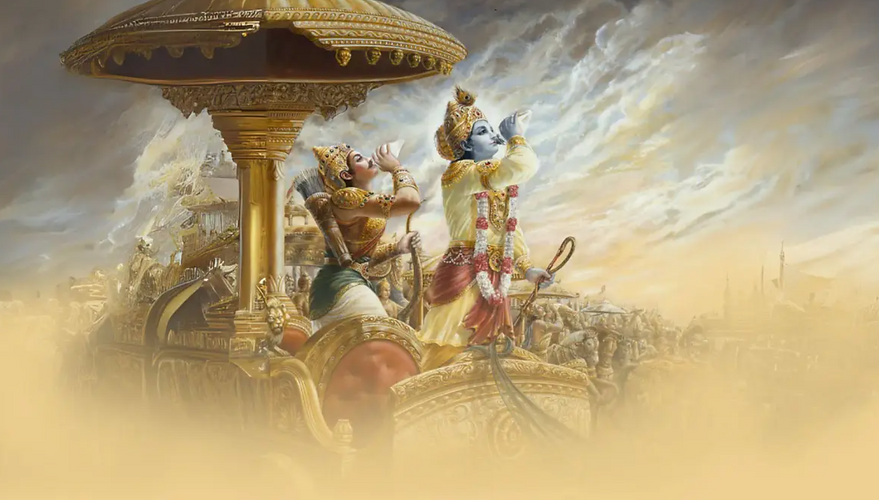
Bhagvad Gita Chapter 4
भगवद् गीता अध्याय ४
Bhagvad Gita Chapter 4 - Gyan Karma Sanyas Yog
भगवद गीता अध्याय 4 - ज्ञान कर्म संन्यास योग
Chapter 4 of the Bhagavad Gita, titled "Jnana Karma Sanyasa Yoga," or "The Yoga of Knowledge and the Disciplines of Action and Renunciation," delves into the synthesis of knowledge, action, and renunciation. Shri Krishna shares the profound truth about the imperishable nature of the soul and the importance of performing one's duty without attachment to the fruits of actions. He introduces the concept of divine wisdom that has been passed down through a lineage of sages, making sure that this wisdom leads to self-realisation and liberation from the cycle of birth and death.
Krishna also addresses the necessity of righteous action and the significance of performing one's duties in accordance with one's nature and the principles of dharm (righteousness). He explains how actions, when performed as a sacrifice without selfish desires, purify the soul and lead to ultimate freedom.
The chapter is a cornerstone in understanding the Gita's philosophy, offering insights into how knowledge, action, and renunciation are intertwined paths to achieving spiritual enlightenment. Krishna reassures Arjuna that anyone, regardless of their past, can attain the supreme through dedicated practice of this integrated path. "Jnana Karma Sanyasa Yoga" inspires a balanced approach to life, where spiritual wisdom guides action, and detachment from the outcomes fosters inner peace and liberation.
भगवद गीता का अध्याय 4, जिसका शीर्षक "ज्ञान कर्म संन्यास योग" या "ज्ञान का योग और कर्म और त्याग के अनुशासन" है, ज्ञान, कर्म और त्याग के संश्लेषण पर प्रकाश डालता है। श्री कृष्ण आत्मा की अविनाशी प्रकृति और कर्मों के फल के प्रति आसक्ति के बिना अपना कर्तव्य निभाने के महत्व के बारे में गहन सत्य साझा करते हैं। वह दिव्य ज्ञान की अवधारणा का परिचय देते हैं जो ऋषियों की वंशावली के माध्यम से पारित किया गया है, यह सुनिश्चित करते हुए कि यह ज्ञान आत्म-प्राप्ति और जन्म और मृत्यु के चक्र से मुक्ति की ओर ले जाता है
कृष्ण धार्मिक कार्य की आवश्यकता और किसी के स्वभाव और धर्म (धार्मिकता) के सिद्धांतों के अनुसार अपने कर्तव्यों को निभाने के महत्व को भी संबोधित करते हैं। वह बताते हैं कि कैसे कर्म, जब स्वार्थी इच्छाओं के बिना बलिदान के रूप में किए जाते हैं, आत्मा को शुद्ध करते हैं और परम स्वतंत्रता की ओर ले जाते हैं।
यह अध्याय गीता के दर्शन को समझने में आधारशिला है, जो इस बात की अंतर्दृष्टि प्रदान करता है कि कैसे ज्ञान, कर्म और त्याग आध्यात्मिक ज्ञान प्राप्त करने के लिए आपस में जुड़े हुए मार्ग हैं। कृष्ण ने अर्जुन को आश्वस्त किया कि कोई भी, अपने अतीत की परवाह किए बिना, इस एकीकृत पथ के समर्पित अभ्यास के माध्यम से सर्वोच्च प्राप्त कर सकता है। "ज्ञान कर्म संन्यास योग" जीवन के प्रति एक संतुलित दृष्टिकोण को प्रेरित करता है, जहां आध्यात्मिक ज्ञान कार्रवाई का मार्गदर्शन करता है, और परिणामों से अलगाव आंतरिक शांति और मुक्ति को बढ़ावा देता है।
श्रीभगवानुवाच ।
इमं विवस्वते योगं प्रोक्तवानहमव्ययम् ।
विवस्वान्मनवे प्राह मनुरिक्ष्वाकवेऽब्रवीत् ॥ ४-१॥
This verse, spoken by Lord Krishna in the Bhagavad Gita, explains the lineage of spiritual wisdom. Krishna says, "I taught this imperishable yog to the Sun God, Vivasvan, who then shared it with Manu, the father of mankind. Manu passed it down to Ikshvaku, the first king of the solar dynasty."
This verse highlights the transmission of eternal knowledge through generations, starting from a divine source to human beings, emphasizing the importance of spiritual teachings in maintaining the balance and order of the world. It showcases the timeless nature of wisdom and the interconnectedness of all beings in the cosmic cycle.
भगवद गीता में भगवान कृष्ण द्वारा बोला गया यह श्लोक आध्यात्मिक ज्ञान की वंशावली की व्याख्या करता है। कृष्ण कहते हैं, "मैंने यह अविनाशी योग सूर्य देव, विवस्वान को सिखाया, जिन्होंने बाद में इसे मानव जाति के पिता मनु के साथ साझा किया। मनु ने इसे सौर वंश के पहले राजा इक्ष्वाकु को दिया।"
यह श्लोक एक दैवीय स्रोत से मनुष्यों तक पीढ़ियों के माध्यम से शाश्वत ज्ञान के संचरण पर प्रकाश डालता है, और दुनिया के संतुलन और व्यवस्था को बनाए रखने में आध्यात्मिक शिक्षाओं के महत्व पर जोर देता है। यह ज्ञान की कालातीत प्रकृति और ब्रह्मांडीय चक्र में सभी प्राणियों के अंतर्संबंध को प्रदर्शित करता है।
एवं परम्पराप्राप्तमिमं राजर्षयो विदुः ।
स कालेनेह महता योगो नष्टः परन्तप ॥ ४-२॥
Shri Krishna further says - This knowledge was passed down through generations of royal sages. However, over time, this great yog was lost to the world."
Shri Krishna is saying that the sacred teachings of yog, which were once well-known and practiced by kings and sages, have been forgotten as centuries passed. The wisdom that was once a common heritage of enlightened rulers gradually disappeared due to the passage of time and the fading of traditions as materialistically inspired disciples contaminated its purity . That is when
Bhagwan himself has to come to this earth to share this knowledge & reinstate it.
श्रीकृष्ण आगे कहते हैं- यह ज्ञान राज ऋषियों की पीढ़ियों से चला आ रहा था। हालाँकि, समय के साथ, यह महान योग दुनिया से लुप्त हो गया।"
श्री कृष्ण कह रहे हैं कि योग की पवित्र शिक्षाएँ, जो एक समय राजाओं और ऋषियों द्वारा प्रसिद्ध और प्रचलित थीं, सदियाँ बीतने के साथ-साथ भुला दी गई हैं। वह ज्ञान जो कभी प्रबुद्ध शासकों की साझी विरासत थी, समय बीतने और परंपराओं के लुप्त होने के कारण धीरे-धीरे लुप्त हो गई क्योंकि भौतिकवादी रूप से प्रेरित शिष्यों ने इसकी पवित्रता को दूषित कर दिया। तभी भगवान को स्वयं इस ज्ञान को साझा करने और इसे पुनः स्थापित करने के लिए इस धरती पर आना पड़ा।
स एवायं मया तेऽद्य योगः प्रोक्तः पुरातनः ।
भक्तोऽसि मे सखा चेति रहस्यं ह्येतदुत्तमम् ॥ ४-३॥
"Today, I am teaching you this ancient yog, the supreme knowledge because you are my devotee and friend."
This knowledge is not ordinary knowledge, it is like a hidden treasure, which needs to be given to the responsible & wise one. This needs to be kept a secret, meaning it needs to be given to the deserved one, the one who can value & respect this supreme knowledge.
"आज मैं तुम्हें यह प्राचीन योग, सर्वोच्च ज्ञान सिखा रहा हूं क्योंकि तुम मेरे भक्त और मित्र हो।"
यह ज्ञान सामान्य ज्ञान नहीं है, यह एक छिपे हुए खजाने की तरह है, जिसे जिम्मेदार और बुद्धिमान व्यक्ति को दिया जाना आवश्यक है। इसे गुप्त रखा जाना चाहिए, अर्थात इसे योग्य व्यक्ति को दिया जाना चाहिए, जो इस सर्वोच्च ज्ञान को महत्व और सम्मान दे सके।
अर्जुन उवाच ।
अपरं भवतो जन्म परं जन्म विवस्वतः ।
कथमेतद्विजानीयां त्वमादौ प्रोक्तवानिति ॥ ४-४॥
Arjun is questioning Lord Krishna, "Your birth is after that of Vivasvan (the Sun God); how am I to understand that you taught this yog in the beginning of creation?"
Arjun is confused about Krishna's divine nature and his timeless existence. Krishna, as the Supreme Personality of Godhead, explains the concept of divine birth and the eternal soul. This dialogue sets the stage for Krishna to reveal his universal form and impart the profound spiritual wisdom that underpins the Gita's teachings on dharm, duty, righteousness, and the eternal nature of the soul. Through this discourse, Krishna elucidates the mystery of divine incarnation and the timeless, transcendental knowledge he imparts to humanity, emphasizing the importance of faith, devotion, and the understanding of one's eternal duty as the path to liberation and spiritual enlightenment.
अर्जुन भगवान कृष्ण से प्रश्न कर रहे हैं, "आपका जन्म विवस्वान् (सूर्य देव) के बाद हुआ है; मैं कैसे समझूं कि आपने सृष्टि के आरंभ में यह योग सिखाया था?"
अर्जुन कृष्ण की दिव्य प्रकृति और उनके कालातीत अस्तित्व के बारे में भ्रमित है। कृष्ण, भगवान के सर्वोच्च व्यक्तित्व के रूप में, दिव्य जन्म और शाश्वत आत्मा की अवधारणा की व्याख्या करते हैं। यह संवाद कृष्ण के लिए अपने सार्वभौमिक रूप को प्रकट करने और गहन आध्यात्मिक ज्ञान प्रदान करने के लिए मंच तैयार करता है जो धर्म, कर्तव्य, धार्मिकता और आत्मा की शाश्वत प्रकृति पर गीता की शिक्षाओं को रेखांकित करता है। इस प्रवचन के माध्यम से, कृष्ण दिव्य अवतार के रहस्य और मानवता को प्रदान किए गए कालातीत, पारलौकिक ज्ञान को स्पष्ट करते हैं, विश्वास, भक्ति और मुक्ति और आध्यात्मिक ज्ञान के मार्ग के रूप में किसी के शाश्वत कर्तव्य की समझ के महत्व पर जोर देते हैं।
श्रीभगवानुवाच ।
बहूनि मे व्यतीतानि जन्मानि तव चार्जुन ।
तान्यहं वेद सर्वाणि न त्वं वेत्थ परन्तप ॥ ४-५॥
"Many births of mine have passed, as well as yours, O Arjuna. I know them all, but you do not, O Parantapa (scorcher of foes)."
Here, Krishna introduces the concept of divine omniscience and the soul's immortality, emphasizing His eternal nature and the cycle of rebirths in the material world. This statement sets the groundwork for understanding the difference between the eternal soul and the temporary physical body, and the concept of reincarnation. Shri Krishna's message underscores the soul's journey through various births and the importance of realizing one's eternal, spiritual identity beyond the physical realm. This verse highlights the unique position of Krishna as the omniscient Supreme Being, capable of remembering all past lives, in contrast to the conditioned soul, which is bound by the limits of material existence and memory.
Sometimes, rather most of the times, truth is not just what is seen, it is much beyond that. Shri Krishna is that truth. One can think of him the way he wants to but Shri Krishna is much bigger & beyond one’s imagination.
"मेरे और तुम्हारे भी कई जन्म बीत चुके हैं, हे अर्जुन। मैं उन सभी को जानता हूं, लेकिन तुम नहीं जानते, हे परंतप (शत्रुओं को भस्म करने वाले)।"
यहां, कृष्ण दिव्य सर्वज्ञता और आत्मा की अमरता की अवधारणा का परिचय देते हैं, उनकी शाश्वत प्रकृति और भौतिक दुनिया में पुनर्जन्म के चक्र पर जोर देते हैं। यह कथन शाश्वत आत्मा और अस्थायी भौतिक शरीर और पुनर्जन्म की अवधारणा के बीच अंतर को समझने के लिए आधार तैयार करता है। श्री कृष्ण का संदेश विभिन्न जन्मों के माध्यम से आत्मा की यात्रा और भौतिक क्षेत्र से परे अपनी शाश्वत, आध्यात्मिक पहचान को समझने के महत्व को रेखांकित करता है। यह कविता सर्वज्ञ सर्वोच्च व्यक्ति के रूप में कृष्ण की अद्वितीय स्थिति पर प्रकाश डालती है, जो वातानुकूलित आत्मा के विपरीत, पिछले सभी जन्मों को याद करने में सक्षम है, जो भौतिक अस्तित्व और स्मृति की सीमाओं से बंधी है।
कभी-कभी, बल्कि अधिकांश समय, सत्य केवल वही नहीं होता जो दिखाई देता है, वह उससे कहीं आगे होता है। श्रीकृष्ण ही वह सत्य हैं। कोई उनके बारे में जैसा चाहे वैसा सोच सकता है लेकिन श्री कृष्ण किसी की कल्पना से कहीं बड़े और परे हैं।
अजोऽपि सन्नव्ययात्मा भूतानामीश्वरोऽपि सन् ।
प्रकृतिं स्वामधिष्ठाय सम्भवाम्यात्ममायया ॥ ४-६॥
"Although I am unborn, everlasting, and I am the Lord of all beings, by controlling My own nature, I take birth through My own Maya (divine illusion)."
Krishna explains his true nature, his being. He says I am unborn - I was never born, neither can anyone destroy me. I appear with my Yogmaya in whatever form I want to. The one who is born is bound to die but who was Arjun looking at? Because he was never born. Then how did Shri Krishna exist ? He existed with his Maya - Yog Maya. He appeared in human form to be amongst humans, be with them, understand them & live like them.
This profound statement elucidates the divine nature of Krishna's incarnations. Unlike human beings, whose births and actions are determined by karm (the accumulated results of past actions), Krishna's avatar (incarnation) is a divine event, transcending the karmic cycle. He embodies the ultimate reality, untouched by the imperfections of the material world, yet chooses to manifest within it to restore dharm (righteousness) and guide humanity towards spiritual awakening.
"यद्यपि मैं अजन्मा, शाश्वत हूं, और मैं सभी प्राणियों का भगवान हूं, अपनी प्रकृति को नियंत्रित करके, मैं अपनी माया (दिव्य भ्रम) के माध्यम से जन्म लेता हूं।"
कृष्ण अपने वास्तविक स्वरूप, अपने अस्तित्व की व्याख्या करते हैं। वह कहता है कि मैं अजन्मा हूँ - मेरा कभी जन्म नहीं हुआ, न ही मुझे कोई नष्ट कर सकता है। मैं अपनी योगमाया के साथ जिस रूप में चाहूँ प्रकट हो जाता हूँ। जिसका जन्म हुआ है उसकी मृत्यु निश्चित है लेकिन अर्जुन किसकी ओर देख रहा था? क्योंकि वह कभी पैदा ही नहीं हुआ था. तो फिर श्री कृष्ण का अस्तित्व कैसे हुआ? वह अपनी माया - योग माया के साथ अस्तित्व में थे। वह मानव रूप में मनुष्यों के बीच रहने, उनके साथ रहने, उन्हें समझने और उनकी तरह जीने के लिए प्रकट हुए।
यह गहन कथन कृष्ण के अवतारों की दिव्य प्रकृति को स्पष्ट करता है। मनुष्यों के विपरीत, जिनका जन्म और कार्य कर्म (पिछले कार्यों के संचित परिणाम) द्वारा निर्धारित होते हैं, कृष्ण का अवतार (अवतार) एक दिव्य घटना है, जो कर्म चक्र से परे है। वह परम वास्तविकता का प्रतीक है, भौतिक संसार की अपूर्णताओं से अछूता है, फिर भी धर्म (धार्मिकता) को बहाल करने और मानवता को आध्यात्मिक जागृति की ओर मार्गदर्शन करने के लिए इसके भीतर प्रकट होने का विकल्प चुनता है।
यदा यदा हि धर्मस्य ग्लानिर्भवति भारत ।
अभ्युत्थानमधर्मस्य तदात्मानं सृजाम्यहम् ॥ ४-७॥
Whenever there is fall of Dharm (righteousness) & Adharm increases, that is when I appear on this earth.
Every yug sees rise in Adharm & that is when Shri Krishna takes a form & appears to destroy Adharm & bring Dharm back. This appearing of God is called Avatar.
One of the most quoted verse from Gita, where Lord Krishna tells Arjuna, "Whenever there is a decline in dharm and an increase in adharm, at that time I manifest Myself." This verse encapsulates the concept of divine intervention in the cosmic order. Krishna assures that to protect the good, destroy the wicked, and establish dharm (righteousness), He incarnates in the world at various times. This promise signifies the eternal commitment of the Divine to maintain the balance of the universe. It highlights the cyclical nature of time and the perpetual struggle between good and evil, emphasizing the role of the divine in restoring moral order. This principle reassures believers of the presence of a higher justice and the ultimate triumph of good over evil through divine will and action.
जब-जब धर्म का पतन होता है और अधर्म बढ़ता है, तब-तब मैं इस धरती पर प्रकट होता हूं।
हर युग में अधर्म में वृद्धि देखी जाती है और तभी श्री कृष्ण अवतार लेते हैं और अधर्म को नष्ट करने और धर्म को वापस लाने के लिए प्रकट होते हैं। ईश्वर के इस प्रकटीकरण को अवतार कहा जाता है।
यह श्लोक ब्रह्मांडीय व्यवस्था में दैवीय हस्तक्षेप की अवधारणा को समाहित करता है। कृष्ण आश्वासन देते हैं कि अच्छे लोगों की रक्षा करने, दुष्टों को नष्ट करने और धर्म (धार्मिकता) की स्थापना करने के लिए, वह विभिन्न समय पर दुनिया में अवतार लेते हैं। यह वादा ब्रह्मांड के संतुलन को बनाए रखने के लिए ईश्वर की शाश्वत प्रतिबद्धता को दर्शाता है। यह समय की चक्रीय प्रकृति और अच्छे और बुरे के बीच सतत संघर्ष पर प्रकाश डालता है, नैतिक व्यवस्था को बहाल करने में परमात्मा की भूमिका पर जोर देता है। यह सिद्धांत विश्वासियों को उच्च न्याय की उपस्थिति और दैवीय इच्छा और कार्रवाई के माध्यम से बुराई पर अच्छाई की अंतिम विजय का आश्वासन देता है।
परित्राणाय साधूनां विनाशाय च दुष्कृताम् ।
धर्मसंस्थापनार्थाय सम्भवामि युगे युगे ॥ ४-८॥
To reinstate Dharm back, Shri Krishna appears in different forms in each yug. He comes to this earth to save the righteous people, to destroy the sinners & to bring back Dharm. One should fight to destroy sinners & save the truthful ones.
This verse explains that Lord Krishna is born in every age to protect the good, destroy the wicked, and establish righteousness. It assures believers that the divine is always watching over the world, ensuring good prevails over evil and guiding people towards moral and spiritual integrity. It represents the belief in divine justice and the moral order of the universe, motivating people to live virtuously and follow their duties.
धर्म को पुनः स्थापित करने के लिए श्री कृष्ण प्रत्येक युग में अलग-अलग रूपों में प्रकट होते हैं। वह धर्मी लोगों को बचाने, पापियों को नष्ट करने और धर्म को वापस लाने के लिए इस धरती पर आते हैं। पापियों को नष्ट करने और सच्चे लोगों को बचाने के लिए युद्ध करना चाहिए।
यह श्लोक बताता है कि भगवान कृष्ण हर युग में अच्छे लोगों की रक्षा, दुष्टों का विनाश और धर्म की स्थापना के लिए पैदा होते हैं। यह विश्वासियों को आश्वस्त करता है कि परमात्मा हमेशा दुनिया पर नजर रखता है, बुराई पर अच्छाई की जीत सुनिश्चित करता है और लोगों को नैतिक और आध्यात्मिक अखंडता की ओर मार्गदर्शन करता है। यह ईश्वरीय न्याय और ब्रह्मांड की नैतिक व्यवस्था में विश्वास का प्रतिनिधित्व करता है, लोगों को सदाचार से जीने और अपने कर्तव्यों का पालन करने के लिए प्रेरित करता है।
जन्म कर्म च मे दिव्यमेवं यो वेत्ति तत्त्वतः ।
त्यक्त्वा देहं पुनर्जन्म नैति मामेति सोऽर्जुन ॥ ४-९॥
Shri Krishna doesn’t take birth, its divine! The one who understands this, doesn’t take rebirth. His birth - death cycle breaks & he attains Shri Krishna.This means that he achieves the ultimate purpose of his soul to connect with The Absolute Truth !
This verse emphasizes the transcendental nature of Krishna's incarnations and deeds. It suggests that comprehending the divine essence behind Krishna's birth and activities in this world can lead to liberation from the cycle of rebirth. This knowledge offers a direct path to unity with the divine. It underscores the importance of spiritual wisdom and the realization of the divine play (leela) of the Lord, which can free one from the bonds of karma and the cycle of death and rebirth, leading to eternal union with the divine. This teaching encourages seekers to look beyond the material appearances and recognize the underlying spiritual reality.
श्री कृष्ण का जन्म नहीं होता, यह दिव्य है! जो इसे समझ लेता है उसका पुनर्जन्म नहीं होता। उसका जन्म-मृत्यु का चक्र टूट जाता है और उसे श्री कृष्ण की प्राप्ति हो जाती है। इसका मतलब यह है कि वह अपनी आत्मा के अंतिम उद्देश्य - परम सत्य से जुड़ने - को प्राप्त कर लेता है!
यह श्लोक कृष्ण के अवतारों और कार्यों की पारलौकिक प्रकृति पर जोर देता है। यह सुझाव देता है कि इस दुनिया में कृष्ण के जन्म और गतिविधियों के पीछे के दिव्य सार को समझने से पुनर्जन्म के चक्र से मुक्ति मिल सकती है। यह ज्ञान परमात्मा के साथ एकता का सीधा मार्ग प्रदान करता है। यह आध्यात्मिक ज्ञान के महत्व और भगवान की दिव्य लीला (लीला) के एहसास को रेखांकित करता है, जो किसी को कर्म के बंधन और मृत्यु और पुनर्जन्म के चक्र से मुक्त कर सकता है, जिससे परमात्मा के साथ शाश्वत मिलन हो सकता है। यह शिक्षा साधकों को भौतिक दिखावे से परे देखने और अंतर्निहित आध्यात्मिक वास्तविकता को पहचानने के लिए प्रोत्साहित करती है।
वीतरागभयक्रोधा मन्मया मामुपाश्रिताः ।
बहवो ज्ञानतपसा पूता मद्भावमागताः ॥ ४-१०॥
The one who is free from attachments, greed, lust, fears, anger & who has dedicated themselves to Shri Krishna, one who follows the path show by him, attains Krishna. The one who has controlled his senses, the one who follows the knowledge given by Shri Krishna is sure to get liberation.
This verse highlights the transformative power of spiritual knowledge and devotion. It describes the path to divine realization as one of detachment from worldly desires, fears, and angers, and a deep integration with the divine essence. Krishna emphasizes that it is through a disciplined pursuit of knowledge and a life lived in devotion to the divine that individuals can purify themselves, overcome the limitations of their material existence, and achieve unity with the divine consciousness. This state of being, characterized by a profound inner peace and a relinquishment of all forms of egoistic attachment, leads to the ultimate liberation and realization of one's true nature, which is identical to the divine essence.
जो मोह, लोभ, वासना, भय, क्रोध से मुक्त है और जिसने स्वयं को श्री कृष्ण के प्रति समर्पित कर दिया है, जो उनके दिखाए मार्ग का अनुसरण करता है, वह कृष्ण को प्राप्त करता है। जिसने अपनी इंद्रियों को वश में कर लिया है, जो श्रीकृष्ण द्वारा दिए गए ज्ञान का पालन करता है उसे मुक्ति मिलना निश्चित है।
यह श्लोक आध्यात्मिक ज्ञान और भक्ति की परिवर्तनकारी शक्ति पर प्रकाश डालता है। यह दिव्य प्राप्ति के मार्ग को सांसारिक इच्छाओं, भय और क्रोध से वैराग्य और दिव्य सार के साथ गहरे एकीकरण के रूप में वर्णित करता है। कृष्ण इस बात पर जोर देते हैं कि ज्ञान की अनुशासित खोज और ईश्वर के प्रति समर्पण में जीए गए जीवन के माध्यम से व्यक्ति खुद को शुद्ध कर सकते हैं, अपने भौतिक अस्तित्व की सीमाओं को पार कर सकते हैं और दिव्य चेतना के साथ एकता प्राप्त कर सकते हैं। गहन आंतरिक शांति और सभी प्रकार के अहंकारी लगाव के त्याग की विशेषता वाली यह स्थिति, परम मुक्ति और व्यक्ति के वास्तविक स्वरूप की प्राप्ति की ओर ले जाती है, जो दिव्य सार के समान है।
ये यथा मां प्रपद्यन्ते तांस्तथैव भजाम्यहम् ।
मम वर्त्मानुवर्तन्ते मनुष्याः पार्थ सर्वशः ॥ ४-११॥
Hey Arjun, I devote myself to the person the same way he devotes himself to me. They all walk on the path I show them.
Here Shri Krishna says, that the one who understands the knowledge given by him, becomes one with him.
Here devotion doesn’t mean going to temples & doing rituals, it means listening to what Shri Krishna says & following the path he shows you.
हे अर्जुन, मैं स्वयं को उस से उसी प्रकार समर्पित करता हूं जिस प्रकार वह स्वयं को मेरे लिए समर्पित करता है। वे सब मेरे दिखाए मार्ग पर चलते हैं।
यहां श्रीकृष्ण कहते हैं कि जो उनके द्वारा दिए गए ज्ञान को समझ लेता है, वह उनसे एक हो जाता है।
यहां भक्ति का अर्थ मंदिरों में जाना और अनुष्ठान करना नहीं है, इसका अर्थ है श्री कृष्ण जो कहते हैं उसे सुनना और उनके दिखाए मार्ग पर चलना।
काङ्क्षन्तः कर्मणां सिद्धिं यजन्त इह देवताः ।
क्षिप्रं हि मानुषे लोके सिद्धिर्भवति कर्मजा ॥ ४-१२॥
Shri Krishna says that ones who does his karma without the interest of any fruit & devotes his karma to the devta he believes in, then the fruit of his karma will be positive for sure. So keep HIM in your thoughts & actions while doing any karma.
श्री कृष्ण कहते हैं कि जो व्यक्ति बिना किसी फल की इच्छा के कर्म करता है और अपने कर्म को उस देवता को समर्पित करता है जिस पर वह विश्वास करता है, तो उसके कर्म का फल निश्चित रूप से सकारात्मक होगा। इसलिए कोई भी कर्म करते समय उसे अपने विचारों और कार्यों में रखें।
चातुर्वर्ण्यं मया सृष्टं गुणकर्मविभागशः ।
तस्य कर्तारमपि मां विद्ध्यकर्तारमव्ययम् ॥ ४-१३॥
Here Shri Krishna talks about one of the biggest truth of our society that we have forgotten. Brahman, Kshtriya, Vaishya & Shudra - these four Varnas have been formed by me (Shri Krishna) based on the guna & karm.
We have divided these varna based on the caste, on our birth. But in reality it is about ones karm & one’s guna.
यहां श्री कृष्ण हमारे समाज की एक सबसे बड़ी सच्चाई के बारे में बात करते हैं जिसे हम भूल चुके हैं। ब्राह्मण, क्षत्रिय, वैश्य और शूद्र - ये चार वर्ण मेरे (श्री कृष्ण) द्वारा गुण और कर्म के आधार पर बनाए गए हैं।
हमने इन वर्णों को जाति के आधार पर, हमारे जन्म के आधार पर विभाजित किया है। लेकिन वास्तव में यह व्यक्ति के कर्म और उसके गुण के बारे में है।
न मां कर्माणि लिम्पन्ति न मे कर्मफले स्पृहा ।
इति मां योऽभिजानाति कर्मभिर्न स बध्यते ॥ ४-१४॥
We have to do our karm, but not get attached to it. We have to do our karm as our duty, our responsibility but we don’t have to worry about the results. Often we keep worrying about the results so much that our focus on our work is lost. Give your best & leave the rest to HIM.
हमें कर्म तो करना है, लेकिन उसमें आसक्त नहीं होना है। हमें अपना कर्म अपने कर्तव्य, अपनी जिम्मेदारी के रूप में करना है लेकिन हमें फल की चिंता नहीं करनी है। अक्सर हम नतीजों को लेकर इतना चिंतित रहते हैं कि हमारा ध्यान अपने काम से ही भटक जाता है। अपना सर्वश्रेष्ठ दें और बाकी उस पर छोड़ दें।
एवं ज्ञात्वा कृतं कर्म पूर्वैरपि मुमुक्षुभिः ।
कुरु कर्मैव तस्मात्त्वं पूर्वैः पूर्वतरं कृतम् ॥ ४-१५॥
Krishna tells Arjun, that the ones who attained liberation & connected with The Absolute Truth, followed the path of Nishkam Karm as mentioned in the previous shlok.
Certain things never changes in this universe even though times have changed a lot. As the cycle of birth & death is inevitable, similarly, if you put in the right efforts with right intentions, desired results are inevitable.
कृष्ण अर्जुन से कहते हैं, कि जिन्होंने मुक्ति प्राप्त की और परम सत्य से जुड़े, उन्होंने पिछले श्लोक में बताए अनुसार निष्काम कर्म का मार्ग अपनाया।
इस ब्रह्माण्ड में कुछ चीजें कभी नहीं बदलतीं, भले ही समय बहुत बदल गया हो। जिस प्रकार जन्म और मृत्यु का चक्र अपरिहार्य है, उसी प्रकार, यदि आप सही इरादों के साथ सही प्रयास करते हैं, तो वांछित परिणाम अपरिहार्य हैं।
किं कर्म किमकर्मेति कवयोऽप्यत्र मोहिताः ।
तत्ते कर्म प्रवक्ष्यामि यज्ज्ञात्वा मोक्ष्यसेऽशुभात् ॥ ४-१६॥
Shri Krishna explains what is karm & akarm, action & inaction. It is very important to understand the essence of karm otherwise one keeps getting confused.
Shri Krishna explains about karm in upcoming shloks so that one becomes clear about the concept of karm & can work towards his purpose accordingly.
श्री कृष्ण बताते हैं कि कर्म और अकर्म क्या है। कर्म के सार को समझना बहुत जरूरी है अन्यथा व्यक्ति भ्रमित होता रहता है। क्या कुछ भी करने को कर्म कहते हैं? इस शब्द का प्रयोग हम अपने दैनिक जीवन में बहुत ही सहजता से करते रहते हैं।
श्री कृष्ण आगामी श्लोकों में कर्म के बारे में बताते हैं ताकि व्यक्ति कर्म की अवधारणा के बारे में स्पष्ट हो जाए और उसके अनुसार अपने उद्देश्य की दिशा में काम कर सके।
कर्मणो ह्यपि बोद्धव्यं बोद्धव्यं च विकर्मणः ।
अकर्मणश्च बोद्धव्यं गहना कर्मणो गतिः ॥ ४-१७॥
One should understand there are 3 types of karm : karm, akarm & vikarm. Doing something, not doing something or doing something wrong. This philosophy might sound complex but if one understands this theory of karm, life will sail smoothly for him. And that is why it is very important to understand karma.
व्यक्ति को यह समझना चाहिए कि कर्म 3 प्रकार के होते हैं: कर्म, अकर्म और विकर्म। कुछ करना, कुछ न करना या कुछ अनोखा करना। यह दर्शन जटिल लग सकता है लेकिन अगर कोई कर्म के इस सिद्धांत को समझ लेता है, तो उसका जीवन आसानी से चलता जाएगा।
कर्मण्यकर्म यः पश्येदकर्मणि च कर्म यः ।
स बुद्धिमान्मनुष्येषु स युक्तः कृत्स्नकर्मकृत् ॥ ४-१८॥
The person who sees akarm in karm & karm in akarm, is more intelligent than others. It means the person who does his karm but doesn’t boast about it, neither does he think about the result. This is what seeing akarm in karm means - just focusing on the karm.
जो व्यक्ति कर्म में अकर्म और अकर्म में कर्म देखता है, वह दूसरों से अधिक बुद्धिमान होता है। इसका मतलब है कि वह व्यक्ति जो कर्म तो करता है लेकिन उसका घमंड नहीं करता और न ही उसके फल के बारे में सोचता है। कर्म में अकर्म देखने का यही अर्थ है - केवल कर्म पर ध्यान केंद्रित करना।
यस्य सर्वे समारम्भाः कामसङ्कल्पवर्जिताः ।
ज्ञानाग्निदग्धकर्माणं तमाहुः पण्डितं बुधाः ॥ ४-१९॥
Shri Krishna further explains about karm. He says that one who has done the karm as mentioned in the shastras & whose karm are without any desires & attachment & one whose karm destroyed by fire of knowledge is called pandit.
This means you have to do your karm & forget it.
But which karm?
Karm which is defined correct by Shastras. Shastras - the one which follows the path of dharm (righteousness), the karm in which you are fulfilling your duties & responsibilities in a righteous way.
श्रीकृष्ण आगे कर्म के बारे में बताते हैं। वह कहते हैं कि जिसने शास्त्रों में वर्णित कर्म किए हैं और जिसके कर्म बिना किसी इच्छा और आसक्ति के हैं और जिसके कर्म ज्ञान की अग्नि से प्रज्वलित हैं, उन्हें पंडित कहा जाता है।
इसका मतलब है कि आपको अपना कर्म करना है और उसे भूल जाना है। लेकिन कौन सा कर्म?
कर्म जो शास्त्रों द्वारा सही बताया गया है। शास्त्र - वह जो धर्म के मार्ग पर चलता है, वह कर्म जिसमें आप अपने कर्तव्यों और जिम्मेदारियों को पूरा कर रहे हैं।
त्यक्त्वा कर्मफलासङ्गं नित्यतृप्तो निराश्रयः ।
कर्मण्यभिप्रवृत्तोऽपि नैव किञ्चित्करोति सः ॥ ४-२०॥
The man who is detached from his karm and its fruits & is not dependent on this materialistic world & the one who is fulfilled by connecting himself with The Absolute Truth, is the one who is living his life to the fullest. He gets so much in life that if he wants he can even attain The Absolute Truth.
Just live in the present, do your karm & stop worrying about the results.
जो व्यक्ति अपने कर्म और उसके फल से अलग हो गया है और इस भौतिकवादी दुनिया पर निर्भर नहीं है और जो खुद को परम सत्य से जोड़कर पूर्ण हो गया है, वही अपना जीवन पूरी तरह से जी रहा है। उसे जीवन में इतना कुछ मिलता है कि वह चाहे तो परम सत्य को भी प्राप्त कर सकता है।
बस वर्तमान में जियो, अपना कर्म करो और परिणाम की चिंता करना बंद करो।
_______________________________________________________________
निराशीर्यतचित्तात्मा त्यक्तसर्वपरिग्रहः ।
शारीरं केवलं कर्म कुर्वन्नाप्नोति किल्बिषम् ॥४-२१॥
This shlok is about Yogi’s condition. He has won over his senses, mind & intellect. He is above any desires & hopes. The one who wins over his mind does his karm without getting attached to it.
यह श्लोक योगी की स्थिति के बारे में है। उसने अपनी इंद्रियों, मन और बुद्धि पर विजय प्राप्त कर ली है। वह किसी भी इच्छा और आशा से ऊपर है। जो अपने मन पर विजय प्राप्त कर लेता है, वह मन पर आसक्त हुए बिना ही अपना कर्म करता है।
यदृच्छालाभसन्तुष्टो द्वन्द्वातीतो विमत्सरः ।
समः सिद्धावसिद्धौ च कृत्वापि न निबध्यते ॥४-२२॥
Karm yogi is the one who is satisfied in whatever he gets. The one who is not jealous of anyone or does not compare himself to others, the one who is the same is any condition, be it happiness or sadness, win or lose is the true karm yogi. He never gets attached to his karm.
कर्मयोगी वह है जो जो कुछ भी मिले उसी में संतुष्ट रहता है। जो किसी से ईर्ष्या नहीं करता या अपनी तुलना दूसरों से नहीं करता, जो सुख हो या दुख, जीत हो या हार, हर स्थिति में एक जैसा रहता है वही सच्चा कर्मयोगी है। वह कभी भी अपने कर्म में आसक्त नहीं होता।
गतसङ्गस्य मुक्तस्य ज्ञानावस्थितचेतसः ।
यज्ञायाचरतः कर्म समग्रं प्रविलीयते ॥४-२३॥
Karm yogi wins over his desires, he is not attached to anything. He doesn’t even feel proud about his own physical self. He doesn’t get bound by love or delusions. He is just focused on the knowledge of the supreme & keeps following the path guided by him. They walk on the difficult path of liberation. It is a very very difficult one but not impossible. And Shri Krishna says that many have attained this state & are known as Karm Yogi.
कर्म योगी अपनी इच्छाओं पर विजय प्राप्त कर लेता है, उसे किसी भी चीज़ का मोह नहीं होता। उसे अपने शारीरिक स्वरूप पर भी गर्व महसूस नहीं होता। वह प्रेम या मोह में नहीं बंधता। वह केवल सर्वोच्च ज्ञान पर ध्यान केंद्रित करता है और उसके द्वारा निर्देशित मार्ग पर चलता रहता है। वे मुक्ति के कठिन पथ पर चलते हैं। यह बहुत कठिन है लेकिन असंभव नहीं है। और श्री कृष्ण कहते हैं कि कई लोगों ने इस अवस्था को प्राप्त किया है और कर्म योगी के रूप में जाने जाते हैं।
ब्रह्मार्पणं ब्रह्म हविर्ब्रह्माग्नौ ब्रह्मणा हुतम् ।
ब्रह्मैव तेन गन्तव्यं ब्रह्मकर्मसमाधिना ॥४-२४॥
That which is offered in yagna & havan is Brahm. The ahuti that is offered in the fire of havan is also Brahm & the fruit that one gets as a result of the havan is also Brahm. Here Brahm means the biggest The Absolute Truth. Whatever you see in this universe is Brahm. One might find it difficult to connect with such things but try to understand what Shri Krishna wants to teach you, for nothing else but your betterment.
यज्ञ और हवन में जो आहुति दी जाती है वह ब्रह्म है। हवन अग्नि में दी जाने वाली आहुति भी ब्रह्म है और हवन के फलस्वरूप जो फल मिलता है वह भी ब्रह्म है। यहां ब्रह्म का अर्थ है सबसे बड़ा परम सत्य। इस ब्रह्माण्ड में जो कुछ भी आप देखते हैं वह ब्रह्म है। किसी को ऐसी चीजों से जुड़ना मुश्किल हो सकता है, लेकिन यह समझने की कोशिश करें कि श्री कृष्ण आपको क्या सिखाना चाहते हैं, किसी और चीज के लिए नहीं बल्कि आपकी बेहतरी के लिए।
दैवमेवापरे यज्ञं योगिनः पर्युपासते ।
ब्रह्माग्नावपरे यज्ञं यज्ञेनैवोपजुह्वति ॥४-२५॥
Some yogis offer everything to their devta. Devta here means different forms of God that one believes in. Karm Yogis offer everything to their Brahm. There is no difference between offering to your Devta in yagna or offering your fruits to Brahm. Just remember, your Karm is also Yagna where you offer everything to your devta & just focus on your Karm.
कुछ योगी अपने देवता को सब कुछ अर्पित कर देते हैं। यहां देवता का अर्थ भगवान के विभिन्न रूपों से है जिनमें व्यक्ति विश्वास करता है। कर्म योगी अपना सब कुछ अपने ब्रह्म को अर्पित कर देते हैं। यज्ञ में अपने देवता को अर्पित करने या ब्रह्म को अपना फल अर्पित करने में कोई अंतर नहीं है। बस याद रखें, आपका कर्म भी यज्ञ है जहां आप अपने देवता को सब कुछ अर्पित करते हैं और केवल अपने कर्म पर ध्यान केंद्रित करते हैं।
श्रोत्रादीनीन्द्रियाण्यन्ये संयमाग्निषु जुह्वति ।
शब्दादीन्विषयानन्य इन्द्रियाग्निषु जुह्वति ॥४-२६॥
Whatever you put in fire, it will burn it down. Patience is also like fire. Yogis put their senses in the fire of patience & burns down the desires that results from those senses.
The ignorant ones does exactly the opposite. They burn everything they have in the fire ignited by their senses. Anger, jealousy, greed, lust are the examples of being ignorant.
जो कुछ भी तुम आग में डालोगे, वह उसे जला देगी। धैर्य भी आग की तरह है. योगी अपनी इंद्रियों को धैर्य की अग्नि में डालते हैं और उन इंद्रियों से उत्पन्न होने वाली इच्छाओं को जला देते हैं।
अज्ञानी ठीक इसके विपरीत कार्य करते हैं। वे अपनी इंद्रियों द्वारा प्रज्वलित आग में अपना सब कुछ जला देते हैं। क्रोध, ईर्ष्या आदि अज्ञानी होने के उदाहरण हैं।
सर्वाणीन्द्रियकर्माणि प्राणकर्माणि चापरे ।
आत्मसंयमयोगाग्नौ जुह्वति ज्ञानदीपिते ॥४-२७॥
The best way to control your senses is through knowledge. Knowledge is the way through which yogis control their mind. Whenever they get a bad thought, their knowledge guides them towards their ultimate goal & not let their mind wander to a place where they give in to their senses. We always have two choices while doing any work - the right & the wrong. Our knowledge is the reason we can walk on the path of righteousness & not fall prey to our senses.
अपनी इंद्रियों को नियंत्रित करने का सबसे अच्छा तरीका ज्ञान है। ज्ञान वह तरीका है जिसके माध्यम से योगी अपने मन को नियंत्रित करते हैं। जब भी उनके मन में कोई बुरा विचार आता है, तो उनका ज्ञान उन्हें उनके अंतिम लक्ष्य की ओर ले जाता है और उनके दिमाग को ऐसी जगह भटकने नहीं देता, जहां वे अपनी इंद्रियों के सामने झुक जाते हैं। कोई भी काम करते समय हमारे पास हमेशा दो विकल्प होते हैं - सही और गलत। हमारा ज्ञान ही वह कारण है जिससे हम धर्म के मार्ग पर चल सकते हैं और अपनी इंद्रियों के शिकार होने से बच सकते है ।
द्रव्ययज्ञास्तपोयज्ञा योगयज्ञास्तथापरे ।
स्वाध्यायज्ञानयज्ञाश्च यतयः संशितव्रताः ॥४-२८॥
Everyone is fighting a different battle & that is why their karm, the way to deal with the battle, is also different. Many do it in a materialistic way, some through bhakti & some through swadhyay (knowledge).
Know your battle well enough to figure out your karm.
हर कोई अलग-अलग लड़ाई लड़ रहा है और इसीलिए उनके कर्म, लड़ाई से निपटने का तरीका भी अलग-अलग है। कई लोग इसे भौतिकवादी तरीके से करते हैं, कुछ भक्ति के माध्यम से और कुछ स्वाध्याय (ज्ञान) के माध्यम से।
अपने कर्म का पता लगाने के लिए अपनी लड़ाई को अच्छी तरह से जानें।
अपाने जुह्वति प्राणं प्राणेऽपानं तथापरे । प्राणापानगती रुद्ध्वा प्राणायामपरायणाः ॥४-२९॥
अपरे नियताहाराः प्राणान्प्राणेषु जुह्वति । सर्वेऽप्येते यज्ञविदो यज्ञक्षपितकल्मषाः ॥४-३०॥
Shri krishna talks about exercise related to pranayam.
Many waste their pran vayu in apan vayu & some put apan vayu in pran vayu. Pran vayu means the inhale & apan means the exhale. The ones with proper diet, the followers of pranayam, controls their respective apan & pran vayu & puts pran back to pranavayu only. These are the ones who do this through their karm which they have gained through knowledge. Many learned yogis can completely control their pran. We common man have no say on our breath because this control on breath come with control on ourselves. And that is why controlling one’s senses is very important.
श्रीकृष्ण प्राणायाम से संबंधित व्यायाम के बारे में बताते हैं।
कई लोग अपनी प्राण वायु को अपान वायु में बर्बाद कर देते हैं और कुछ लोग अपान वायु को प्राण वायु में डाल देते हैं। प्राण वायु का अर्थ है श्वास लेना और अपान का अर्थ है श्वास छोड़ना। उचित आहार-विहार करने वाले, प्राणायाम के अनुयायी, अपने-अपने अपान और प्राण वायु को नियंत्रित करते हैं और प्राण को वापस प्राणवायु में ही डाल देते हैं। ये वे लोग हैं जो अपने कर्म के माध्यम से ऐसा करते हैं जो उन्होंने ज्ञान के माध्यम से प्राप्त किया है। कई विद्वान योगी अपने प्राण को पूर्णतः नियंत्रित कर सकते हैं। हम आम आदमी को अपनी सांसों पर कोई अधिकार नहीं है क्योंकि सांसों पर यह नियंत्रण खुद पर नियंत्रण के साथ आता है। और इसीलिए अपनी इंद्रियों पर नियंत्रण रखना बहुत महत्वपूर्ण है।
यज्ञशिष्टामृतभुजो यान्ति ब्रह्म सनातनम् ।
नायं लोकोऽस्त्ययज्ञस्य कुतोऽन्यः कुरुसत्तम ॥ ४-३१॥
The one who offers the fruit of his karm to The Absolute Truth attains forever bliss by connecting with Sanatan Parabrahma Parmatma. The one who doesn’t follow Karm yog & is totally immersed in this materialistic world, can never experience bliss even in this world. Whatever they are experiencing is a short lived emotion that resulted due to some materialistic action.
जो अपने कर्मों का फल परम सत्य को अर्पित करता है, वह सनातन परब्रह्म परमात्मा से जुड़कर सदैव आनंद प्राप्त करता है। जो व्यक्ति कर्म योग का पालन नहीं करता और पूरी तरह से इस भौतिकवादी दुनिया में डूबा हुआ है, वह कभी भी इस दुनिया में भी आनंद का अनुभव नहीं कर सकता है।वे जो भी अनुभव कर रहे हैं वह एक अल्पकालिक भावना है जो किसी भौतिकवादी कार्रवाई के कारण उत्पन्न हुई है।
एवं बहुविधा यज्ञा वितता ब्रह्मणो मुखे ।
कर्मजान्विद्धि तान्सर्वानेवं ज्ञात्वा विमोक्ष्यसे ॥ ४-३२॥
There are many forms of yagna (karm) mentioned in Ved. These karm can be completed through mind & senses. Understanding the true meaning of karm will liberate you from bondages. Some of the karm discussed are - controlling your senses, offering to the devtas, doing pranayam by controlling your breath, detachment. If we do these karm with 100% presence of mind & senses, we can get free from this cycle of birth & death.
वेद में यज्ञ (कर्म) के अनेक रूप बताये गये हैं। ये कर्म मन और इंद्रियों के माध्यम से पूरे किए जा सकते हैं। कर्म का सही अर्थ समझने से आप अनेक बंधनों से मुक्त हो जायेंगे। कुछ यज्ञों पर चर्चा की गई है - अपनी इंद्रियों को नियंत्रित करना, देवताओं को अर्पित करना, अपनी सांसों को नियंत्रित करके प्राणायाम करना। यदि हम इन यज्ञों को मन और इंद्रियों की 100% उपस्थिति के साथ करते हैं, तो हम जन्म और मृत्यु के इस चक्र से मुक्त हो सकते हैं।
श्रेयान्द्रव्यमयाद्यज्ञाज्ज्ञानयज्ञः परन्तप ।
सर्वं कर्माखिलं पार्थ ज्ञाने परिसमाप्यते ॥ ४-३३॥
Hey Arjun, one yagna that is better than offering to fire is Gyan yagna. In the yagna, we offer different substances to various devtas. But in gyan yagna, we learn to control our senses, we learn to control our breath, we are focused on the karm & not its fruits.
हे अर्जुन, अग्नि को होम करने से भी श्रेष्ठ यज्ञ ज्ञान यज्ञ है। यज्ञ में हम विभिन्न देवताओं को अलग-अलग पदार्थ अर्पित करते हैं। लेकिन ज्ञान यज्ञ में, हम अपनी इंद्रियों को नियंत्रित करना सीखते हैं, हम अपनी सांसों को नियंत्रित करना सीखते हैं, हम कर्म पर ध्यान केंद्रित करते हैं न कि उसके फल पर।
तद्विद्धि प्रणिपातेन परिप्रश्नेन सेवया ।
उपदेक्ष्यन्ति ते ज्ञानं ज्ञानिनस्तत्त्वदर्शिनः ॥ ४-३४॥
If one doesn’t understand this knowledge given by the Supreme himself, then one should take the help of a guru who could impart this very important knowledge. If we don’t see the need to understand this ultimate knowledge then we will keep living our lives in a monotonous way with no in-depth interest in what life truly means.
यदि कोई स्वयं परमेश्वर द्वारा दिए गए इस ज्ञान को नहीं समझ पाता है, तो उसे किसी गुरु की सहायता लेनी चाहिए जो इस अत्यंत महत्वपूर्ण ज्ञान को प्रदान कर सके। यदि हमें इस परम ज्ञान को समझने की आवश्यकता नहीं दिखती है तो हम अपना जीवन नीरस तरीके से जीते रहेंगे और जीवन का वास्तविक अर्थ क्या है, इसमें कोई गहरी दिलचस्पी नहीं होगी।
यज्ज्ञात्वा न पुनर्मोहमेवं यास्यसि पाण्डव ।
येन भूतान्यशेषेण द्रक्ष्यस्यात्मन्यथो मयि ॥ ४-३५॥
We all do our work, we fulfil our responsibilities, we get old… and like this the wheel of time keeps on going. Why do we keep doing all this, why do we need to do all this, why have we come in this world ?
How many of us ask these questions ? Ignorants will never inquire about this.
Only a few selected ones will try to find answers to these questions. It is only after gaining this knowledge, we will be able to detach & find the true answers to our & world’s existence.
हम सब अपना काम करते हैं, अपनी ज़िम्मेदारियाँ निभाते हैं, बूढ़े हो जाते हैं... और इसी तरह समय का पहिया चलता रहता है। हम यह सब क्यों करते रहते हैं, हमें यह सब करने की आवश्यकता क्यों है, हम इस दुनिया में क्यों आये हैं?
हममें से कितने लोग ये प्रश्न पूछते हैं? अज्ञानी इस विषय में कभी पूछताछ नहीं करेंगे।
कुछ चुनिंदा लोग ही इन सवालों के जवाब ढूंढने की कोशिश करेंगे. इस ज्ञान को प्राप्त करने के बाद ही, हम अपने और दुनिया के अस्तित्व के सही उत्तरों को खोजने में सक्षम होंगे।
अपि चेदसि पापेभ्यः सर्वेभ्यः पापकृत्तमः ।
सर्वं ज्ञानप्लवेनैव वृजिनं सन्तरिष्यसि ॥ ४-३६॥
Even if you have committed sins, but if you try to gain true knowledge with right intentions, you will be able to wash off all your sins.
This doesn’t mean that you can commit sins freely.
Here Shri Krishna wants to convey that if you truly desire to gain knowledge, you will do it by any means but not by sinful ways. You will leave no stone unturned to reach to the true knowledge. It is all about the intentions.
भले ही आपने पाप किए हों, लेकिन अगर आप सही इरादों के साथ सच्चा ज्ञान प्राप्त करने का प्रयास करेंगे, तो आप अपने सभी पापों को धोने में सक्षम होंगे।
इसका मतलब यह नहीं है कि आप स्वतंत्र रूप से पाप कर सकते हैं।
यहां श्री कृष्ण यह बताना चाहते हैं कि यदि आप वास्तव में ज्ञान प्राप्त करने की इच्छा रखते हैं, तो आप इसे किसी भी माध्यम से प्राप्त करेंगे, लेकिन पापपूर्ण तरीके से नहीं। सच्चे ज्ञान तक पहुँचने के लिए आप कोई कसर नहीं छोड़ेंगे। यह सब इरादों के बारे में है।
यथैधांसि समिद्धोऽग्निर्भस्मसात्कुरुतेऽर्जुन ।
ज्ञानाग्निः सर्वकर्माणि भस्मसात्कुरुते तथा ॥ ४-३७॥
Arjun, the way the fuel burns up in fire, in the same way, the fire of knowledge destroys all our karm. When you attain the ultimate knowledge, you are free from the bondages of your karm. You will keep doing your karm as your duty & not for the desire of any fruit.
अर्जुन, जिस प्रकार आग में ईंधन जल जाता है, उसी प्रकार ज्ञान की अग्नि हमारे सभी कर्मों को नष्ट कर देती है। जब आप परम ज्ञान प्राप्त कर लेते हैं, तो आप अपने कर्मों के बंधनों से मुक्त हो जाते हैं। आप अपने कर्म को अपना कर्तव्य समझकर करते रहेंगे, किसी फल की इच्छा के लिए नहीं।
न हि ज्ञानेन सदृशं पवित्रमिह विद्यते ।
तत्स्वयं योगसंसिद्धः कालेनात्मनि विन्दति ॥ ४-३८॥
Knowledge makes the person pure. If you don’t have the curiosity to know, to learn, how can one learn? The one who keeps doing nishkam karm, the one who wants to attain knowledge through learning or through karm, the one who is determined to learn, will learn any way. The important thing is the intention to attain knowledge.
ज्ञान व्यक्ति को पवित्र बनाता है। यदि आपमें जानने की, सीखने की जिज्ञासा नहीं है तो कोई कैसे सीख सकता है? जो निष्काम कर्म करता रहता है, जो विद्या से या कर्म से ज्ञान प्राप्त करना चाहता है, जो सीखने के लिए कृतसंकल्प है, वह किसी भी तरह से सीख लेगा। महत्वपूर्ण बात ज्ञान प्राप्त करने का इरादा है।
श्रद्धावाँल्लभते ज्ञानं तत्परः संयतेन्द्रियः ।
ज्ञानं लब्ध्वा परां शान्तिमचिरेणाधिगच्छति ॥ ४-३९॥
The one who wins over the senses, the one who has faith & believes in handwork, can attain the ultimate knowledge. The one who attains this knowledge experience the ultimate peace.
In exams, if you know all the replies, you will give your exam without any worries or tension. Similarly, in the exam of life if one attains knowledge in the right way, it will not be difficult for him to understand this life & this universe & he will sail smoothly through this exam called life.
जो इंद्रियों पर विजय प्राप्त करता है, जो विश्वास रखता है और कड़ी मेहनत पर विश्वास करता है, वह परम ज्ञान प्राप्त कर सकता है। जो इस ज्ञान को प्राप्त कर लेता है उसे परम शांति का अनुभव होता है।
परीक्षा में, यदि आपको सभी उत्तर पता हैं, तो आप बिना किसी चिंता या तनाव के अपनी परीक्षा देंगे। इसी प्रकार, जीवन की परीक्षा में यदि कोई सही तरीके से ज्ञान प्राप्त कर लेता है, तो उसके लिए इस जीवन और इस ब्रह्मांड को समझना मुश्किल नहीं होगा और वह जीवन नामक इस परीक्षा में आसानी से सफल हो जाएगा।
अज्ञश्चाश्रद्दधानश्च संशयात्मा विनश्यति ।
नायं लोकोऽस्ति न परो न सुखं संशयात्मनः ॥ ४-४०॥
The who cannot differentiate between right & wrong, the one who keeps doubting, the one who doesn’t have faith, such a person gets destroyed. This person can never have peace. He constantly lives in fear, in confusion, keeps getting insecure.
You can never attain anything without working for it. And if don’t desire to learn, to know more, then your being or not being doesn’t make much difference.
जो सही-गलत में फर्क नहीं कर पाता, जो संदेह करता रहता है, जिसमें विश्वास नहीं होता, ऐसा व्यक्ति नष्ट हो जाता है। इस व्यक्ति को कभी शांति नहीं मिल सकती. वह सदैव भय में, असमंजस में रहता है, असुरक्षित होता रहता है।
आप उस पर विश्वास किए बिना और उसके लिए कड़ी मेहनत किए बिना कभी भी कुछ हासिल नहीं कर सकते। और यदि आप सीखने, अधिक जानने की इच्छा नहीं रखते हैं, तो आपके होने या न होने से कोई खास फर्क नहीं पड़ता।
योगसंन्यस्तकर्माणं ज्ञानसञ्छिन्नसंशयम् ।
आत्मवन्तं न कर्माणि निबध्नन्ति धनञ्जय ॥ ४-४१॥
The one who has dedicated all his karm to the Absolute through karm yog & the one who stays humble even after attaining the supreme knowledge is free from the bondages of karm. Karm yogi does not take pride in his knowledge, he is free from doubts or confusions.
जिसने कर्म योग के माध्यम से अपने सभी कर्म पूर्ण को समर्पित कर दिए हैं और जो सर्वोच्च ज्ञान प्राप्त करने के बाद भी विनम्र रहता है, वह कर्म के बंधन से मुक्त है। एक सच्चा कर्म योगी अपने ज्ञान पर घमंड नहीं करता और वह संदेह या भ्रम से मुक्त होता है।
तस्मादज्ञानसम्भूतं हृत्स्थं ज्ञानासिनात्मनः ।
छित्त्वैनं संशयं योगमातिष्ठोत्तिष्ठ भारत ॥ ४-४२॥
Hey karm yogi arjun, remove all the doubts & fears from your mind. Become humble, control your senses & do your karm. Get ready for the war. Here Shri Krishna, tells Arjun to remove all the ignorance from his mind & just focus on his karm.
Similarly, when we also get confused or worried or have fear about something, just keep your focus on your karm & nothing else. Keep doing your karm without thinking about the past or future. We should not worry about the results, we should just keep doing our karm, fulfil our duties & responsibilities & dedicate it to the supreme.
हे कर्मयोगी अर्जुन, अपने मन से सभी संदेह और भय दूर कर दो। विनम्र बनें, अपनी इंद्रियों पर नियंत्रण रखें और अपना कर्म करें। युद्ध के लिए तैयार हो जाओ. यहां श्री कृष्ण, अर्जुन से कहते हैं कि वह अपने मन से सारी अज्ञानता को दूर कर केवल अपने कर्म पर ध्यान केंद्रित करें।
इसी तरह, जब हम भी किसी बात को लेकर भ्रमित या चिंतित या डरे हुए होते हैं, तो अपना ध्यान केवल अपने कर्म पर केंद्रित रखें और कुछ नहीं। अतीत या भविष्य के बारे में सोचे बिना अपना कर्म करते रहें। हमें परिणामों की चिंता नहीं करनी चाहिए, हमें बस अपना कर्म करते रहना चाहिए, अपने कर्तव्यों और जिम्मेदारियों को पूरा करना चाहिए और इसे सर्वोच्च को समर्पित करना चाहिए।
This brings us to the end of chapter 4. This chapter taught us the importance of knowledge & karm.
Attaining supreme knowledge is important for all humans but not all can attain it. The ones who attain it understands the true purpose of the life given to us. We are not here merely to enjoy the materialistic pleasures of life - be it things, people or situations. Our life purpose is much much beyond this materialistic world.
One understands it only if he gains the supreme knowledge & does his karm according to the knowledge imparted. That is if does his karm without any attachment. Only then is he able to elevate his consciousness by moving inwards & live the true purpose for which his soul has been sent in this human body.
यह हमें अध्याय 4 के अंत तक लाता है। इस अध्याय ने हमें ज्ञान और कर्म का महत्व सिखाया।
सर्वोच्च ज्ञान प्राप्त करना सभी मनुष्यों के लिए महत्वपूर्ण है लेकिन सभी इसे प्राप्त नहीं कर सकते। जो लोग इसे प्राप्त कर लेते हैं वे हमें दिए गए जीवन का असली उद्देश्य समझ जाते हैं। हम यहां केवल जीवन के भौतिक सुखों का आनंद लेने के लिए नहीं हैं - चाहे वे चीजें हों, लोग हों या परिस्थितियाँ हों। हमारे जीवन का उद्देश्य इस भौतिकवादी दुनिया से बहुत परे है।
कोई इसे तभी समझ पाता है जब वह सर्वोच्च ज्ञान प्राप्त करता है और दिए गए ज्ञान के अनुसार अपना कर्म करता है। अर्थात् यदि वह बिना किसी आसक्ति के अपना कर्म करता है। केवल तभी वह अंदर जाकर अपनी चेतना को उन्नत कर सकता है और उस सच्चे उद्देश्य को जी सकता है जिसके लिए उसकी आत्मा को इस मानव शरीर में भेजा गया है।