
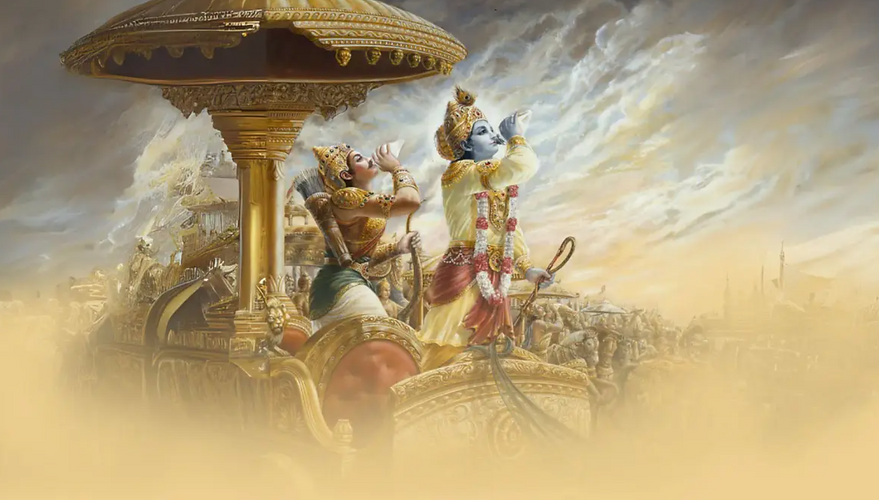
Bhagvad Gita Chapter 13
भगवद् गीता अध्याय १३
Bhagvad Gita Chapter 13 -Kshetra-Kshetragna Vibhaga Yog
भगवद गीता का अध्याय १३ - क्षेत्र-क्षेत्रज्ञ विभाग योग
Chapter 13 of the Bhagavad Gita is titled Kshetra-Kshetragna Vibhaga Yog or The Yog of the Field and the Knower of the Field. This chapter marks the beginning of Gyan yog, the Yog of knowledge.
In this chapter, Shri Krishna explains the distinction between the physical body (the "field" or Kshetra) and the soul or the eternal self (the "knower of the field" or Kshetragna). The chapter delves into the nature of the body, the soul, and the relationship between the two, offering insights into the concept of self-realization.
Shri Krishna begins by describing the body as the "field," a temporary and perishable vessel that houses the soul. He clarifies that while the body undergoes changes and eventually decays, the soul remains eternal and unchanging. The soul is the true self, beyond the physical attributes of the body. Through this distinction, Shri Krishna encourages Arjun to focus on understanding the eternal nature of the self, as opposed to being attached to the fleeting aspects of the material world.
Shri Krishna also elaborates on the qualities and characteristics of the soul, the importance of spiritual knowledge, and the process of self-realization. He emphasizes that the knowledge of the difference between the body and the soul is key to understanding the nature of life, death, and liberation (moksh). Additionally, this chapter outlines the various qualities of a wise person, who perceives the unity of all beings, sees the divine presence in everything, and acts with humility, detachment, and understanding.
Chapter 13 thus introduces profound philosophical concepts related to the nature of the self, urging the seeker to recognize the impermanence of the physical body while realizing the eternal essence of the soul.
भगवद गीता के अध्याय 13 का शीर्षक क्षेत्र-क्षेत्रज्ञ विभाग योग या क्षेत्र का योग और क्षेत्रज्ञ है। यह अध्याय ज्ञान योग की शुरुआत का प्रतीक है।
इस अध्याय में, भगवान कृष्ण भौतिक शरीर ("क्षेत्र" या क्षेत्र) और आत्मा या शाश्वत आत्मा ("क्षेत्रज्ञ" या क्षेत्रज्ञ) के बीच अंतर बताते हैं। अध्याय शरीर, आत्मा और दोनों के बीच संबंधों की प्रकृति पर गहराई से चर्चा करता है, जो आत्म-साक्षात्कार की अवधारणा में अंतर्दृष्टि प्रदान करता है।
कृष्ण शरीर को "क्षेत्र" के रूप में वर्णित करके शुरू करते हैं, जो एक अस्थायी और नाशवान बर्तन है जिसमें आत्मा रहती है। वह स्पष्ट करते हैं कि जब शरीर में परिवर्तन होते हैं और अंततः क्षय होता है, तो आत्मा शाश्वत और अपरिवर्तित रहती है। आत्मा शरीर की भौतिक विशेषताओं से परे, सच्ची आत्मा है। इस अंतर के माध्यम से, कृष्ण अर्जुन को भौतिक दुनिया के क्षणभंगुर पहलुओं से जुड़े रहने के बजाय, स्वयं की शाश्वत प्रकृति को समझने पर ध्यान केंद्रित करने के लिए प्रोत्साहित करते हैं।
कृष्ण आत्मा के गुणों और विशेषताओं, आध्यात्मिक ज्ञान के महत्व और आत्म-साक्षात्कार की प्रक्रिया के बारे में भी विस्तार से बताते हैं। वह इस बात पर ज़ोर देते हैं कि शरीर और आत्मा के बीच के अंतर का ज्ञान जीवन, मृत्यु और मुक्ति (मोक्ष) की प्रकृति को समझने की कुंजी है। इसके अतिरिक्त, यह अध्याय एक बुद्धिमान व्यक्ति के विभिन्न गुणों को रेखांकित करता है, जो सभी प्राणियों की एकता को समझता है, हर चीज़ में ईश्वरीय उपस्थिति को देखता है, और विनम्रता, वैराग्य और समझदारी के साथ कार्य करता है।
इस प्रकार अध्याय 13 आत्मा की प्रकृति से संबंधित गहन दार्शनिक अवधारणाओं का परिचय देता है, तथा साधक को आत्मा के शाश्वत सार का बोध करते हुए भौतिक शरीर की नश्वरता को पहचानने का आग्रह करता है।
अर्जुन उवाच |
प्रकृतिं पुरुषं चैव क्षेत्रं क्षेत्रज्ञमेव च |
एतद्वेदितुमिच्छामि ज्ञानं ज्ञेयं च केशव || 1||
Arjun said: O Keshava, I wish to understand the nature (Prakriti), the spirit (Purusha), the field (Kshetra), and the knower of the field (Kshetrajna), as well as knowledge (Jnana) and the object of knowledge (Jneya).
In this verse, Arjun is seeking clarity from Shri Krishna on fundamental philosophical concepts. He wants to understand the nature (Prakriti), which is the material world, and the spirit (Purusha), which represents the divine consciousness or soul. He also asks about the field (Kshetra), which refers to the physical body, and the knower of the field (Kshetrajna), which is the soul or consciousness that resides in the body and governs its actions. Arjun desires to know about Jnana (knowledge), which is the awareness of the self and the universe, and Jneya (the object of knowledge), which refers to the ultimate truth or the supreme reality. By asking these questions, Arjun seeks to deepen his understanding of the nature of existence, the self, and the divine in order to resolve his internal confusion.
अर्जुन ने कहा: हे केशव, मैं प्रकृति (प्रकृति), पुरुष (आत्मा), क्षेत्र (शरीर) और क्षेत्रज्ञ (आत्मा का ज्ञान) के बारे में समझना चाहता हूँ, साथ ही ज्ञान (ज्ञान) और ज्ञेय (ज्ञान का उद्देश्य) के बारे में भी।
इस श्लोक में अर्जुन भगवान श्री कृष्ण से कुछ बुनियादी दार्शनिक अवधारणाओं के बारे में स्पष्टता प्राप्त करना चाहता है। वह प्रकृति (प्रकृति) को समझना चाहता है, जो भौतिक संसार को संदर्भित करता है, और पुरुष (आत्मा) को, जो दिव्य चेतना या आत्मा का प्रतिनिधित्व करता है। वह क्षेत्र (शरीर) के बारे में भी पूछता है, जो शारीरिक शरीर है, और क्षेत्रज्ञ (आत्मा), जो शरीर में निवास करनेवाला आत्मा या चेतना है, और जो उसके कर्मों का संचालन करता है। अर्जुन ज्ञान (ज्ञान) के बारे में जानना चाहता है, जो आत्मा और ब्रह्मांड का बोध है, और ज्ञेय (ज्ञान का उद्देश्य), जो सर्वोच्च सत्य या परब्रह्म है। इन सवालों को पूछकर अर्जुन अपने अस्तित्व, आत्मा और दिव्य के बारे में गहरी समझ प्राप्त करना चाहता है, ताकि वह अपनी आंतरिक उलझनों को हल कर सके।
श्रीभगवानुवाच |
इदं शरीरं कौन्तेय क्षेत्रमित्यभिधीयते |
एतद्यो वेत्ति तं प्राहु: क्षेत्रज्ञ इति तद्विद: || 2||
The Blessed Lord said: This body, O Kunti’s son, is called the field (Kshetra). He who knows it is called the knower of the field (Kshetrajna) by those who know the truth.
In this verse, Shri Krishna explains that the physical body is referred to as the "field" (Kshetra) in spiritual terms. The body is a vessel in which the soul resides, and it is through this body that individuals experience the material world. The term "Kshetrajna" refers to the soul or the knower of the field, which is the eternal, conscious entity that resides within the body. Those who are knowledgeable and enlightened understand this distinction, recognizing that the soul is different from the body. The body is perishable and subject to change, while the soul is eternal and remains unaffected by the transformations of the physical world. This verse highlights the importance of recognizing the difference between the body and the soul for spiritual growth and understanding.
भगवान ने कहा: यह शरीर, ओ कौन्तेय, क्षेत्र के रूप में जाना जाता है। जो इसे जानता है, उसे क्षेत्रज्ञ कहा जाता है, ऐसा सच्चे जानकारों का कहना है।
इस श्लोक में भगवान श्री कृष्ण ने बताया कि शरीर को "क्षेत्र" कहा जाता है। यह शरीर एक प्रकार से वह स्थली है, जिसमें आत्मा निवास करती है और इस शरीर के माध्यम से व्यक्ति भौतिक संसार का अनुभव करता है। "क्षेत्रज्ञ" वह आत्मा है, जो इस शरीर में निवास करती है और यह शाश्वत, चेतनात्मक तत्व है। जो लोग ज्ञानवंत होते हैं, वे इस अंतर को समझते हैं और जानते हैं कि आत्मा शरीर से भिन्न है। शरीर नश्वर है, जो परिवर्तनशील और मर्त्य है, जबकि आत्मा शाश्वत है और भौतिक संसार के परिवर्तनों से अप्रभावित रहती है। इस श्लोक के माध्यम से श्री कृष्ण यह समझाते हैं कि आत्मा और शरीर के बीच के अंतर को समझना आध्यात्मिक उन्नति और सच्चे ज्ञान के लिए आवश्यक है।
क्षेत्रज्ञं चापि मां विद्धि सर्वक्षेत्रेषु भारत |
क्षेत्रक्षेत्रज्ञयोर्ज्ञानं यत्तज्ज्ञानं मतं मम || 3||
And know Me also to be the knower of the field, O Bharata, in all fields. The knowledge of the field and the knower of the field is considered by Me to be the true knowledge.
In this verse, Shri Krishna reveals that He is the Supreme Soul, the "knower of the field" (Kshetrajna), present in every living being. Just as each individual soul resides within its respective body (the field), Shri Krishna, as the Supreme Consciousness, is the eternal knower within all bodies. The knowledge of the distinction between the field (the body) and the knower of the field (the soul) is considered the highest and most important spiritual knowledge. This understanding is essential to recognize the difference between the temporary, perishable body and the eternal, imperishable soul. Shri Krishna emphasizes that true knowledge is not merely about the physical world but about understanding the eternal soul and its connection to the Supreme Being.
और तुम मुझे भी हर क्षेत्र में, ओ भारत, क्षेत्रज्ञ के रूप में जानो। क्षेत्र और क्षेत्रज्ञ का ज्ञान ही, वह ज्ञान है जो मुझे सर्वोत्तम मान्य है।
इस श्लोक में भगवान श्री कृष्ण बताते हैं कि वे स्वयं प्रत्येक जीव के भीतर स्थित क्षेत्रज्ञ (आत्मा) हैं। जैसे प्रत्येक व्यक्ति की आत्मा अपने शरीर (क्षेत्र) में स्थित रहती है, वैसे ही भगवान कृष्ण सर्वत्र सभी शरीरों के भीतर स्थित सर्वोच्च आत्मा हैं। क्षेत्र (शरीर) और क्षेत्रज्ञ (आत्मा) के बीच का अंतर समझना ही असली ज्ञान है, और यही ज्ञान श्री कृष्ण के अनुसार सर्वोत्तम ज्ञान माना जाता है। यह ज्ञान केवल भौतिक संसार के बारे में नहीं है, बल्कि यह समझने का है कि शरीर नश्वर है, और आत्मा शाश्वत है। इस श्लोक में भगवान कृष्ण यह समझाते हैं कि इस ज्ञान का प्राप्त करना जीवन का सर्वोत्तम उद्देश्य है।
तत्क्षेत्रं यच्च यादृक्च यद्विकारि यतश्च यत् |
स च यो यत्प्रभावश्च तत्समासेन मे शृणु || 4||
Whatever the field is, of whatever nature it is, and whatever its modifications are, and whatever its influence is, hear it all briefly from Me.
In this verse, Shri Krishna invites Arjun to understand the nature of the field (the body) and the modifications that occur within it. The "field" refers to the material body, while the modifications refer to the changes it undergoes, such as birth, growth, decay, and death. The "influence" refers to the various actions, qualities, and characteristics of the field. Shri Krishna explains that everything related to the body and its transformations is part of the material world and subject to change. However, the soul or the "knower of the field" is beyond these changes and remains eternal. Shri Krishna emphasizes that by understanding these aspects, one can better comprehend the relationship between the soul and the body, leading to spiritual knowledge and liberation.
जो भी क्षेत्र है, जो जिस प्रकार का है, जो विकार होते हैं, और जो प्रभाव है, उसे संक्षेप में मुझसे सुनो।
इस श्लोक में भगवान श्री कृष्ण अर्जुन को शरीर (क्षेत्र) के बारे में समझाने के लिए कहते हैं। यह "क्षेत्र" भौतिक शरीर को दर्शाता है, और इसके विकारों का अर्थ है शरीर में होने वाले परिवर्तन जैसे जन्म, वृद्धि, वृद्धावस्था और मृत्यु। "प्रभाव" से तात्पर्य शरीर में होने वाली क्रियाओं, गुणों और लक्षणों से है। कृष्ण यह स्पष्ट करते हैं कि शरीर और इसके बदलाव भौतिक जगत का हिस्सा हैं और ये सब परिवर्तनशील हैं। जबकि आत्मा, जो क्षेत्रज्ञ है, इन बदलावों से परे रहती है और शाश्वत होती है। इस श्लोक में कृष्ण यह समझाते हैं कि इन सभी पहलुओं को समझकर आत्मा और शरीर के संबंध को जानना एक व्यक्ति को आत्मज्ञान और मुक्ति की ओर अग्रसर करता है।
ऋषिभिर्बहुधा गीतं छन्दोभिर्विविधै: पृथक् |
ब्रह्मसूत्रपदैश्चैव हेतुमद्भिर्विनिश्चितै: || 5 ||
This knowledge has been sung by the sages in various ways, through different meters, separately; and also in the Brahma Sutras, through reasoning, with definite conclusions.
In this verse, Shri Krishna refers to the knowledge that He is about to impart as being expressed in many forms by the sages. This knowledge has been conveyed through various poetic meters (Chandras) and diverse interpretations in different scriptures. Additionally, this wisdom is contained in the Brahma Sutras, which are concise aphorisms that present the essence of the Vedic teachings through logical reasoning. Shri Krishna emphasizes that the knowledge He is sharing is not a new one, but a universal truth that has been expressed in different forms by the sages and is supported by well-established reasoning. The verse highlights the depth and richness of spiritual wisdom, which is available in many forms but points to the same ultimate truth.
यह ज्ञान ऋषियों द्वारा विभिन्न प्रकार से गाया गया है, विविध छंदों में पृथक-पृथक रूप से; और ब्रह्मसूत्रों में भी इसे हेतुमद्वारे और निश्चित रूप से प्रस्तुत किया गया है।
इस श्लोक में भगवान श्री कृष्ण उस ज्ञान का उल्लेख करते हैं जो वे अर्जुन को देने जा रहे हैं। वे बताते हैं कि यह ज्ञान पहले से ही विभिन्न ऋषियों द्वारा विभिन्न छंदों (कविता की संरचनाओं) में व्यक्त किया गया है और विभिन्न रूपों में समझाया गया है। साथ ही, यह ज्ञान ब्रह्मसूत्रों में भी पाया जाता है, जो वेदों का सार प्रस्तुत करने वाले शास्त्र हैं। ब्रह्मसूत्रों में यह ज्ञान तार्किक दृष्टिकोण से और निश्चित रूप से व्यक्त किया गया है। कृष्ण यहाँ यह स्पष्ट करते हैं कि यह ज्ञान कोई नया नहीं है, बल्कि एक ऐसा सत्य है जिसे ऋषियों ने विभिन्न रूपों में व्यक्त किया है और यह वेदों और तर्क से सिद्ध है। यह श्लोक यह बताता है कि आध्यात्मिक ज्ञान अनेक रूपों में प्रस्तुत किया गया है, लेकिन सभी का उद्देश्य एक ही परम सत्य को जानना है।
महाभूतान्यङ्ककारो बुद्धिरव्यक्त मेव च |
इन्द्रियाणि दशैकं च पञ्च चेन्द्रियगोचरा: || 6||
The great elements, the ego, the intellect, the unmanifested, and the ten senses, along with the five objects of sense, are also considered as part of the body.
In this verse, Shri Krishna outlines the components that make up the "field" (the physical body and its functions). The "Mahabhutas" (the great elements), namely earth, water, fire, air, and ether, constitute the material foundation of the body. Along with these, the "Ahamkara" (ego) and "Buddhi" (intellect) are also included. The "Avyakta" (the unmanifested) refers to the subtle nature that is the basis for the material world. Additionally, the ten senses are mentioned—five for action (hands, feet, speech, etc.) and five for perception (sight, hearing, touch, taste, and smell). These senses interact with the five objects of sense (the corresponding external elements), further shaping human experience. Shri Krishna is explaining that the body is composed of both the material and subtle aspects, and the senses play a vital role in experiencing the world.
महाभूत (पाँच महान तत्व), अहंकार (ईगो), बुद्धि (इंटेलेक्ट), अव्यक्त (जो दृश्य रूप में नहीं है), दस इन्द्रियाँ, और पाँच इन्द्रियगोष्ठ (इन्द्रियों से जुड़ी बाहरी वस्तुएँ)—ये सभी शरीर के अंग माने जाते हैं।
इस श्लोक में भगवान श्री कृष्ण ने "क्षेत्र" (शरीर और इसके कार्यों) के विभिन्न घटकों को बताया है। महाभूतों (पाँच महान तत्वों) का मतलब है पृथ्वी, जल, अग्नि, वायु और आकाश, जो शरीर के भौतिक आधार हैं। इसके साथ-साथ अहंकार (ईगो) और बुद्धि (इंटेलेक्ट) भी शरीर के घटक माने जाते हैं। अव्यक्त का मतलब है वह सूक्ष्म रूप, जो भौतिक संसार का आधार है, जिसे हम सामान्यतः महसूस नहीं कर सकते। इसके अलावा, दस इन्द्रियाँ, यानी पाँच क्रियात्मक इन्द्रियाँ (हाथ, पैर, वाणी आदि) और पाँच ज्ञानेन्द्रियाँ (दृष्टि, श्रवण, स्पर्श, स्वाद और गंध) भी शरीर का हिस्सा हैं, जो बाहरी वस्तुओं से संपर्क स्थापित करती हैं। इस श्लोक में भगवान कृष्ण ने बताया कि शरीर भौतिक और सूक्ष्म दोनों रूपों से बना हुआ है और इन्द्रियाँ संसार को अनुभव करने में अहम भूमिका निभाती हैं।
इच्छा द्वेष: सुखं दु:खं सङ्घातश्चेतना धृति: |
एतत्क्षेत्रं समासेन सविकारमुदाहृतम् || 7||
Desire, aversion, happiness, sorrow, the aggregate of the body, consciousness, and determination—all these, in their varied forms, constitute the "field."
In this verse, Shri Krishna elaborates on the psychological and emotional aspects of the body, which are considered as part of the "field" or the physical body and mind. Desire (Ichha) and aversion (Dvesha) represent the emotional forces that drive human actions. Happiness (Sukha) and sorrow (Dukha) are the emotional states experienced due to various external or internal conditions. The aggregate of the body (Sanghata) refers to the physical constitution and the mind. Consciousness (Chetana) represents the awareness or sentience, while determination (Dhrti) refers to the willpower that directs one's actions. All of these factors, when taken together, form the "field" or the essence of human existence. Shri Krishna emphasizes the interconnectedness of the mind, emotions, and physical body in the process of experiencing life.
इच्छा, द्वेष, सुख, दुःख, शरीर का संयोग, चेतना और धृति—यह सब मिलकर "क्षेत्र" का रूप बनते हैं।
इस श्लोक में भगवान श्री कृष्ण ने शरीर और मानसिक क्रियाओं के पहलुओं को "क्षेत्र" का हिस्सा बताया है। इच्छा (Ichha) और द्वेष (Dvesha) वे भावनाएँ हैं जो मनुष्य के कार्यों को प्रेरित करती हैं। सुख (Sukha) और दुःख (Dukha) वे मानसिक अवस्थाएँ हैं जो विभिन्न बाहरी और आंतरिक कारणों से उत्पन्न होती हैं। शरीर का संयोग (Sanghata) शरीर और मस्तिष्क के संगठित रूप को दर्शाता है। चेतना (Chetana) वह जागरूकता है, जो अस्तित्व का एहसास कराती है। धृति (Dhrti) वह दृढ़ निश्चय है जो किसी कार्य को करने के लिए मनुष्य की इच्छा को दिशा देता है। इन सभी मानसिक और भौतिक घटकों को मिलाकर भगवान श्री कृष्ण ने "क्षेत्र" का रूप प्रस्तुत किया है।
अमानित्वमदम्भित्वमहिंसा क्षान्तिरार्जवम् |
आचार्योपासनं शौचं स्थैर्यमात्मविनिग्रह: || 8||
इन्द्रियार्थेषु वैराग्यमनहङ्कार एव च |
जन्ममृत्युजराव्याधिदु:खदोषानुदर्शनम् || 9||
असक्तिरनभिष्वङ्ग: पुत्रदारगृहादिषु |
नित्यं च समचित्तत्वमिष्टानिष्टोपपत्तिषु || 10||
मयि चानन्ययोगेन भक्तिरव्यभिचारिणी |
विविक्तदेशसेवित्वमरतिर्जनसंसदि || 11||
अध्यात्मज्ञाननित्यत्वं तत्वज्ञानार्थदर्शनम् |
एतज्ज्ञानमिति प्रोक्तमज्ञानं यदतोऽन्यथा || 12||
“Humility, absence of pride, non-violence, patience, simplicity, devotion to one's teacher, cleanliness, steadiness, and self-control.
Renunciation of attachment to sensory objects, absence of ego, and recognition of the defects of birth, death, old age, and disease.
Detachment from the attachment to sons, wife, and home, and maintaining equanimity in the face of good and bad experiences.
Devotion to Me with undivided attention, unflinching faith, serving in a solitary place, and avoiding unnecessary social engagements.
Constant engagement in spiritual knowledge, understanding the purpose of life, and seeing the ultimate truth. This is the knowledge I have spoken of, and anything other than this is ignorance.”
In these verses, Shri Krishna outlines various qualities that constitute true wisdom and spiritual practice. The first set of verses (8–9) describes virtues like humility, non-violence, patience, simplicity, and control over the senses, which are fundamental to developing a pure and peaceful mind. A person who renounces attachment to worldly things, acknowledges the inevitable sufferings of life (birth, death, disease, old age), and maintains detachment from family and possessions, leads a life in alignment with spiritual wisdom. Verses 10–11 speak about devotion to God, spiritual solitude, and avoiding distractions from worldly pleasures or attachments. The last verse (12) emphasizes that true knowledge is not just intellectual but must be directed towards understanding the self and the ultimate reality, beyond the distractions of the material world.
-
दीनता, अहंकार का अभाव, अहिंसा, धैर्य, सरलता, आचार्य की पूजा, पवित्रता, स्थिरता और आत्मनियंत्रण।
-
इन्द्रिय विषयों से वैराग्य, अहंकार का अभाव, और जन्म, मृत्यु, वृद्धावस्था और रोगों के दोषों का दर्शन।
-
पुत्र, पत्नी और घर से अनुराग का त्याग और अच्छे और बुरे परिणामों में समभाव बनाए रखना।
-
मुझमें अनन्य भक्तिरूप ध्यान, अविचल श्रद्धा, एकांत स्थान पर सेवा, और सामाजिक संलिप्तताओं से परहेज।
-
आध्यात्मिक ज्ञान में निरंतरता, जीवन के उद्देश्य को समझना और अंतिम सत्य का दर्शन करना। यही ज्ञान है जिसे मैंने बताया है, और जो इससे भिन्न है, वह अज्ञान है।
इन श्लोकों में भगवान श्री कृष्ण ने सच्चे ज्ञान और आध्यात्मिक साधना की विभिन्न विशेषताएँ बताई हैं। पहले कुछ श्लोक (8-9) में उन्होंने उन गुणों का वर्णन किया है जो एक शुद्ध और शांत मस्तिष्क को प्राप्त करने के लिए आवश्यक हैं, जैसे कि दीनता, अहिंसा, धैर्य, सरलता, और इन्द्रिय विषयों से वैराग्य। जो व्यक्ति संसारिक वस्तुओं से अनुराग को छोड़ देता है, जीवन के दुखों (जन्म, मृत्यु, रोग, वृद्धावस्था) को पहचानता है और परिवार तथा संपत्ति से निर्लिप्त रहता है, वह आध्यात्मिक मार्ग पर अग्रसर होता है। श्लोक 10-11 में भगवान ने भक्ति, एकांतवास, और सांसारिक व्यस्तताओं से बचने की बात की है। अंतिम श्लोक (12) में बताया गया है कि सच्चा ज्ञान केवल बौद्धिक नहीं, बल्कि आत्मा और परम सत्य की समझ प्राप्त करने का मार्ग है, जो संसारिक उलझनों से परे है।
ज्ञेयं यत्तत्प्रवक्ष्यामि यज्ज्ञात्वामृतमश्रुते |
अनादिमत्परं ब्रह्म न सत्तन्नासदुच्यते || 13||
I shall now explain to you that which is to be known, and by knowing which one attains immortality. It is the supreme, beginningless Brahman, and it is not said to be either existent or non-existent.
In this verse, Shri Krishna reveals the nature of the ultimate truth, which is the supreme Brahman. He emphasizes that by understanding this knowledge, one attains immortality, transcending the cycle of birth and death. This supreme reality is eternal, beginningless, and beyond the concept of dualities such as existence and non-existence. The Brahman described here is not bound by time or space, and cannot be fully grasped through ordinary means. This is a profound and transcendental knowledge that leads to liberation (moksh).
अब मैं तुम्हें उस ज्ञान के बारे में बताऊँगा, जिसे जानकर अमृत को प्राप्त किया जाता है। वह अनादि और परम ब्रह्म है, जिसे न अस्तित्व कहा जा सकता है और न अनस्तित्व।
इस श्लोक में भगवान श्री कृष्ण सर्वोच्च सत्य, जो परम ब्रह्म है, उसका वर्णन कर रहे हैं। वे बताते हैं कि इस ज्ञान को जानने से व्यक्ति अमृत (निराकार अस्तित्व) को प्राप्त करता है, अर्थात् वह जन्म और मृत्यु के चक्र से मुक्त हो जाता है। यह परम सत्य अनादि (जिसका कोई प्रारंभ नहीं) और अतीन्द्रिय है, जो न तो अस्तित्व में है और न ही असत् रूप में। यह ब्रह्म पारलौकिक और निराकार है, जिसे सामान्य तरीकों से नहीं समझा जा सकता। यह अत्यधिक गहन और तात्त्विक ज्ञान है, जो मोक्ष की प्राप्ति की दिशा में मार्गदर्शन करता है।
सर्वत: पाणिपादं तत्सर्वतोऽक्षिशिरोमुखम् |
सर्वत: श्रुतिमल्लोके सर्वमावृत्य तिष्ठति || 14||
He has hands and feet everywhere, eyes, heads, and mouths everywhere. He hears everywhere, and He exists, pervading all, in every part of the world.
In this verse, Shri Krishna describes the omnipresence of the Supreme Divine, who is the ultimate reality. The Supreme Being is present everywhere — with hands, feet, eyes, and ears spread across the entire universe. This signifies that the Divine is not confined to a particular space or place but is all-pervading. The verse conveys the idea that the Supreme Divine is the source and essence of everything in the universe, and nothing exists without Him. It also points to the fact that the Divine is beyond physical limitations and is present in all living beings and the entire creation.
उसके पास सर्वत्र हाथ-पैर हैं, सर्वत्र आँखें, सिर और मुँह हैं। वह सर्वत्र सुनता है, और वह सभी को आवरित करके सभी जगह तिष्ठता है।
इस श्लोक में भगवान श्री कृष्ण परम ब्रह्म की सर्वव्यापीता का वर्णन कर रहे हैं। परमात्मा का अस्तित्व हर स्थान पर है, उनके पास हर जगह हाथ, पैर, आँखें, सिर और मुँह हैं। इसका अर्थ यह है कि ईश्वर किसी विशेष स्थान या रूप में सीमित नहीं हैं, बल्कि वह सर्वव्यापी हैं। यह श्लोक इस बात को स्पष्ट करता है कि परमात्मा ब्रह्मांड के प्रत्येक कण में व्याप्त हैं और सृष्टि के हर हिस्से में उनका अस्तित्व है। उनका रूप और शक्ति सभी वस्तुओं में विद्यमान है, और वे सबकुछ अपने अंतर्गत समेटे हुए हैं।
सर्वेन्द्रियगुणाभासं सर्वेन्द्रियविवर्जितम् |
असक्तं सर्वभृच्चैव निर्गुणं गुणभोक्तृ च || 15||
He appears as the reflection of all the senses, yet is beyond the senses themselves. He is unattached, the sustainer of all, without qualities, and the enjoyer of qualities.
This verse highlights the paradoxical nature of the Supreme Being. While the Divine manifests as the reflection of all the senses — meaning that the Divine is responsible for the experiences we have through our senses — He is not confined to the limitations of the senses themselves. The verse emphasizes that God is unattached, meaning He is not bound by worldly attachments. He is the ultimate sustainer of the universe, providing for all life and beings. Despite being beyond the qualities of the material world, He is also the enjoyer of these very qualities, underscoring His transcendental nature and supremacy over creation.
वह सभी इन्द्रियगुणों का आभास है, फिर भी सभी इन्द्रियगुणों से परे है। वह निःसंग है, सर्वभृत् है, निर्गुण है, और गुणों के भोक्तृ हैं।
इस श्लोक में भगवान के अद्वितीय स्वरूप का वर्णन किया गया है। परमात्मा सभी इन्द्रियगुणों के आभास के रूप में प्रकट होते हैं, अर्थात् वह सभी इन्द्रिय अनुभूतियों के स्रोत हैं, फिर भी वह इन्द्रियगुणों से परे हैं। वह न तो किसी प्रकार के बंधन या स attachment से जुड़े होते हैं, बल्कि सभी का पालन करने वाले हैं। श्लोक यह भी बताता है कि वह निर्गुण होते हुए भी गुणों के भोक्तृ हैं, अर्थात् भौतिक संसार के गुणों से परे होते हुए भी वह उनका अनुभव करते हैं। इस प्रकार, यह श्लोक भगवान के अद्वितीय और परम स्वरूप को दर्शाता है।
बहिरन्तश्च भूतानामचरं चरमेव च |
सूक्ष्मत्वात्तदविज्ञेयं दूरस्थं चान्तिके च तत् || 16||
He is both within and outside all beings, both the moving and the unmoving. Due to His subtle nature, He is beyond the comprehension of the senses, and is far, yet near.
This verse speaks about the omnipresence and subtlety of the Divine. He exists within all living beings (both those that move and those that are immovable), and He is also outside of them, signifying His all-encompassing nature. His true essence is so subtle and transcendental that it cannot be fully grasped by the physical senses. Even though He is beyond the reach of our senses, He is both far and near. This paradoxical nature points to the Divine's ability to be present everywhere, transcending time, space, and limitations of perception.
वह सभी प्राणियों के भीतर और बाहर, चल और अचल दोनों में स्थित हैं। उनकी सूक्ष्मता के कारण वे अप्राप्त हैं और दूर होते हुए भी निकट हैं।
यह श्लोक भगवान की सर्वव्यापकता और सूक्ष्मता को दर्शाता है। वह सभी प्राणियों के भीतर और बाहर उपस्थित हैं, चाहे वे चल प्राणी हों या अचल। भगवान का असली रूप इतना सूक्ष्म है कि इसे शारीरिक इन्द्रियों से समझा नहीं जा सकता। हालांकि वह हमारी समझ से परे हैं, वह दूर होते हुए भी हमारे पास हैं। यह श्लोक भगवान की अद्वितीय प्रकृति को व्यक्त करता है, जो समय, स्थान और इन्द्रियों की सीमाओं से परे है, और हर जगह मौजूद है।
अविभक्तं च भूतेषु विभक्तमिव च स्थितम् |
भूतभर्तृ च तज्ज्ञेयं ग्रसिष्णु प्रभविष्णु च || 17||
He is indivisible in all beings, yet appears as though divided. He is the sustainer of all beings, and the one who both devours and creates them.
This verse describes the paradoxical nature of the Divine. Although He is indivisible, meaning He is one and whole, He manifests as though He is divided among all beings in the world. He is the sustainer of life, providing existence to all creatures. At the same time, He also devours all things during the dissolution of the universe (Pralaya) and creates them again at the beginning of the next cycle. This verse highlights the cyclical nature of creation, preservation, and destruction that is inherent in the cosmic order, all being governed by the same Divine force.
वह सभी प्राणियों में अविभक्त हैं, फिर भी विभक्त प्रतीत होते हैं। वह भूतों के पालनहार हैं, और वही उन्हें ग्रसने और उत्पन्न करने वाले भी हैं।
यह श्लोक भगवान की विरोधाभासी प्रकृति को दर्शाता है। वह सर्वव्यापी और अविभक्त होते हुए भी हर प्राणी में विभक्त रूप में दिखाई देते हैं। वह सभी जीवों के पालनकर्ता हैं, यानी उन्हें अस्तित्व प्रदान करने वाले हैं। साथ ही, वह सृष्टि के संहारक और उत्पन्न करने वाले भी हैं। जब ब्रह्माण्ड का संहार होता है, तो वह सब कुछ समेट लेते हैं और फिर से सृष्टि के प्रारंभ में वही सब कुछ पुनः उत्पन्न करते हैं। इस श्लोक से यह स्पष्ट होता है कि सृष्टि, पालन और संहार का चक्रीय क्रम भगवान की इच्छा और क्रिया द्वारा चलता है।
ज्योतिषामपि तज्ज्योतिस्तमस: परमुच्यते |
ज्ञानं ज्ञेयं ज्ञानगम्यं हृदि सर्वस्य विष्ठितम् || 18||
Among all the forms of light, He is the supreme light that dispels all darkness. He is the knowledge, the object of knowledge, and the goal of knowledge, and is seated in the hearts of all beings.
This verse compares the Divine to the highest form of light, symbolizing wisdom, enlightenment, and knowledge. Just as light dispels darkness, the Divine dispels ignorance and confusion. He is not only the source of knowledge but also the essence and goal of it. The Divine resides in the hearts of all beings, signifying that true understanding and wisdom come from within, through connection with the higher self. The verse highlights that the Divine is both the means and the end of knowledge, revealing the importance of spiritual enlightenment as the highest form of awareness.
सभी प्रकार की ज्योतियों में वह सर्वोत्तम ज्योति है, जो तमस को पार कर देती है। वह ज्ञान, ज्ञेय और ज्ञानगम्य हैं, और सभी प्राणियों के हृदय में स्थित हैं।
यह श्लोक भगवान को सर्वोच्च ज्योति के रूप में प्रस्तुत करता है, जो अज्ञान और अंधकार को समाप्त करता है। जैसे कि ज्योति अंधकार को नष्ट करती है, वैसे ही भगवान अज्ञानता और भ्रम को दूर करते हैं। वह केवल ज्ञान के स्रोत नहीं हैं, बल्कि ज्ञान का रूप और उसका अंतिम लक्ष्य भी हैं। भगवान सभी प्राणियों के हृदय में स्थित हैं, जिसका अर्थ है कि सच्चा ज्ञान और समझ भीतर से, उच्च आत्मा से जुड़कर प्राप्त होते हैं। यह श्लोक यह स्पष्ट करता है कि भगवान ही ज्ञान के माध्यम और लक्ष्य दोनों हैं, और यही सबसे ऊंची चेतना और बोध है।
इति क्षेत्रं तथा ज्ञानं ज्ञेयं चोक्तं समासत: |
मद्भक्त एतद्विज्ञाय मद्भावायोपपद्यते || 19||
Thus, the field, the knowledge, and the object of knowledge have been briefly explained. My devotee, knowing this, attains to My nature.
In this verse, Shri Krishna summarizes the concepts of the "field" (the physical body and the world), the "knowledge" (the understanding of the Divine presence in the world), and the "object of knowledge" (the Divine itself). He states that a devotee, by understanding these concepts, can align themselves with the divine nature. The essence of the verse is that knowledge of the self, the world, and the Divine leads one to transcend worldly limitations and realize their oneness with the Divine. A true devotee, recognizing this knowledge, is drawn closer to the ultimate spiritual truth and becomes one with the Supreme.
इस प्रकार, क्षेत्र, ज्ञान और ज्ञेय को संक्षेप में बताया गया है। मेरा भक्त, इसे जानकर मेरी प्रकृति में पहुंचता है।
इस श्लोक में भगवान श्री कृष्ण ने "क्षेत्र" (शरीर और संसार), "ज्ञान" (ईश्वर के प्रति जागरूकता) और "ज्ञेय" (ईश्वर स्वयं) के तत्वों को संक्षेप में बताया है। वह यह कहते हैं कि जो भक्त इस ज्ञान को समझता है, वह मेरी दिव्य प्रकृति में समाहित हो जाता है। श्लोक का सार यह है कि आत्म, संसार और ईश्वर का ज्ञान प्राप्त करने से व्यक्ति सांसारिक बंधनों को पार करता है और दिव्य से एकाकार हो जाता है। जो भक्त इस ज्ञान को ग्रहण करता है, वह सर्वोच्च आध्यात्मिक सत्य से जुड़ता है और ईश्वर से एक हो जाता है।
प्रकृतिं पुरुषं चैव विद्ध्यनादी उभावपि |
विकारांश्च गुणांश्चैव विद्धि प्रकृतिसम्भवान् || 20||
Understand both Nature (prakriti) and the Spirit (purush) to be beginningless. The transformations and the qualities are also produced by Nature.
In this verse, Shri Krishna explains the dual nature of existence. He instructs Arjun to understand that both Nature (Prakriti) and the Spirit (Purusha) are beginningless, meaning they have no origin in time. While Prakriti (Nature) is responsible for the creation, transformation, and qualities (gunas), Purusha (the Spirit) remains beyond the influence of these transformations. Prakriti is the material cause of everything in the universe, while Purusha is the underlying consciousness. The verse helps in understanding the eternal interplay between these two forces: Prakriti, which undergoes constant transformation, and Purusha, the eternal observer. Both are essential in the creation and functioning of the universe.
प्रकृति और पुरुष दोनों को अज्ञेय समझो। विकार और गुण भी प्रकृति से उत्पन्न होते हैं।
इस श्लोक में भगवान श्री कृष्ण ने अस्तित्व की द्वैतिकता को स्पष्ट किया है। वह अर्जुन को यह समझाने के लिए कहते हैं कि प्रकृति (प्रकृति) और पुरुष (आत्मा) दोनों ही अनादि हैं, यानी इनका कोई प्रारंभ नहीं है। जहां प्रकृति (प्रकृति) सृजन, परिवर्तन और गुणों (गुण) के लिए उत्तरदायी है, वहीं पुरुष (आत्मा) इन परिवर्तनों से परे रहता है। प्रकृति ब्रह्मांड में सब कुछ उत्पन्न करने वाली और भौतिक कारण है, जबकि पुरुष शाश्वत चेतना है। इस श्लोक से यह समझ में आता है कि दोनों शक्तियाँ – प्रकृति, जो लगातार परिवर्तन करती है, और पुरुष, जो शाश्वत पर्यवेक्षक है, ब्रह्मांड की रचना और क्रियावली में महत्वपूर्ण भूमिका निभाती हैं।
कार्यकारणकर्तृत्वे हेतु: प्रकृतिरुच्यते |
पुरुष: सुखदु:खानां भोक्तृत्वे हेतुरुच्यते || 21||
In the role of cause and effect, Nature is said to be the cause; the Spirit is said to be the enjoyer of happiness and sorrow.
In this verse, Shri Krishna distinguishes between the roles of Nature (Prakriti) and the Spirit (Purusha). He explains that Nature (Prakriti) is the material cause of all things, the source from which everything originates, changes, and dissolves. On the other hand, the Spirit (Purusha) is the experiencer, the one who enjoys the fruits of actions, whether happiness or sorrow. The verse highlights that while Nature is responsible for the physical creation and transformation, the Spirit is the conscious entity that experiences the consequences of those transformations. The Spirit, although separate from Nature, is deeply involved in experiencing the outcomes of the processes initiated by Nature.
कार्य और कारण के दृष्टिकोण से प्रकृति को कारण कहा जाता है; पुरुष को सुख और दुःख के अनुभवकर्ता के रूप में कहा जाता है।
इस श्लोक में भगवान श्री कृष्ण ने प्रकृति (प्रकृति) और पुरुष (आत्मा) के कार्य और कारण के दृष्टिकोण से अंतर को स्पष्ट किया है। भगवान ने बताया कि प्रकृति (प्रकृति) सभी चीजों का भौतिक कारण है, वह स्रोत है जिससे सब कुछ उत्पन्न होता है, बदलता है और समाप्त होता है। दूसरी ओर, पुरुष (आत्मा) सुख और दुःख का अनुभव करने वाला है, जो कार्यों के परिणामों का अनुभव करता है। इस श्लोक के माध्यम से यह बताया गया है कि जबकि प्रकृति शारीरिक रचनाओं और परिवर्तनों के लिए जिम्मेदार है, वहीं पुरुष (आत्मा) उन परिवर्तनों के परिणामों को अनुभव करने वाली चेतना है। पुरुष और प्रकृति अलग-अलग हैं, लेकिन पुरुष, प्रकृति द्वारा प्रारंभ किए गए इन सभी कार्यों के परिणामों को अनुभव करता है।
पुरुष: प्रकृतिस्थो हि भुङक्ते प्रकृतिजान्गुणान् |
कारणं गुणसङ्गोऽस्य सदसद्योनिजन्मसु || 22||
The Spirit, dwelling in Nature, experiences the qualities of Nature. The cause of this is the attachment to the qualities, which leads to birth in the realms of existence, both perishable and imperishable.
In this verse, Shri Krishna explains the interaction between the Spirit (Purusha) and Nature (Prakriti). The Spirit, although transcendental and separate from Nature, takes on the qualities of Nature when it dwells within it. These qualities are the three Gunas (Sattva, Rajas, and Tamas), which govern all aspects of the material world. The Spirit’s attachment to these Gunas causes it to experience the pleasures and pains of life. This attachment to the Gunas is the root cause of the cycle of birth and rebirth, as the Spirit is bound by the qualities of Nature, leading it to take new forms in different realms of existence, both temporary (perishable) and eternal (imperishable).
पुरुष, जो प्रकृति में स्थित होता है, प्रकृति के गुणों का अनुभव करता है। इसका कारण है गुणों में आसक्ति, जो जन्मों के चक्र में उत्पत्ति का कारण बनती है, जो नाशमान और अविनाशी दोनों प्रकार के होते हैं।
इस श्लोक में भगवान श्री कृष्ण ने पुरुष (आत्मा) और प्रकृति (प्रकृति) के बीच के संबंध को स्पष्ट किया है। पुरुष, जो अपनी मूल अवस्था में निराकार और निष्कलंक है, जब प्रकृति के भीतर स्थित होता है, तो वह प्रकृति के गुणों का अनुभव करता है। ये गुण तीन प्रकार के होते हैं - सत्त्व, रजस और तमस, जो भौतिक जगत को नियंत्रित करते हैं। इन गुणों में पुरुष की आसक्ति उसे सुख-दुःख का अनुभव कराती है। यह आसक्ति ही जन्म और मृत्यु के चक्र का कारण बनती है, जिससे आत्मा को नाशमान और अविनाशी दोनों प्रकार के जन्मों का अनुभव होता है।
उपद्रष्टानुमन्ता च भर्ता भोक्ता महेश्वर: |
परमात्मेति चाप्युक्तो देहेऽस्मिन्पुरुष: पर: || 23||
The observer, the approver, the supporter, the experiencer, the great Lord, and the supreme soul—thus is the Supreme Spirit (Purusha) described in this body.
In this verse, Shri Krishna describes the various roles that the Supreme Spirit (Purusha) plays while it resides in the body. The Supreme Spirit is the "upadrishta" (observer), the "anumanta" (approver), the "bharta" (supporter), the "bhokta" (experiencer), and the "mahesvara" (great Lord). He is also referred to as the "paramatma" (supreme soul). This means that although the body is governed by the material nature, the Spirit (the Purusha) remains as a silent observer, witnessing the actions of the mind and senses, giving approval and support to the functioning of the body, and experiencing the outcomes of actions. Despite being the supreme entity, the Purusha exists within the body, transcending all material phenomena.
देखने वाला, अनुमोदक, पालनकर्ता, भोगी, महेश्वर और परमात्मा—इस प्रकार देह में स्थित पुरुष को उच्चारित किया गया है।
इस श्लोक में भगवान श्री कृष्ण ने पुरुष (आत्मा) की विभिन्न भूमिकाओं का वर्णन किया है, जब वह शरीर में स्थित होता है। पुरुष को उपद्रष्टा (देखने वाला), अनुमन्ता (अनुमोदक), भर्ता (पालक), भोक्ता (भोगी), महेश्वर (महान ईश्वर) और परमात्मा (परमात्मा) कहा गया है। इसका मतलब यह है कि हालांकि शरीर भौतिक प्रकृति द्वारा नियंत्रित है, पुरुष एक मौन पर्यवेक्षक की तरह कार्य करता है, वह मन और इन्द्रियों की क्रियाओं का निरीक्षण करता है, उनकी अनुमोदना करता है और शरीर के कार्यों को समर्थन प्रदान करता है। वह भले ही सर्वोत्तम तत्व है, फिर भी वह शरीर में स्थित रहता है और सभी भौतिक घटनाओं से परे है।
य एवं वेत्ति पुरुषं प्रकृतिं च गुणै: सह |
सर्वथा वर्तमानोऽपि न स भूयोऽभिजायते || 24||
One who knows the Purusha (the soul) and Prakriti (the material nature), along with the gunas (qualities), is not born again, even though he is functioning in this world in various ways.
In this verse, Shri Krishna explains that a person who understands the true nature of the soul (Purusha) and the material world (Prakriti), along with the three gunas (sattva, rajas, and tamas), is liberated from the cycle of birth and death. Despite continuing to engage in worldly activities, such a person does not undergo rebirth. This is because he has transcended the dualities of pleasure and pain, success and failure, and realizes his true nature as the eternal, unchanging soul, not bound by the fluctuations of material existence. By understanding both the soul and the material nature, he gains liberation and is free from the bondage of reincarnation.
जो पुरुष और प्रकृति को गुणों के साथ जानता है, वह सर्वथा वर्तमान रहते हुए भी पुनः जन्म नहीं लेता।
इस श्लोक में भगवान श्री कृष्ण बताते हैं कि जो व्यक्ति पुरुष (आत्मा) और प्रकृति (भौतिक जगत) को और साथ ही तीन गुणों (सत्त्व, रजस, और तामस) को जानता है, वह पुनः जन्म लेने के चक्र से मुक्त हो जाता है। भले ही वह इस संसार में विभिन्न रूपों में कार्य कर रहा हो, ऐसा व्यक्ति पुनः जन्म नहीं लेता। इसका कारण यह है कि वह सुख-दुःख, सफलता-असफलता की द्वैतों से परे होता है और अपनी सच्ची पहचान के रूप में शाश्वत, अविनाशी आत्मा को जानता है। जब वह आत्मा और भौतिक प्रकृति को समझ लेता है, तो उसे मोक्ष प्राप्त होता है और वह पुनः जन्म के बंधन से मुक्त हो जाता है।
ध्यानेनात्मनि पश्यन्ति केचिदात्मानमात्मना |
अन्ये साङ् ख्येन योगेन कर्मयोगेन चापरे || 25||
Some see the Self through meditation (Dhyana), others through knowledge (Sankhya Yog), and some through the path of action (Karma Yog).
In this verse, Shri Krishna highlights the different paths through which individuals can attain self-realization. He explains that some people realize the true nature of the Self through deep meditation, focusing their mind inwardly (Dhyana Yog). Others may gain this realization through the path of knowledge and wisdom (Sankhya Yog), where they analyze and understand the nature of the soul and the universe. Additionally, some achieve the same goal through the path of action (Karma Yog), where they perform selfless duties and work without attachment to the results, leading them to a deeper understanding of the Self. Each of these paths is valid, and individuals may follow the one that resonates with them the most to achieve spiritual enlightenment.
कुछ लोग ध्यान के द्वारा आत्मा को आत्मा से देखते हैं, अन्य कुछ सांख्य योग और कर्म योग के द्वारा।
इस श्लोक में भगवान श्री कृष्ण यह बताते हैं कि आत्मा की सच्चाई को जानने के विभिन्न रास्ते हैं। कुछ लोग ध्यान (ध्यान योग) के माध्यम से आत्मा का अनुभव करते हैं, जहाँ वे अपनी मानसिकता को आंतरिक रूप से केंद्रित करते हैं। कुछ लोग सांख्य योग के माध्यम से आत्मज्ञान प्राप्त करते हैं, जहाँ वे आत्मा और ब्रह्मा के स्वरूप का विश्लेषण करते हुए ज्ञान प्राप्त करते हैं। कुछ लोग कर्म योग के माध्यम से आत्मा का ज्ञान प्राप्त करते हैं, जिसमें वे निष्काम कर्म करते हुए बिना परिणामों की चिंता किए आत्मज्ञान प्राप्त करते हैं। प्रत्येक मार्ग व्यक्ति की प्रकृति और उसकी यात्रा के अनुसार उपयुक्त है, और ये सभी आत्मसाक्षात्कार की दिशा में ले जाते हैं।
अन्ये त्वेवमजानन्त: श्रुत्वान्येभ्य उपासते |
तेऽपि चातितरन्त्येव मृत्युं श्रुतिपरायणा: || 26||
Others, who do not know the Self in this way, but hear about it from others and engage in devotion through listening, also transcend death by following the teachings of the scriptures.
In this verse, Shri Krishna acknowledges that not everyone is capable of directly experiencing the Self or engaging in meditation or philosophical inquiry. However, those who do not understand the Self directly but instead listen to the scriptures and teachings from others, and approach the divine through devotion, are still able to transcend death. The act of listening to and contemplating the divine teachings, as per the scriptures, can lead to liberation and spiritual elevation. These individuals may not have the intellectual understanding or meditative experience of the Self but still gain the same benefit through the guidance and wisdom imparted through spiritual practices and listening to sacred knowledge.
अन्ये तु एवमजानन्त: श्रुत्वान्येभ्य उपासते। तेऽपि चातितरन्त्येव मृत्युं श्रुतिपरायणाः।
इस श्लोक में भगवान श्री कृष्ण बताते हैं कि सभी लोग आत्मज्ञान प्राप्त करने के लिए ध्यान या तात्त्विक अध्ययन नहीं कर सकते। लेकिन जो लोग सीधे आत्मा को नहीं जानते, परंतु दूसरों से श्रवण करके और शास्त्रों के उपदेशों पर ध्यान देते हुए भक्ति करते हैं, वे भी मृत्यु के पार जा सकते हैं। वे शास्त्रों की शिक्षाओं के आधार पर अपने जीवन को बदलते हुए, आध्यात्मिक उन्नति की ओर बढ़ते हैं और मृत्यु के पार जाने में सफल होते हैं। इन व्यक्तियों के पास सीधे आत्मा का ज्ञान या ध्यान का अनुभव नहीं हो सकता, लेकिन वे शास्त्रों के माध्यम से प्राप्त ज्ञान और भक्ति के मार्ग से मुक्ति प्राप्त करते हैं।
यावत्सञ्जायते किञ्चित्सत्वं स्थावरजङ्गमम् |
क्षेत्रक्षेत्रज्ञसंयोगात्तद्विद्धि भरतर्षभ || 27||
O Bharata (Arjun), whatever being, whether moving or non-moving, is born, know that it is born from the combination of the field (body) and the knower of the field (soul).
In this verse, Shri Krishna explains that every living being, whether it is a plant (non-moving) or an animal (moving), is born due to the union of the body (the field or "kshetra") and the soul (the knower of the field or "kshetrajna"). The physical body, which is subject to birth and death, is the field in which the soul experiences its journey through different lifetimes. The soul itself is eternal and unchanged, while the body is perishable. The combination of these two—the physical body and the eternal soul—gives rise to the living being in this world. This process happens according to the laws of nature, and the soul's presence in the body is what gives life to it.
हे भरतर्षभ! जो कुछ भी स्थावर और जंगम प्राणियों का जन्म होता है, वह क्षेत्र और क्षेत्रज्ञ के संयोग से उत्पन्न होता है, इसे समझो।
इस श्लोक में भगवान श्री कृष्ण बताते हैं कि सभी जीवों का जन्म, चाहे वे स्थावर (गिरगिट, पेड़) हों या जंगम (पशु, मनुष्य), क्षेत्र (शरीर) और क्षेत्रज्ञ (आत्मा) के संयोग से होता है। शरीर, जो जन्म और मृत्यु से प्रभावित है, वह उस क्षेत्र का प्रतीक है जिसमें आत्मा (जो स्थिर और शाश्वत है) अपने जीवन की यात्रा करती है। आत्मा स्वयं अजर-अमर है, जबकि शरीर नाशवान है। इन दोनों का संयोग जीवित प्राणी के रूप में अस्तित्व में आता है। यह प्रक्रिया प्रकृति के नियमों के अनुसार होती है, और आत्मा का शरीर में अस्तित्व ही उसे जीवन प्रदान करता है।
समं सर्वेषु भूतेषु तिष्ठन्तं परमेश्वरम् |
विनश्यत्स्वविनश्यन्तं य: पश्यति स पश्यति || 28||
He who sees the Supreme Lord, who is the same in all beings, and who is undestroyable, even though the bodies are perishable—he truly sees.
In this verse, Shri Krishna explains that the true vision is to see the Supreme Divine (the Parameshwara) as the same in all living beings, irrespective of their external forms. The body, being perishable, is not the true essence of a living being. The soul, or the eternal self, is indestructible. One who perceives the undying nature of the Divine presence in every being and sees beyond the physical forms, realizing the unity in all life, is said to truly "see." This spiritual insight transcends the illusion of individual separateness and leads to true understanding and enlightenment.
जो व्यक्ति परमेश्वर को, जो सभी प्राणियों में समान रूप से स्थित हैं और जो विनाशशील नहीं हैं, देखता है—वह सचमुच देखता है।
इस श्लोक में भगवान श्री कृष्ण बताते हैं कि वास्तविक दृष्टि तब होती है जब व्यक्ति परमेश्वर को सभी प्राणियों में समान रूप से देखता है, और यह समझता है कि आत्मा या दिव्य सत्ता कभी नष्ट नहीं होती, जबकि शरीर नाशवान है। जो व्यक्ति परमेश्वर को प्रत्येक प्राणी में एक समान रूप से देखता है, वह न केवल भौतिक रूपों से परे जाता है, बल्कि वह जीवन की एकता और दिव्य अस्तित्व को समझता है। इस प्रकार की दृष्टि आत्मज्ञान और आत्म-साक्षात्कार की ओर मार्ग प्रशस्त करती है।
समं पश्यन्हि सर्वत्र समवस्थितमीश्वरम् |
न हिनस्त्यात्मनात्मानं ततो याति परां गतिम् || 29||
One who sees the Supreme Lord equally present everywhere, does not harm his own self. Such a person attains the highest goal.
In this verse, Shri Krishna explains that when a person perceives the Supreme Divine as equally present in all beings, they no longer engage in actions that harm others or themselves. The understanding that the Divine resides in all things leads to compassion, non-violence, and self-awareness. By seeing the unity of all existence and the Divine presence in everything, the individual transcends the ego and worldly attachments, leading them to the ultimate spiritual goal: liberation (Moksh). Thus, true wisdom and spiritual realization result in peaceful, righteous actions that do not cause harm and elevate the individual to the highest state of being.
जो व्यक्ति सर्वत्र परमेश्वर को समान रूप से स्थित देखता है, वह अपने आत्मा को हानि नहीं पहुँचाता। ऐसा व्यक्ति उच्चतम गति को प्राप्त करता है।
इस श्लोक में भगवान श्री कृष्ण बताते हैं कि जो व्यक्ति परमेश्वर को हर स्थान और प्राणी में समान रूप से देखता है, वह कभी भी अपने या दूसरों के प्रति हानिप्रद कर्म नहीं करता। यह दृष्टि व्यक्ति को करुणा, अहिंसा और आत्म-जागरूकता की ओर प्रवृत्त करती है। जब व्यक्ति समझता है कि परमेश्वर हर वस्तु में समाहित हैं, तो वह अपने अहंकार और सांसारिक आसक्तियों से ऊपर उठता है। इस प्रकार, इस साक्षात्कार से व्यक्ति आत्मज्ञान और मोक्ष की दिशा में अग्रसर होता है, और उसके कर्म भी शुद्ध, निष्कलंक और उद्धारक होते हैं।
प्रकृत्यैव च कर्माणि क्रियमाणानि सर्वश: |
य: पश्यति तथात्मानमकर्तारं स पश्यति || 30||
All actions are performed by nature, in all beings. One who sees the Self as the non-doer, such a person truly sees.
In this verse, Shri Krishna explains that all actions in the world are driven by nature (Prakriti). It is not the individual who truly performs these actions, but rather the three gunas (modes of nature) that govern the functioning of the world. The person who realizes that their true Self (Atman) is beyond the actions performed by the body and mind, and that it is nature that is responsible for all actions, attains a deep understanding of the ultimate reality. Such a person sees beyond the illusion of doership and experiences true liberation, as they understand that they are not the body or the mind but the eternal soul (Atman).
सभी कर्म प्रकृति द्वारा सभी स्थानों पर किए जाते हैं। जो व्यक्ति अपने आत्मा को कर्ता न मानकर देखता है, वही व्यक्ति सच्चे रूप से देखता है।
इस श्लोक में भगवान श्री कृष्ण बताते हैं कि सभी कार्य प्रकृति (प्रकृति) द्वारा होते हैं और यह कार्य व्यक्ति के शरीर और मन से नहीं, बल्कि प्रकृति के गुणों द्वारा होते हैं। जब व्यक्ति यह समझता है कि उसका आत्मा (आत्मा) इन कार्यों से परे है और यह प्रकृति ही है जो इन कर्मों को कराती है, तब उसे वास्तविक सत्य का बोध होता है। ऐसा व्यक्ति कर्तृत्व की भ्रांति से परे हो जाता है और वास्तविक मुक्ति का अनुभव करता है। वह जानता है कि वह न तो शरीर है और न ही मन, बल्कि वह शाश्वत आत्मा है।
यदा भूतपृथग्भावमेकस्थमनुपश्यति |
तत एव च विस्तारं ब्रह्म सम्पद्यते तदा || 31||
When a person sees the diversity of beings in their unity and the unity in their diversity, then they attain the supreme reality, Brahman.
In this verse, Shri Krishna conveys that when a person perceives all beings as expressions of one underlying truth (Brahman), seeing the interconnectedness and unity in all diversity, they come to understand the ultimate reality. The realization that all beings, whether animate or inanimate, are essentially interconnected and part of the singular existence (Brahman), leads to spiritual enlightenment. Such a person sees the entire creation as one and thus transcends the illusion of separation, achieving union with the supreme divine consciousness.
जब कोई व्यक्ति प्राणीमात्र की विविधता को एकता में और एकता को विविधता में देखता है, तब वह सर्वोच्च ब्रह्म के रूप में सम्पन्न हो जाता है।
इस श्लोक में भगवान श्री कृष्ण बताते हैं कि जब व्यक्ति सभी प्राणियों और वस्तुओं की विविधता को एकता में और एकता को विविधता में देखता है, तो वह ब्रह्म के वास्तविक रूप को समझता है। यह व्यक्ति समझता है कि सभी प्राणी और संसार की प्रत्येक वस्तु एक ही ब्रह्म का स्वरूप हैं। यह ज्ञान उसे आत्म-साक्षात्कार की ओर ले जाता है, जिससे वह ब्रह्म से मिलकर सर्वोत्तम स्थिति को प्राप्त करता है।
अनादित्वान्निर्गुणत्वात्परमात्मायमव्यय: |
शरीरस्थोऽपि कौन्तेय न करोति न लिप्यते || 32||
The Supreme Soul is eternal, without beginning or end, and beyond all qualities. Though residing in the body, O Kunti’s son, it does not act, nor is it tainted.
In this verse, Shri Krishna explains that the Supreme Soul (Brahman) is eternal and beyond the three gunas (qualities) of nature. It is not affected by actions and does not undergo any change, even though it resides within every living being’s body. This divine essence is unaffected by the worldly experiences or the actions of the body. The soul remains pure and untouched, no matter how the body or mind behaves. The distinction between the imperishable soul and the perishable body is highlighted, emphasizing that the soul is beyond the influence of material actions and qualities.
परमात्मा अनादि और निरगुण है, अव्यय है। हालांकि वह शरीर में निवास करता है, ओ कौन्तेय, वह न तो कुछ करता है और न ही वह किसी चीज़ से प्रभावित होता है।
इस श्लोक में भगवान श्री कृष्ण बताते हैं कि परमात्मा न तो जन्म से जुड़ा हुआ है और न ही वह गुणों से प्रभावित है। वह शाश्वत, निराकार और निरगुण है। वह शरीर में रहते हुए भी न तो कोई कार्य करता है और न ही वह किसी चीज़ से लिप्त होता है। यह परमात्मा अनुकूल या प्रतिकूल परिस्थितियों से प्रभावित नहीं होता। शरीर और आत्मा में अंतर स्पष्ट करते हुए, भगवान यह स्पष्ट करते हैं कि आत्मा किसी भी भौतिक अनुभव से अप्रभावित और शुद्ध रहती है।
यथा सर्वगतं सौक्ष्म्यादाकाशं नोपलिप्यते |
सर्वत्रावस्थितो देहे तथात्मा नोपलिप्यते || 33||
Just as the all-pervading ether (space) is not tainted, even though it is present everywhere, similarly the soul, which is present in every body, is not tainted.
In this verse, Shri Krishna compares the soul to ether (space), which is all-pervading and unaffected by any material contamination. Even though ether exists in every part of the universe, it remains untouched by any external elements. Similarly, the soul, though present in every living being's body, is not affected by the actions, emotions, or circumstances of the body. The soul remains pure and untouched, unaffected by the worldly experiences that the body goes through. The verse highlights the distinction between the eternal, unchanging nature of the soul and the temporary, changing nature of the body.
जैसे आकाश (ether) सम्पूर्ण रूप से व्याप्त होते हुए भी किसी भी प्रकार से प्रदूषित नहीं होता, वैसे ही आत्मा भी शरीर में व्याप्त होते हुए भी किसी प्रकार से प्रभावित नहीं होती।
इस श्लोक में भगवान श्री कृष्ण आत्मा और आकाश (ether) के बीच तुलना करते हैं। जैसे आकाश सम्पूर्ण सृष्टि में व्याप्त होने के बावजूद भी किसी भी प्रदूषण से अप्रभावित रहता है, वैसे ही आत्मा भी हर शरीर में व्याप्त होते हुए भी किसी भी भौतिक क्रिया या परिस्थितियों से प्रभावित नहीं होती। आत्मा शुद्ध और अविनाशी होती है, जो शरीर के कार्यों या भौतिक अनुभवों से स्वतंत्र रहती है। यह श्लोक आत्मा की शाश्वतता और उसके निराकार रूप को दर्शाता है।
यथा प्रकाशयत्येक: कृत्स्नं लोकमिमं रवि: |
क्षेत्रं क्षेत्री तथा कृत्स्नं प्रकाशयति भारत || 34||
Just as a single sun illuminates the entire world, similarly, the soul (the field-knower) illuminates the entire body.
In this verse, Shri Krishna makes a comparison between the sun and the soul. Just as the sun, with its single light, brightens the entire world and allows all living beings to see, in a similar way, the soul, which is present in every being’s body, illuminates the entire body. The soul is the source of consciousness and life, and through its presence, the body is able to function, just like the sun enables the world to function by providing light. This analogy emphasizes the soul’s role in the physical body, showing that the soul is the true illuminator, just as the sun is the illuminator of the world.
जैसे एक ही सूर्य सम्पूर्ण लोक को प्रकाशित करता है, वैसे ही क्षेत्री (आत्मा) सम्पूर्ण शरीर को प्रकाशित करता है, हे भारत।
इस श्लोक में भगवान श्री कृष्ण सूर्य और आत्मा के बीच तुलना करते हैं। जैसे एक ही सूर्य अपनी रोशनी से सम्पूर्ण संसार को प्रकाशित करता है, वैसे ही आत्मा (क्षेत्री) भी सम्पूर्ण शरीर को प्रकाशमान करती है। आत्मा ही सचेतना और जीवन का स्रोत है, और उसी के माध्यम से शरीर कार्य करता है, जैसे सूर्य के प्रकाश से संसार जीवित और गतिशील होता है। यह श्लोक आत्मा के प्रकाशमान और शाश्वत होने की भूमिका को दर्शाता है, जो शरीर के सभी कार्यों को नियंत्रित करता है।
क्षेत्रक्षेत्रज्ञयोरेवमन्तरं ज्ञानचक्षुषा |
भूतप्रकृतिमोक्षं च ये विदुर्यान्ति ते परम् || 35||
Those who have the knowledge-eye to perceive the difference between the field and the knower of the field, and understand the liberation of the material nature, they reach the Supreme.
In this verse, Shri Krishna reveals the importance of understanding the distinction between the body (the field) and the soul (the knower of the field). Those who possess true knowledge, represented here as the "knowledge-eye," can recognize that the physical body is temporary, while the soul is eternal. Furthermore, these individuals understand that liberation from material nature (the cycle of birth and death) is possible through this awareness. By realizing the difference between the body and the soul and seeking liberation from the material world, they can attain the Supreme, which is the ultimate goal of human life.
जो लोग क्षेत्र और क्षेत्रज्ञ के बीच के अंतर को ज्ञान के चक्षु से देखते हैं, और भूतप्रकृति के मोक्ष को समझते हैं, वे परब्रह्म को प्राप्त करते हैं।
इस श्लोक में भगवान श्री कृष्ण शरीर (क्षेत्र) और आत्मा (क्षेत्रज्ञ) के बीच के अंतर को समझने की आवश्यकता को बताते हैं। जो लोग ज्ञान की दृष्टि रखते हैं, वे यह समझ पाते हैं कि शरीर नाशवान है, जबकि आत्मा शाश्वत है। इसके अलावा, ये व्यक्ति यह भी समझते हैं कि भूतप्रकृति से मुक्ति प्राप्त करना संभव है, जो जन्म और मृत्यु के चक्र से बाहर निकलने की प्रक्रिया है। जब व्यक्ति इस भेद को समझता है और भूतप्रकृति से मुक्त होने का प्रयास करता है, तो वह परमात्मा, अर्थात परब्रह्म को प्राप्त कर लेता है, जो जीवन का सर्वोच्च उद्देश्य है।
In the concluding section of Chapter 13 of the Bhagavad Gita, Shri Krishna provides Arjun with a deeper understanding of the nature of the self, the body, and the soul. Shri Krishna explains that the true wisdom lies in recognizing the distinction between the body (the Kshetra) and the soul (the Kshetragna). The body is temporary, constantly changing, and subject to decay, whereas the soul is eternal, indestructible, and beyond the physical realm.
Shri Krishna elaborates that the soul exists in all living beings, and the body serves as a temporary vessel. Those who recognize the difference between the two and perceive the soul’s divinity in all beings, regardless of their external forms, are considered wise. Such individuals act selflessly, with compassion, and see beyond the superficial distinctions of caste, gender, and status. They understand that all life is interconnected, and they possess a deeper spiritual awareness.
Shri Krishna also highlights the significance of spiritual knowledge and devotion as the path to liberation. Those who seek to understand the essence of the self, attain detachment from material desires, and engage in righteous actions without attachment to outcomes, are truly enlightened. By realizing the impermanence of the body and the permanence of the soul, they attain peace and liberation from the cycle of birth and death.
In conclusion, Chapter 13 emphasizes the importance of self-awareness, recognizing the eternal nature of the soul, and cultivating wisdom to live a life of detachment, humility, and devotion. This understanding paves the way for spiritual growth, leading to ultimate liberation (moksh).
भगवद गीता के अध्याय 13 के अंतिम भाग में भगवान कृष्ण अर्जुन को स्वयं, शरीर और आत्मा की प्रकृति की गहरी समझ प्रदान करते हैं। कृष्ण बताते हैं कि सच्चा ज्ञान शरीर (क्षेत्र) और आत्मा (क्षेत्रज्ञ) के बीच के अंतर को पहचानने में निहित है। शरीर अस्थायी है, लगातार बदलता रहता है और क्षय के अधीन है, जबकि आत्मा शाश्वत, अविनाशी और भौतिक क्षेत्र से परे है।
कृष्ण विस्तार से बताते हैं कि आत्मा सभी जीवित प्राणियों में मौजूद है, और शरीर एक अस्थायी वाहन के रूप में कार्य करता है। जो लोग दोनों के बीच अंतर को पहचानते हैं और सभी प्राणियों में आत्मा की दिव्यता को देखते हैं, चाहे उनका बाहरी रूप कुछ भी हो, उन्हें बुद्धिमान माना जाता है। ऐसे व्यक्ति निस्वार्थ भाव से, करुणा के साथ कार्य करते हैं और जाति, लिंग और स्थिति के सतही भेदों से परे देखते हैं। वे समझते हैं कि सभी जीवन आपस में जुड़े हुए हैं, और उनके पास एक गहरी आध्यात्मिक जागरूकता है।
कृष्ण मुक्ति के मार्ग के रूप में आध्यात्मिक ज्ञान और भक्ति के महत्व पर भी प्रकाश डालते हैं। जो लोग स्वयं के सार को समझना चाहते हैं, भौतिक इच्छाओं से वैराग्य प्राप्त करते हैं, और परिणामों से आसक्ति के बिना धार्मिक कार्यों में संलग्न होते हैं, वे वास्तव में प्रबुद्ध हैं। शरीर की नश्वरता और आत्मा की शाश्वतता को समझकर, वे जन्म और मृत्यु के चक्र से शांति और मुक्ति प्राप्त करते हैं।
अध्याय 13 में आत्म-जागरूकता, आत्मा की शाश्वत प्रकृति को पहचानने और वैराग्य, विनम्रता और भक्ति का जीवन जीने के लिए ज्ञान विकसित करने के महत्व पर जोर दिया गया है। यह समझ आध्यात्मिक विकास का मार्ग प्रशस्त करती है, जो परम मुक्ति (मोक्ष) की ओर ले जाती है।