
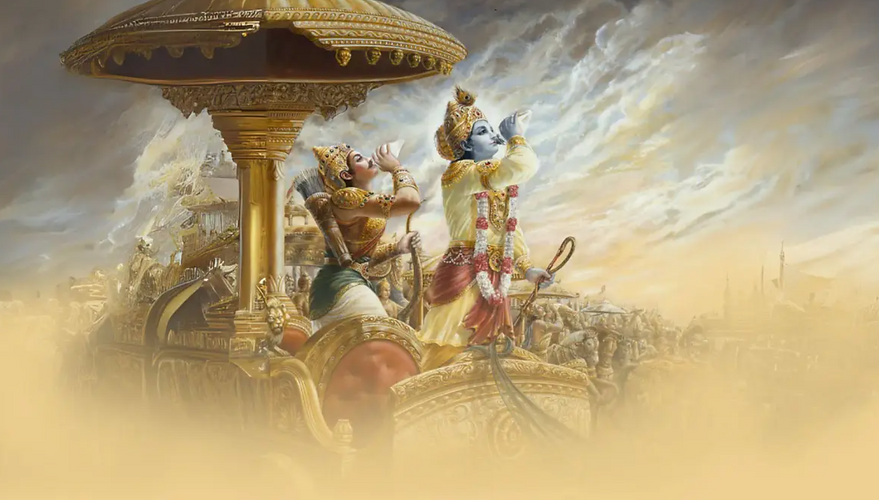
Bhagvad Gita Chapter 7
भगवद् गीता अध्याय ७
Bhagvad Gita Chapter 7 - Gyaan-Vigyaan Yog
भगवद गीता का अध्याय ७ - ज्ञान-विज्ञान योग
This chapter marks the beginning of Bhakti Yog - the path of devotion.
This chapter focuses on the knowledge (Gyaan) and wisdom (Vigyaan) required to understand the Supreme Reality. In this chapter, Shri Krishna reveals the nature of the Absolute Truth, emphasizing both its material and spiritual aspects. He explains how everything in the universe, both living and non-living, is a manifestation of His divine energy.
Shri Krishna begins by stating that only those with unwavering devotion can truly comprehend His infinite nature. He categorizes His divine energy into two forms - the lower (material) and the higher (spiritual) energies. While the lower energy includes the five physical elements (earth, water, fire, air, and space), mind, intellect, and ego, the higher energy is the living force, or the soul (Atman), that animates all beings.
He further explains the rarity of true knowledge, as most people remain entangled in worldly desires. Devotion (Bhakti) is presented as the surest path to understanding God’s omnipresent reality. Shri Krishna also identifies Himself as the essence of everything cherished by humanity - the taste in water, the light of the sun and moon, the sound in space, and the life force in all beings.
This chapter stresses the importance of transcending material illusions (Maya) and surrendering to Shri Krishna for liberation. By doing so, devotees achieve freedom from ignorance and experience divine wisdom, ultimately attaining eternal peace and bliss. This profound knowledge bridges the gap between the finite self and the infinite divine.
है, भक्ति योग - भक्ति के मार्ग की शुरुआत का प्रतीक है।
यह अध्याय सर्वोच्च वास्तविकता को समझने के लिए आवश्यक ज्ञान (ज्ञान) और बुद्धि (विज्ञान) पर केंद्रित है। इस अध्याय में, भगवान कृष्ण ने पूर्ण सत्य की प्रकृति को प्रकट किया है, इसके भौतिक और आध्यात्मिक दोनों पहलुओं पर जोर दिया है। वह बताते हैं कि कैसे ब्रह्मांड में सब कुछ - जीवित और निर्जीव दोनों - उनकी दिव्य ऊर्जा की अभिव्यक्ति है।
कृष्ण यह कहते हुए शुरू करते हैं कि केवल अटूट भक्ति वाले लोग ही वास्तव में उनके अनंत स्वरूप को समझ सकते हैं। वह अपनी दिव्य ऊर्जा को दो रूपों में वर्गीकृत करता है - निम्न (भौतिक) और उच्च (आध्यात्मिक) ऊर्जा। जबकि निचली ऊर्जा में पांच भौतिक तत्व (पृथ्वी, जल, अग्नि, वायु और अंतरिक्ष), मन, बुद्धि और अहंकार शामिल हैं, उच्च ऊर्जा जीवित शक्ति, या आत्मा (आत्मान) है, जो सभी प्राणियों को जीवित करती है।
वह आगे सच्चे ज्ञान की दुर्लभता की व्याख्या करते हैं, क्योंकि अधिकांश लोग सांसारिक इच्छाओं में उलझे रहते हैं। ईश्वर की सर्वव्यापी वास्तविकता को समझने के लिए भक्ति को सबसे निश्चित मार्ग के रूप में प्रस्तुत किया गया है। कृष्ण खुद को मानवता द्वारा पोषित हर चीज के सार के रूप में भी पहचानते हैं - पानी में स्वाद, सूर्य और चंद्रमा की रोशनी, अंतरिक्ष में ध्वनि और सभी प्राणियों में जीवन शक्ति।
यह अध्याय भौतिक भ्रम (माया) को पार करने और मुक्ति के लिए कृष्ण के प्रति समर्पण के महत्व पर जोर देता है। ऐसा करने से, भक्तों को अज्ञानता से मुक्ति मिलती है और दिव्य ज्ञान का अनुभव होता है, अंततः शाश्वत शांति और आनंद प्राप्त होता है। यह गहन ज्ञान सीमित आत्म और अनंत परमात्मा के बीच की दूरी को पाटता है।
श्रीभगवानुवाच |
मय्यासक्तमना: पार्थ योगं युञ्जन्मदाश्रय: |
असंशयं समग्रं मां यथा ज्ञास्यसि तच्छृणु || 1||
“Shri Krishna said: O Parth, with your mind attached to Me, taking refuge in Me, and practicing yog, listen to how you will know Me completely and without any doubt.”
Shri Krishna invites Arjun to focus his mind and heart on Him with unwavering devotion and take complete refuge in Him. By doing so, Arjun will be able to understand Shri Krishna in totality - His material, spiritual, and divine aspects.
The term "Asaktamana" (mind attached to Me) emphasizes devotion and love for God. "Madashrayah" (taking refuge in Me) signifies surrender and acceptance of Shri Krishna as the ultimate guide. Through disciplined practice of "Yog" (spiritual discipline), one achieves clarity of vision and eliminates doubts (Asanshayam).
This shloka highlights the path of Bhakti (devotion) as the means to gain complete knowledge of God. By aligning the mind, heart, and intellect with the divine, one transcends ignorance and attains spiritual wisdom, ultimately leading to liberation (Moksh).
श्री कृष्ण ने कहा: हे पार्थ, अपना मन मुझमें संलग्न करके, मेरी शरण में आकर और योग का अभ्यास करके सुनो कि तुम मुझे कैसे पूरी तरह से और बिना किसी संदेह के जान लोगे।"
श्री कृष्ण अर्जुन को अपने मन और हृदय को अटूट भक्ति के साथ उन पर केंद्रित करने और उनकी पूर्ण शरण लेने के लिए आमंत्रित करते हैं। ऐसा करने से, अर्जुन कृष्ण को समग्रता से समझने में सक्षम होगा - उनके भौतिक, आध्यात्मिक और दिव्य, सभी पहलू।
"असक्तमना" (मुझसे जुड़ा हुआ मन) भगवान के प्रति भक्ति और प्रेम पर जोर देता है। "मदाश्रयः" (मेरी शरण लेना) परम मार्गदर्शक के रूप में कृष्ण के समर्पण और स्वीकृति का प्रतीक है। "योग" (आध्यात्मिक अनुशासन) के अनुशासित अभ्यास के माध्यम से, व्यक्ति दृष्टि की स्पष्टता प्राप्त करता है और संदेह (असंशयम्) को समाप्त करता है।
यह श्लोक भगवान का पूर्ण ज्ञान प्राप्त करने के साधन के रूप में भक्ति के मार्ग पर प्रकाश डालता है। मन, हृदय और बुद्धि को परमात्मा के साथ संरेखित करके, व्यक्ति अज्ञानता को पार कर जाता है और आध्यात्मिक ज्ञान प्राप्त करता है, जो अंततः मुक्ति (मोक्ष) की ओर ले जाता है।
ज्ञानं तेऽहं सविज्ञानमिदं वक्ष्याम्यशेषत: |
यज्ज्ञात्वा नेह भूयोऽन्यज्ज्ञातव्यमवशिष्यते || 2||
"I shall now fully reveal to you this knowledge (Gyaan) along with its realization (Vigyaan). Once you understand this, nothing else will remain to be known in this world."
In this shlok, Shri Krishna promises Arjun the most profound and complete knowledge. Here, Gyaan refers to theoretical knowledge, while Vigyaan refers to experiential wisdom or realization. Shri Krishna asserts that by understanding both aspects, Arjun will achieve a complete vision of reality, leaving no further need for worldly knowledge.
Shri Krishna emphasizes that theoretical knowledge alone is insufficient for liberation. True wisdom comes from direct experience, which can be gained through devotion (Bhakti), contemplation, and surrender to God. This knowledge encompasses both the material world (Prakriti) and the ultimate reality (Parabrahma).
By attaining this comprehensive knowledge, one transcends ignorance and sees the divine presence in everything. Just as the sun illuminates the entire world, divine wisdom removes the darkness of ignorance from the seeker’s mind. This shlok highlights the path of self-realization, where one moves beyond the mundane to perceive the eternal truth of existence.
Shri Krishna assures Arjun that this supreme wisdom will lead to liberation (Moksh), freeing him from all doubts and material bondage.
"अब मैं तुम्हें इस ज्ञान (ज्ञान) को उसके बोध (विज्ञान) सहित पूरी तरह से प्रकट करूंगा। एक बार जब आप इसे समझ लेंगे, तो इस दुनिया में और कुछ भी जानने के लिए शेष नहीं रहेगा।"
इस श्लोक में श्री कृष्ण अर्जुन को सबसे गहन और संपूर्ण ज्ञान का वादा करते हैं। यहाँ, ज्ञान का तात्पर्य सैद्धांतिक ज्ञान से है, जबकि विज्ञान का तात्पर्य अनुभवात्मक ज्ञान या अनुभूति से है। कृष्ण का दावा है कि दोनों पहलुओं को समझने से, अर्जुन वास्तविकता की पूर्ण दृष्टि प्राप्त कर लेगा, और सांसारिक ज्ञान की कोई आवश्यकता नहीं रहेगी।
कृष्ण इस बात पर जोर देते हैं कि मुक्ति के लिए केवल सैद्धांतिक ज्ञान अपर्याप्त है। सच्चा ज्ञान प्रत्यक्ष अनुभव से आता है, जिसे भक्ति, चिंतन और ईश्वर के प्रति समर्पण के माध्यम से प्राप्त किया जा सकता है। यह ज्ञान भौतिक संसार (प्रकृति) और परम वास्तविकता (परब्रह्म) दोनों को समाहित करता है।
इस व्यापक ज्ञान को प्राप्त करके, व्यक्ति अज्ञानता को पार कर जाता है और हर चीज में दिव्य उपस्थिति को देखता है। जिस प्रकार सूर्य संपूर्ण जगत को प्रकाशित करता है, उसी प्रकार दिव्य ज्ञान साधक के मन से अज्ञानता के अंधकार को दूर करता है। यह श्लोक आत्म-साक्षात्कार के मार्ग पर प्रकाश डालता है, जहाँ व्यक्ति सांसारिकता से परे जाकर अस्तित्व के शाश्वत सत्य को समझता है।
भगवान कृष्ण ने अर्जुन को आश्वासन दिया कि यह सर्वोच्च ज्ञान उन्हें सभी संदेहों और भौतिक बंधनों से मुक्त करते हुए मुक्ति (मोक्ष) की ओर ले जाएगा।
मनुष्याणां सहस्रेषु कश्चिद्यतति सिद्धये।
यततामपि सिद्धानां कश्चिन्मां वेत्ति तत्त्वत:||3||
“Among thousands of people, hardly one strives for perfection, and among those who strive and achieve perfection, hardly one truly knows Me in essence.”
Shri Krishna highlights the rarity and difficulty of attaining true knowledge of the Supreme Divine. Out of thousands of human beings, only a few strive for spiritual perfection. Even among those rare individuals who dedicate themselves to spiritual practices like meditation, austerity, and devotion, only a handful are able to truly know Shri Krishna in His complete essence (Tattvatah), which includes His material, spiritual, and divine nature.
This shlok reveals the distinction between ordinary human pursuits and the pursuit of self-realization. Most people remain entangled in worldly desires and material pursuits. Only a few seek higher knowledge and strive for Siddhi (spiritual perfection). However, even after attaining perfection, realizing the true nature of God requires deeper devotion, grace, and surrender.
Shri Krishna implies that intellectual efforts alone are not enough to realize Him. True knowledge comes from a combination of self-effort (through yog, meditation, and devotion) and divine grace. This shlok emphasizes the supreme value of devotion (Bhakti) and the profound difficulty of knowing the divine reality. Only a rare, enlightened soul can perceive Shri Krishna as the ultimate cause of creation, preservation, and dissolution.
“हजारों लोगों में से, शायद ही कोई पूर्णता के लिए प्रयास करता है, और जो लोग प्रयास करते हैं और पूर्णता प्राप्त करते हैं, उनमें से शायद ही कोई मुझे वास्तव में संक्षेप में जानता है।"
श्री कृष्ण सर्वोच्च दिव्य के सच्चे ज्ञान को प्राप्त करने की दुर्लभता और कठिनाई पर प्रकाश डालते हैं। हजारों मनुष्यों में से केवल कुछ ही आध्यात्मिक पूर्णता के लिए प्रयास करते हैं। यहां तक कि उन दुर्लभ व्यक्तियों में से जो खुद को ध्यान, तपस्या और भक्ति जैसी आध्यात्मिक प्रथाओं के लिए समर्पित करते हैं, केवल मुट्ठी भर लोग ही वास्तव में कृष्ण को उनके पूर्ण सार (तत्त्व) में जान पाते हैं, जिसमें उनकी आध्यात्मिक और दिव्य प्रकृति शामिल है।
यह श्लोक सामान्य मानव गतिविधियों और आत्म-साक्षात्कार की खोज के बीच अंतर को प्रकट करता है। अधिकांश लोग सांसारिक इच्छाओं और भौतिक कार्यों में उलझे रहते हैं। केवल कुछ ही लोग उच्च ज्ञान चाहते हैं और सिद्धि (आध्यात्मिक पूर्णता) के लिए प्रयास करते हैं। हालाँकि, पूर्णता प्राप्त करने के बाद भी, ईश्वर के वास्तविक स्वरूप को समझने के लिए गहरी भक्ति, अनुग्रह और समर्पण की आवश्यकता होती है।
कृष्ण का तात्पर्य है कि केवल बौद्धिक प्रयास ही उन्हें महसूस करने के लिए पर्याप्त नहीं हैं। सच्चा ज्ञान आत्म-प्रयास (योग, ध्यान और भक्ति के माध्यम से) और दैवीय कृपा के संयोजन से आता है। यह श्लोक भक्ति के सर्वोच्च मूल्य और दिव्य वास्तविकता को जानने की गहन कठिनाई पर जोर देता है। केवल एक दुर्लभ, प्रबुद्ध आत्मा ही कृष्ण को सृजन, संरक्षण और विघटन के अंतिम कारण के रूप में देख सकती है।
भूमिरापोऽनलो वायु: खं मनो बुद्धिरेव च |
अहङ्कार इतीयं मे भिन्ना प्रकृतिरष्टधा || 4||
“Earth, water, fire, air, space, mind, intellect, and ego - these eight elements constitute My separated material energies.”
In this shlok, Shri Krishna explains the concept of His material energy, which is divided into eight fundamental elements. The first five - earth, water, fire, air, and space - are the physical elements, forming the basis of the material world. The remaining three - mind, intellect, and ego are subtle elements that influence perception, cognition, and identity.
Shri Krishna describes these energies as His “separated” or lower prakriti (material nature), which forms the basis of creation. However, these elements are incapable of feelings and lacks consciousness. The shlok emphasizes that while these energies create the physical and mental aspects of existence, they are distinct from the higher, spiritual energy—consciousness or the soul.
By understanding this distinction, one can transcend material limitations and realize the eternal spiritual reality beyond temporary material manifestations, ultimately leading to self-realization and liberation.
"पृथ्वी, जल, अग्नि, वायु, आकाश, मन, बुद्धि और अहंकार- ये आठ तत्व मेरी अलग-अलग भौतिक ऊर्जा का निर्माण करते हैं।"
इस श्लोक में, भगवान श्री कृष्ण अपनी भौतिक ऊर्जा की अवधारणा को समझाते हैं, जो आठ मूलभूत तत्वों में विभाजित है। पहले पांच-पृथ्वी, जल, अग्नि, वायु और अंतरिक्ष-भौतिक तत्व हैं, जो भौतिक संसार का आधार बनाते हैं। शेष तीन - मन, बुद्धि और अहंकार - सूक्ष्म तत्व हैं जो धारणा, अनुभूति और पहचान को प्रभावित करते हैं।
श्री कृष्ण इन ऊर्जाओं को अपनी निचली प्रकृति (भौतिक प्रकृति) के रूप में वर्णित करते हैं, जो सृष्टि का आधार बनती है। हालाँकि, ये तत्व असंवेदनशील हैं और उनमें चेतना का अभाव है।
अपरेयमितस्त्वन्यां प्रकृतिं विद्धि मे पराम् |
जीवभूतां महाबाहो ययेदं धार्यते जगत् || 5||
“This lower nature (Prakriti) of Mine is distinct from My higher nature. My higher nature consists of the Jiva (living beings), by which this world is sustained.”
Here Shri Krishna explains that His material energy (Apara Prakriti) consists of eight elements - earth, water, fire, air, space, mind, intellect, and ego. However, beyond this is His higher, spiritual energy (Para Prakriti), which consists of all living beings (Jiva). While the material world is governed by inert matter, it is the divine consciousness within living beings that sustains the universe. This shlok emphasizes the distinction between the material and spiritual aspects of existence, urging one to transcend material illusions and recognize the divine essence within all life.
“मेरी यह निचली प्रकृति (प्रकृति) मेरी उच्च प्रकृति से भिन्न है। मेरी उच्च प्रकृति में जीव (जीवित प्राणी) शामिल हैं, जिसके द्वारा यह दुनिया कायम है।
यहां श्री कृष्ण बताते हैं कि उनकी भौतिक ऊर्जा (अपरा प्रकृति) में आठ तत्व शामिल हैं- पृथ्वी, जल, अग्नि, वायु, आकाश, मन, बुद्धि और अहंकार। हालाँकि, इससे परे उनकी उच्च, आध्यात्मिक ऊर्जा (परा प्रकृति) है, जिसमें सभी जीवित प्राणी (जीव) शामिल हैं। जबकि भौतिक संसार जड़ पदार्थ द्वारा शासित होता है, यह जीवित प्राणियों के भीतर की दिव्य चेतना है जो ब्रह्मांड को बनाए रखती है। यह श्लोक अस्तित्व के भौतिक और आध्यात्मिक पहलुओं के बीच अंतर पर जोर देता है, व्यक्ति को भौतिक भ्रम से परे जाने और सभी जीवन के भीतर दिव्य तत्व को पहचानने का आग्रह करता है।
एतद्योनीनि भूतानि सर्वाणीत्युपधारय |
अहं कृत्स्नस्य जगत: प्रभव: प्रलयस्तथा || 6||
“Understand that all living beings have these two natures (material and spiritual) as their source. I am the origin and end of the entire universe.”
Shri Krishna declares Himself as the ultimate source of all creation. The universe and all living beings originate from His material (Apara Prakriti) and spiritual (Para Prakriti) energies. He is both the creator (Prabhava) and the one into whom everything dissolves (Pralaya). This highlights the concept of divine omnipresence Shri Krishna is the cause of creation, sustenance, and destruction. The verse urges seekers to recognize the Supreme Being as the fundamental reality behind existence. It also reinforces the idea that beyond the physical world lies a higher, spiritual truth that one must strive to understand.
“सभी जीवित प्राणियों के स्रोत के रूप में ये दो प्रकृतियाँ (भौतिक और आध्यात्मिक) हैं। मैं संपूर्ण ब्रह्मांड का मूल और अंत हूं।''
श्री कृष्ण स्वयं को समस्त सृष्टि का अंतिम स्रोत घोषित करते हैं। ब्रह्मांड और सभी जीवित प्राणियों की उत्पत्ति उनकी भौतिक (अपरा प्रकृति) और आध्यात्मिक (परा प्रकृति) ऊर्जा से हुई है। वह सृजनकर्ता (प्रभाव) और वह जिसमें सब कुछ विलीन हो जाता है (प्रलय) दोनों है। यह दिव्य सर्वव्यापकता की अवधारणा पर प्रकाश डालता है - कृष्ण सृजन, पालन और विनाश का कारण हैं। यह श्लोक साधकों से अस्तित्व के पीछे की मूलभूत वास्तविकता के रूप में सर्वोच्च सत्ता को पहचानने का आग्रह करता है। यह इस विचार को भी पुष्ट करता है कि भौतिक दुनिया से परे एक उच्च, आध्यात्मिक सत्य है जिसे समझने का प्रयास करना चाहिए।
मत्त: परतरं नान्यत्किञ्चिदस्ति धनञ्जय |
मयि सर्वमिदं प्रोतं सूत्रे मणिगणा इव || 7||
“O Dhananjaya (Arjun), there is nothing superior to Me. Everything rests in Me, like pearls strung on a thread.”
In this verse, Shri Krishna establishes His supreme position as the ultimate reality. He declares that there is no truth beyond Him, emphasizing that everything in existence, both material and spiritual depends on Him, just as pearls are held together by a thread in a necklace. This analogy illustrates that although the thread remains unseen, it is the fundamental force binding everything. Similarly, Shri Krishna, though often not perceived, is the essence that sustains the universe.
It highlights the concept of non-duality (Advaita), where Shri Krishna is both the creator and the sustainer. It urges seekers to recognize the divine presence in all aspects of life and develop unwavering devotion. By realizing Shri Krishna’s all-encompassing nature, one can transcend material illusions and attain spiritual wisdom.
“हे धनंजय (अर्जुन), मुझसे श्रेष्ठ कुछ भी नहीं है। सब कुछ मुझमें ही निहित है, जैसे धागे में बंधे मोती।”
इस श्लोक में श्रीकृष्ण अपनी सर्वोच्च स्थिति को परम सत्य के रूप में स्थापित करते हैं। वह घोषणा करते है कि उससे परे कोई सच्चाई नहीं है, इस बात पर जोर देते हुए कि अस्तित्व में सब कुछ - भौतिक और आध्यात्मिक दोनों - उस पर निर्भर करता है, जैसे मोती एक हार में धागे द्वारा एक साथ रखे जाते हैं। यह सादृश्य दर्शाता है कि यद्यपि धागा अदृश्य रहता है, यह हर चीज़ को बांधने वाली मूलभूत शक्ति है। इसी तरह, कृष्ण, हालांकि अक्सर समझ में नहीं आते, वह सार हैं जो ब्रह्मांड को बनाए रखते हैं।
यह श्लोक अद्वैत की अवधारणा पर प्रकाश डालता है, जहां कृष्ण निर्माता और पालनकर्ता दोनों हैं। यह साधकों से जीवन के सभी पहलुओं में दिव्य उपस्थिति को पहचानने और अटूट भक्ति विकसित करने का आग्रह करते है। कृष्ण की सर्वव्यापी प्रकृति को महसूस करके, कोई भी भौतिक भ्रम को पार कर सकता है और आध्यात्मिक ज्ञान प्राप्त कर सकता है।
रसोऽहमप्सु कौन्तेय प्रभास्मि शशिसूर्ययो: |
प्रणव: सर्ववेदेषु शब्द: खे पौरुषं नृषु || 8||
“Hey Arjun, I am the taste in water, the light in the sun and the moon. I am the sacred syllable Om in all the Vedas, the sound in space, and the ability in humans."
In this shlok, Shri Krishna explains how His divine presence pervades all of creation. He is the essence of water, the light of sun, moon & all the celestial bodies and the sacred Om , the first sound of the universe. He exists in the very fabric of reality.
This verse teaches that by perceiving Shri Krishna in the fundamental aspects of nature, one can develop a deeper spiritual connection. It encourages seekers to recognize divinity in everyday experiences, developing a sense of devotion and humility. The message is that God is not separate from the world but is its very essence, guiding us to see the divine in all things.
“हे अर्जुन, मैं जल में स्वाद, सूर्य और चंद्रमा में प्रकाश हूं। मैं सभी वेदों में पवित्र अक्षर ओम, अंतरिक्ष में ध्वनि और मनुष्यों में क्षमता हूं।"
इस श्लोक में, भगवान कृष्ण बताते हैं कि कैसे उनकी दिव्य उपस्थिति पूरी सृष्टि में व्याप्त है। वह जल का सार, सूर्य, चंद्रमा और सभी खगोलीय पिंडों का प्रकाश और पवित्र ओम है - ब्रह्मांड की पहली ध्वनि। वह वास्तविकता के ताने-बाने में मौजूद है।
यह श्लोक सिखाता है कि प्रकृति के मूलभूत पहलुओं में कृष्ण को देखकर, कोई गहरा आध्यात्मिक संबंध विकसित कर सकता है। यह साधकों को रोजमर्रा के अनुभवों में दिव्यता को पहचानने, भक्ति और विनम्रता की भावना विकसित करने के लिए प्रोत्साहित करता है। संदेश यह है कि ईश्वर संसार से अलग नहीं है, बल्कि इसका सार है, जो हमें सभी चीजों में परमात्मा को देखने के लिए मार्गदर्शन करता है।
पुण्यो गन्ध: पृथिव्यां च तेजश्चास्मि विभावसौ |
जीवनं सर्वभूतेषु तपश्चास्मि तपस्विषु || 9||
"I am the pure fragrance of the earth and the brilliance in fire. I am the life in all beings and the penance of a tapasvi.”
Shri Krishna describes how His divine presence exists in various elements of nature and life. The pleasant fragrance of the earth, the radiance of fire, the vital force in all living beings, and the austerity of those who practice penance—all are manifestations of His supreme energy.
Everything sacred and essential in the universe originates from Shri Krishna. By recognizing His presence in the natural world and within ourselves, we develop a deeper connection with the divine. It encourages seekers to cultivate awareness of God’s influence in everyday life and to practice discipline (tapas) with devotion. Through this realization, one can move beyond material attachments and embrace a spiritual path guided by divine consciousness.
"मैं पृथ्वी की शुद्ध सुगंध और अग्नि में तेज हूं। मैं सभी प्राणियों में जीवन हूं और एक तपस्वी की तपस्या हूं।"
श्री कृष्ण बताते हैं कि कैसे उनकी दिव्य उपस्थिति प्रकृति और जीवन के विभिन्न तत्वों में मौजूद है। पृथ्वी की सुखद सुगंध, अग्नि की चमक, सभी जीवित प्राणियों में जीवन शक्ति, और तपस्या करने वालों की तपस्या - ये सभी उनकी सर्वोच्च ऊर्जा की अभिव्यक्तियाँ हैं।
ब्रह्मांड में हर पवित्र और आवश्यक चीज कृष्ण से उत्पन्न होती है। प्राकृतिक दुनिया में और अपने भीतर उनकी उपस्थिति को पहचानकर, हम परमात्मा के साथ एक गहरा संबंध विकसित करते हैं। यह साधकों को रोजमर्रा की जिंदगी में भगवान के प्रभाव के बारे में जागरूकता पैदा करने और भक्ति के साथ अनुशासन (तप) का अभ्यास करने के लिए प्रोत्साहित करता है। इस अनुभूति के माध्यम से, व्यक्ति भौतिक आसक्तियों से आगे बढ़ सकता है और दिव्य चेतना द्वारा निर्देशित आध्यात्मिक मार्ग अपना सकता है।
बीजं मां सर्वभूतानां विद्धि पार्थ सनातनम् |
बुद्धिर्बुद्धिमतामस्मि तेजस्तेजस्विनामहम् || 10||
"O Arjun, know that I am the eternal seed of all beings. I am the intelligence of the intelligent and the brilliance of the powerful."
Shri Krishna declares Himself as the eternal cause from which all living beings originate. Just as a seed contains the potential for a tree, He is the divine source of creation. He also states that the intellect found in wise individuals and the strength in powerful beings are manifestations of His divine energy.
Here Shri Krishna emphasizes that all intelligence, strength, and creative potential come from God. It teaches seekers to recognize divine presence in wisdom and power, using these gifts for righteousness & not otherwise. By understanding Shri Krishna as the root of existence, one can cultivate humility and gratitude, leading to spiritual growth. The verse inspires individuals to channel their intelligence and strength toward higher, noble purposes, aligning with the divine will.
"हे अर्जुन, यह जान कि मैं सभी प्राणियों का शाश्वत बीज हूं। मैं बुद्धिमानों की बुद्धि और शक्तिशाली लोगों का तेज हूं।"
श्री कृष्ण स्वयं को शाश्वत कारण घोषित करते हैं जिससे सभी जीवित प्राणियों की उत्पत्ति होती है। जिस प्रकार एक बीज में एक वृक्ष की क्षमता होती है, उसी प्रकार वह सृष्टि का दिव्य स्रोत है। उन्होंने यह भी कहा कि बुद्धिमान व्यक्तियों में पाई जाने वाली बुद्धि और शक्तिशाली प्राणियों में पाई जाने वाली शक्ति उनकी दिव्य ऊर्जा की अभिव्यक्तियाँ हैं।
यहां श्री कृष्ण इस बात पर जोर देते हैं कि सारी बुद्धि, शक्ति और रचनात्मक क्षमता ईश्वर से आती है। यह साधकों को ज्ञान और शक्ति में दिव्य उपस्थिति को पहचानना सिखाता है, इन उपहारों का उपयोग धार्मिकता के लिए करना है, अन्यथा नहीं। कृष्ण को अस्तित्व के मूल के रूप में समझकर, व्यक्ति विनम्रता और कृतज्ञता विकसित कर सकता है, जिससे आध्यात्मिक विकास हो सकता है। यह श्लोक व्यक्तियों को अपनी बुद्धि और शक्ति को दैवीय इच्छा के अनुरूप उच्च, महान उद्देश्यों की ओर निर्देशित करने के लिए प्रेरित करता है।
बलं बलवतां चाहं कामरागविवर्जितम् |
धर्माविरुद्धो भूतेषु कामोऽस्मि भरतर्षभ || 11||
"I am the strength of the strong, devoid of desire and attachment. I am the desire in beings that is not contrary to dharm (righteousness)."
HE is the true source of strength in the powerful, but this strength must be free from selfish desires and attachments. Strength should be used for protection, justice and righteousness rather than for egoistic purposes. Shri Krishna also clarifies that He manifests as pure desire - desire that aligns with dharm and does not lead to greed or sin. This means desires that inspire duty, selfless action and spiritual growth are divine.
This shlok teaches that both strength and desire, when used righteously, are forms of divine energy. It encourages individuals to cultivate discipline and use their power and ambitions in ways that serve a higher purpose, promoting balance between material life and spiritual progress.
"मैं बलवानों की शक्ति हूं, इच्छा और आसक्ति से रहित हूं। मैं प्राणियों में वह इच्छा हूं जो धर्म (धार्मिकता) के विपरीत नहीं है।"
वह शक्तिशाली में शक्ति का सच्चा स्रोत है, लेकिन यह शक्ति स्वार्थी इच्छाओं और आसक्तियों से मुक्त होनी चाहिए। शक्ति का उपयोग अहंकारपूर्ण उद्देश्यों की बजाय सुरक्षा, न्याय और धार्मिकता के लिए किया जाना चाहिए। श्री कृष्ण यह भी स्पष्ट करते हैं कि वह शुद्ध इच्छा के रूप में प्रकट होते हैं - ऐसी इच्छा जो धर्म के अनुरूप हो और लालच या पाप की ओर ले न जाए। इसका मतलब यह है कि कर्तव्य, निस्वार्थ कार्य और आध्यात्मिक विकास को प्रेरित करने वाली इच्छाएं दिव्य हैं।
यह श्लोक सिखाता है कि शक्ति और इच्छा दोनों, जब सही तरीके से उपयोग की जाती हैं, तो दिव्य ऊर्जा के रूप हैं। यह व्यक्तियों को अनुशासन विकसित करने और अपनी शक्ति और महत्वाकांक्षाओं का उपयोग उन तरीकों से करने के लिए प्रोत्साहित करता है जो उच्च उद्देश्य की पूर्ति करते हैं, भौतिक जीवन और आध्यात्मिक प्रगति के बीच संतुलन को बढ़ावा देते हैं।
ये चैव सात्त्विका भावा राजसास्तामसाश्च ये |
मत्त एवेति तान्विद्धि न त्वहं तेषु ते मयि || 12||
"Know that all states of being—whether sattvic (pure), rajasic (passionate), or tamasic (ignorant) , originate from Me. Yet, I am not in them, and they are not in Me."
Shri Krishna explains that the three gunas (modes of nature) - sattva (goodness, purity), rajas (passion, activity), and tamas (ignorance, inertia)—all arise from His divine energy. These gunas influence human behavior, thoughts, and actions, shaping the material world. However, though these qualities originate from Him, He remains beyond them, untouched and transcendental. This means that although He is the ultimate source of everything, He is not bound by the limitations of these material modes.
This teaches that while individuals are influenced by the gunas, they can transcend them through devotion and spiritual wisdom. By aligning with Shri Krishna’s divine nature, one can rise above the dualities of the material world and attain liberation (moksh). It encourages seekers to cultivate purity, control desires, and seek higher spiritual knowledge.
"जान लो कि अस्तित्व की सभी अवस्थाएँ - चाहे सात्विक (शुद्ध), राजसिक (भावुक), या तामसिक (अज्ञानी) - मुझसे उत्पन्न होती हैं। फिर भी, मैं उनमें नहीं हूँ, और वे मुझ में नहीं हैं।"
श्री कृष्ण बताते हैं कि तीन गुण (प्रकृति के गुण) - सत्व (अच्छाई, पवित्रता), रजस (जुनून, गतिविधि), और तमस (अज्ञान, जड़ता) - सभी उनकी दिव्य ऊर्जा से उत्पन्न होते हैं। ये गुण मानव व्यवहार, विचारों और कार्यों को प्रभावित करते हैं और भौतिक संसार को आकार देते हैं। हालाँकि, यद्यपि ये गुण उससे उत्पन्न होते हैं, फिर भी वह उनसे परे, अछूता और पारलौकिक रहता है। इसका मतलब यह है कि यद्यपि वह हर चीज का अंतिम स्रोत है, वह इन भौतिक साधनों की सीमाओं से बंधा नहीं है।
यह सिखाता है कि जब व्यक्ति गुणों से प्रभावित होते हैं, तो वे भक्ति और आध्यात्मिक ज्ञान के माध्यम से उन्हें पार कर सकते हैं। कृष्ण के दिव्य स्वभाव के साथ जुड़कर, व्यक्ति भौतिक संसार के द्वंद्वों से ऊपर उठ सकता है और मुक्ति (मोक्ष) प्राप्त कर सकता है। यह साधकों को पवित्रता विकसित करने, इच्छाओं पर नियंत्रण रखने और उच्च आध्यात्मिक ज्ञान प्राप्त करने के लिए प्रोत्साहित करता है।
त्रिभिर्गुणमयैर्भावैरेभि: सर्वमिदं जगत् |
मोहितं नाभिजानाति मामेभ्य: परमव्ययम् || 13||
"The entire world is deluded by these three modes of nature - sattva (goodness), rajas (passion), and tamas (ignorance). Because of this delusion, people fail to recognize Me, who is beyond these modes and who is eternal."
The material world operates under the influence of the three gunas (modes of nature). These qualities bind human beings to worldly existence, creating illusions of happiness, ambition, and ignorance. As a result, people become engrossed in material pleasures and struggles, failing to perceive the Supreme Divine, who is beyond all these influences.
HE is transcendental—beyond time, space, and the changing nature of the world. However, due to attachment and ego, people remain unaware of HIS true existence.
This verse teaches that to realize the Supreme, one must go beyond the material modes through spiritual wisdom, devotion (bhakti), and self-discipline. By surrendering to HIM one can overcome illusion (maya) and attain true enlightenment.
"पूरी दुनिया प्रकृति के इन तीन गुणों - सत्व (अच्छाई), राजस (जुनून), और तमस (अज्ञान) से भ्रमित है। इस भ्रम के कारण, लोग मुझे पहचानने में विफल रहते हैं, जो इन गुणों से परे है और जो शाश्वत है।"
भौतिक संसार तीन गुणों (प्रकृति के गुणों) के प्रभाव में संचालित होता है। ये गुण मनुष्य को सांसारिक अस्तित्व से बांधते हैं, खुशी, महत्वाकांक्षा और अज्ञानता का भ्रम पैदा करते हैं। परिणामस्वरूप, लोग भौतिक सुखों और संघर्षों में फंस जाते हैं और सर्वोच्च ईश्वर को समझने में असफल हो जाते हैं, जो इन सभी प्रभावों से परे है।
वह पारलौकिक है - समय, स्थान और दुनिया की बदलती प्रकृति से परे। हालाँकि, मोह और अहंकार के कारण लोग उनके वास्तविक अस्तित्व से अनजान रहते हैं।
यह श्लोक सिखाता है कि सर्वोच्च को महसूस करने के लिए, व्यक्ति को आध्यात्मिक ज्ञान, भक्ति (भक्ति), और आत्म-अनुशासन के माध्यम से भौतिक साधनों से परे जाना होगा। उसके प्रति समर्पण करके व्यक्ति भ्रम (माया) पर विजय पा सकता है और सच्चा ज्ञान प्राप्त कर सकता है।
दैवी ह्येषा गुणमयी मम माया दुरत्यया |
मामेव ये प्रपद्यन्ते मायामेतां तरन्ति ते || 14||
"This divine illusion (Maya), consisting of the three modes of nature, is difficult to overcome. But those who surrender to Me can easily cross beyond it."
The material world is controlled by His divine energy, Maya, which operates through the three gunas - sattva, rajas and tamas. This Maya creates illusion, binding souls in the cycle of birth and death, making it difficult to perceive the eternal truth. However, Shri Krishna assures that those who surrender to Him with devotion and faith can transcend Maya. By focusing on spiritual wisdom and detaching from material desires, one can break free from the illusion and attain liberation (moksh).
This verse emphasizes the importance of surrender and devotion as the easiest and surest path to overcoming worldly attachments and realizing the Supreme Divine. It inspires seekers to place trust in Krishna and follow the path of righteousness.
"प्रकृति के तीन गुणों से युक्त इस दिव्य भ्रम (माया) पर विजय पाना कठिन है। लेकिन जो लोग मेरे प्रति समर्पित हो जाते हैं, वे आसानी से इससे पार पा सकते हैं।"
भौतिक जगत उनकी दिव्य ऊर्जा, माया द्वारा नियंत्रित होता है, जो तीन गुणों- सत्व, रजस और तम के माध्यम से संचालित होती है। यह माया भ्रम पैदा करती है, आत्माओं को जन्म और मृत्यु के चक्र में बांधती है, जिससे शाश्वत सत्य को समझना मुश्किल हो जाता है। हालाँकि, कृष्ण आश्वासन देते हैं कि जो लोग भक्ति और विश्वास के साथ उनके प्रति समर्पित होते हैं, वे माया से परे हो सकते हैं। आध्यात्मिक ज्ञान पर ध्यान केंद्रित करके और भौतिक इच्छाओं से अलग होकर, कोई भी भ्रम से मुक्त हो सकता है और मुक्ति (मोक्ष) प्राप्त कर सकता है।
यह श्लोक सांसारिक आसक्तियों पर काबू पाने और सर्वोच्च दिव्य को महसूस करने के सबसे आसान और सुनिश्चित मार्ग के रूप में समर्पण और भक्ति के महत्व पर जोर देता है। यह साधकों को कृष्ण पर भरोसा रखने और धार्मिकता के मार्ग पर चलने के लिए प्रेरित करता है।
न मां दुष्कृतिनो मूढा: प्रपद्यन्ते नराधमा: |
माययापहृतज्ञाना आसुरं भावमाश्रिता: || 15||
"Those who are deluded, who are sinful, whose knowledge is stolen by illusion and who have embraced a demonic nature do not surrender to Me."
In this shlok, Shri Krishna explains why some people fail to recognize and surrender to Him. He categorizes them into four types:
-
Dushkritina (Sinful People): Those who engage in wrongdoings and ignore dharma.
-
Moodha (Foolish and Ignorant): Those who are blinded by material desires and fail to seek higher wisdom.
-
Māyayāpahṛta-jñānā (Deluded by Maya): Those whose intellect is clouded by illusion, preventing them from understanding the divine truth.
-
Āsuraṁ bhāvam āśritāḥ (Possessing a Demonic Nature): Those who are arrogant, egoistic, and hostile to spirituality.
This verse teaches that attachment to materialism and ego prevents one from walking the path of spirituality & connecting with the Absolute. However, through devotion and righteousness, one can overcome these obstacles and attain divine grace. Shri Krishna urges seekers to choose the path of knowledge and surrender to Him.
"जो लोग भ्रमित हैं, जो पापी हैं, जिनका ज्ञान माया द्वारा चुराया गया है और जिन्होंने राक्षसी स्वभाव को अपनाया है, वे मेरी शरण में नहीं आते।"
इस श्लोक में, श्री कृष्ण बताते हैं कि क्यों कुछ लोग उन्हें पहचानने और उनके प्रति समर्पण करने में विफल रहते हैं। वे उन्हें चार प्रकारों में वर्गीकृत करते हैं: 1. दुष्कृतिन (पापी लोग): जो गलत कामों में लिप्त रहते हैं और धर्म की उपेक्षा करते हैं। 2. मूढ़ (मूर्ख और अज्ञानी): जो भौतिक इच्छाओं से अंधे हो जाते हैं और उच्च ज्ञान प्राप्त करने में विफल हो जाते हैं। 3. मायापहृत-ज्ञान (माया से भ्रमित): जिनकी बुद्धि माया से ढकी हुई है, जो उन्हें ईश्वरीय सत्य को समझने से रोकती है। 4. आसुरं भावं आश्रित: (राक्षसी स्वभाव वाले): जो अभिमानी, अहंकारी और आध्यात्मिकता के विरोधी हैं। यह श्लोक सिखाता है कि भौतिकवाद और अहंकार के प्रति आसक्ति व्यक्ति को आध्यात्मिकता के मार्ग पर चलने और परम से जुड़ने से रोकती है। हालाँकि, भक्ति और धार्मिकता के माध्यम से, व्यक्ति इन बाधाओं को दूर कर सकता है और ईश्वरीय कृपा प्राप्त कर सकता है। कृष्ण साधकों से ज्ञान का मार्ग चुनने और उनके प्रति समर्पण करने का आग्रह करते हैं।
चतुर्विधा भजन्ते मां जना: सुकृतिनोऽर्जुन |
आर्तो जिज्ञासुरर्थार्थी ज्ञानी च भरतर्षभ || 16||
"Among the righteous, there are four types of people who seek refuge in Me: the distressed, the seeker of knowledge, the seeker of material gain, and the wise devotee who is always in spiritual pursuit."
In this verse, Shri Krishna categorizes four types of individuals who come to Him for guidance and support:
-
Distressed (Artha): Those seeking relief from suffering and misfortune.
-
Seeker of Knowledge (Jigyasu): Those pursuing wisdom and understanding of the truth.
-
Seeker of Material Gain (Artharti): Those in pursuit of material wealth or worldly objectives.
-
The Wise Devotee (Jnani): Those who worship HIM with complete understanding, devotion, and love, seeing HIM as the Supreme Truth.
All these seekers, regardless of their initial intentions, can attain divine grace. However, the wise devotee, who seeks HIM for the sake of divine knowledge, is considered the most elevated. This verse encourages people to seek refuge in HIM for liberation and spiritual growth, regardless of their starting point.
“धर्मात्माओं में चार प्रकार के लोग मेरी शरण में आते हैं: व्यथित, ज्ञान के साधक, भौतिक लाभ के साधक और हमेशा आध्यात्मिक खोज में लगे रहने वाले बुद्धिमान भक्त।"
इस श्लोक में, कृष्ण चार प्रकार के व्यक्तियों को वर्गीकृत करते हैं जो मार्गदर्शन और सहायता के लिए उनके पास आते हैं: 1. व्यथित (अर्थ): वे जो दुख और दुर्भाग्य से मुक्ति चाहते हैं। 2. ज्ञान के साधक (जिज्ञासु): वे जो ज्ञान और सत्य की समझ की खोज में लगे हैं। 3. भौतिक लाभ के साधक (अर्थार्थी): वे जो भौतिक धन या सांसारिक उद्देश्यों की खोज में लगे हैं। 4. बुद्धिमान भक्त (ज्ञानी): वे जो पूर्ण समझ, भक्ति और प्रेम के साथ उनकी पूजा करते हैं, उन्हें सर्वोच्च सत्य के रूप में देखते हैं। ये सभी साधक, अपने शुरुआती इरादों के बावजूद, दिव्य कृपा प्राप्त कर सकते हैं। हालाँकि, बुद्धिमान भक्त, जो दिव्य ज्ञान के लिए उनकी तलाश करता है, उसे सबसे श्रेष्ठ माना जाता है। यह श्लोक लोगों को मुक्ति और आध्यात्मिक विकास के लिए उनकी शरण लेने के लिए प्रोत्साहित करता है, चाहे उनका प्रारंभिक बिंदु कुछ भी हो।
तेषां ज्ञानी नित्ययुक्त एकभक्तिर्विशिष्यते |
प्रियो हि ज्ञानिनोऽत्यर्थमहं स च मम प्रिय: || 17||
"Of all, the wise devotee (Jnani) who worships Me with understanding, is the highest. For I am the ultimate goal of their knowledge and they remain fully aligned with me through true devotion."
Shri Krishna explains the importance of wisdom in the spiritual journey. The highest devotee is the one who has a true understanding of the nature of the self and the Supreme Being. The Jnani sees beyond the material world and surrenders with deep understanding and devotion to the Divine. This individual knows that HE is the ultimate source of all life and everything is intertwined in Him.
While other seekers may come to HIM for material reasons, the wise devotee is the most elevated because they seek the truth itself and not material benefits. True devotion, rooted in wisdom and alignment with divine truth, is the path to liberation (moksh). This verse inspires us to cultivate a deeper understanding of the divine and connect with it through pure devotion & no selfish interests.
"सभी में से, बुद्धिमान भक्त (ज्ञानी) जो समझ के साथ मेरी पूजा करता है, वह सर्वोच्च है। क्योंकि मैं उनके ज्ञान का अंतिम लक्ष्य हूँ और वे सच्ची भक्ति के माध्यम से मेरे साथ पूरी तरह से जुड़े रहते हैं।"
श्री कृष्ण आध्यात्मिक यात्रा में ज्ञान के महत्व को समझाते हैं। सर्वोच्च भक्त वह है जिसे स्वयं और सर्वोच्च सत्ता की प्रकृति की सच्ची समझ है। ज्ञानी भौतिक दुनिया से परे देखता है और गहरी समझ और भक्ति के साथ ईश्वर के प्रति समर्पण करता है। यह व्यक्ति जानता है कि वह सभी जीवन का अंतिम स्रोत है और सब कुछ उसी में समाया हुआ है। जबकि अन्य साधक भौतिक कारणों से उनके पास आ सकते हैं, बुद्धिमान भक्त सबसे श्रेष्ठ है क्योंकि वे भौतिक लाभों की नहीं बल्कि सत्य की तलाश करते हैं। ज्ञान और ईश्वरीय सत्य के साथ संरेखण में निहित सच्ची भक्ति मुक्ति (मोक्ष) का मार्ग है। यह श्लोक हमें ईश्वर की गहरी समझ विकसित करने और शुद्ध भक्ति और बिना किसी स्वार्थ के उसके साथ जुड़ने के लिए प्रेरित करता है।
उदारा: सर्व एवैते ज्ञानी त्वात्मैव मे मतम् |
आस्थित: स हि युक्तात्मा मामेवानुत्तमां गतिम् || 18||
"Among all devotees, the one who worships Me with the highest level of devotion, recognizing Me as the supreme truth, is the most exalted. They are fully devoted, and their hearts are dedicated to Me with unwavering faith and love."
The highest form of worship is the one where a devotee’s knowledge is rooted in divine truth and they dedicate their soul to the Supreme Being. The devotee who acknowledges Shri Krishna as the ultimate reality, the source of all existence, and remains aligned with this understanding is the most distinguished.
This devotee’s devotion is unconditional and they transcend the dualities of the material world. Shri Krishna emphasizes that such a person, who deeply comprehends the nature of reality and lives in harmony with it, reaches the highest level of spiritual achievement. This encourages us to cultivate a deeper connection with the divine through wisdom, love, and devotion, seeking the Supreme Truth above all else.
"सभी भक्तों में, जो मुझे सर्वोच्च सत्य के रूप में पहचानते हुए, उच्चतम स्तर की भक्ति के साथ मेरी पूजा करता है, वह सबसे श्रेष्ठ है। वे पूरी तरह से समर्पित हैं, और उनके दिल अटूट विश्वास और प्रेम के साथ मेरे प्रति समर्पित हैं।"
पूजा का उच्चतम रूप वह है जहाँ भक्त का ज्ञान दिव्य सत्य में निहित होता है और वे अपनी आत्मा को सर्वोच्च सत्ता को समर्पित करते हैं। वह भक्त जो कृष्ण को परम वास्तविकता, सभी अस्तित्व का स्रोत मानता है, और इस समझ के साथ जुड़ा रहता है, वह सबसे प्रतिष्ठित है।
इस भक्त की भक्ति बिना शर्त होती है और वे भौतिक दुनिया के द्वंद्वों से परे होते हैं। कृष्ण इस बात पर जोर देते हैं कि ऐसा व्यक्ति, जो वास्तविकता की प्रकृति को गहराई से समझता है और उसके साथ सामंजस्य में रहता है, आध्यात्मिक उपलब्धि के उच्चतम स्तर तक पहुँचता है। यह हमें ज्ञान, प्रेम और भक्ति के माध्यम से दिव्य के साथ एक गहरा संबंध बनाने के लिए प्रोत्साहित करता है, जो सर्वोच्च सत्य की तलाश करता है।
बहूनां जन्मनामन्ते ज्ञानवान्मां प्रपद्यते |
वासुदेव: सर्वमिति स महात्मा सुदुर्लभ: || 19||
"After many births and deaths, the wise person, who has gained true knowledge, surrenders to Me, realizing that I am the ultimate truth. Such a great soul is very rare."
Bhagwan speaks of the journey of spiritual realization. He explains that after countless lifetimes, a soul, through various experiences, eventually attains true knowledge and understanding of the Supreme Being. Upon realizing that HE is the ultimate reality - the all-encompassing truth - the wise person surrenders completely to HIM.
Such a devotee is a rare soul, as only after transcending ignorance and ego can one come to this realization. This verse underscores the importance of spiritual wisdom and devotion, implying that liberation (moksh) is achieved through a deep understanding of the divine. It encourages us to persist on the spiritual path, as true realization comes after many lifetimes of learning and growth.
"अनेक जन्मों और मृत्युओं के पश्चात्, सच्चा ज्ञान प्राप्त करने वाला बुद्धिमान व्यक्ति, यह अनुभव करते हुए कि मैं ही परम सत्य हूँ, मेरी शरण में आता है। ऐसी महान आत्मा बहुत दुर्लभ है।"
भगवान आध्यात्मिक अनुभूति की यात्रा के बारे में बताते हैं। वे बताते हैं कि अनगिनत जन्मों के पश्चात्, एक आत्मा, विभिन्न अनुभवों के माध्यम से, अंततः परम सत्ता के बारे में सच्चा ज्ञान और समझ प्राप्त करती है। यह अनुभव करने पर कि वह परम सत्य है - सर्वव्यापी सत्य - बुद्धिमान व्यक्ति पूरी तरह से उसके प्रति समर्पित हो जाता है। ऐसा भक्त एक दुर्लभ आत्मा है, क्योंकि अज्ञानता और अहंकार से ऊपर उठने के पश्चात ही कोई इस अनुभूति तक पहुँच सकता है। यह श्लोक आध्यात्मिक ज्ञान और भक्ति के महत्व को रेखांकित करता है, जिसका अर्थ है कि मुक्ति (मोक्ष) दिव्यता की गहन समझ के माध्यम से प्राप्त होती है। यह हमें आध्यात्मिक पथ पर बने रहने के लिए प्रोत्साहित करता है, क्योंकि सच्चा बोध कई जन्मों के सीखने और विकास के पश्चात आता है।
कामैस्तैस्तैर्हृतज्ञाना: प्रपद्यन्तेऽन्यदेवता: |
तं तं नियममास्थाय प्रकृत्या नियता: स्वया || 20||
"Those whose wisdom is stolen by various desires surrender to other deities, following specific rules and worship practices according to their own nature."
Shri Krishna explains that people whose intellect is clouded by material desires surrender to different deities, following rituals according to their nature. Instead of seeking the Supreme Truth, they worship gods who can fulfill their worldly wishes.
Shri Krishna clarifies that such worship is not wrong but limited in spiritual growth. Devotees driven by temporary gains remain bound to the material world, whereas those seeking liberation focus on the Supreme (Shri Krishna or Brahman).
This verse emphasizes that our spiritual choices are influenced by our nature (prakriti). People worship based on their inclinations, but true wisdom lies in transcending desires and surrendering to the highest divine consciousness.
Shri Krishna urges us to reflect: Are we worshiping for temporary benefits or striving for eternal liberation? True devotion is seeking divine knowledge, not just fulfilling desires.
"जिनकी बुद्धि विभिन्न इच्छाओं द्वारा चुरा ली गई है, वे अपने स्वभाव के अनुसार विशिष्ट नियमों और पूजा पद्धतियों का पालन करते हुए अन्य देवताओं की शरण में चले जाते हैं।"
श्री कृष्ण बताते हैं कि जिन लोगों की बुद्धि भौतिक इच्छाओं से घिरी हुई है, वे अपने स्वभाव के अनुसार अनुष्ठानों का पालन करते हुए विभिन्न देवताओं की शरण में चले जाते हैं। सर्वोच्च सत्य की खोज करने के बजाय, वे उन देवताओं की पूजा करते हैं जो उनकी सांसारिक इच्छाओं को पूरा कर सकते हैं। कृष्ण स्पष्ट करते हैं कि ऐसी पूजा गलत नहीं है, बल्कि आध्यात्मिक विकास में सीमित है। अस्थायी लाभ से प्रेरित भक्त भौतिक दुनिया से बंधे रहते हैं, जबकि मुक्ति चाहने वाले लोग सर्वोच्च (कृष्ण या ब्रह्म) पर ध्यान केंद्रित करते हैं। यह श्लोक इस बात पर जोर देता है कि हमारे आध्यात्मिक विकल्प हमारी प्रकृति से प्रभावित होते हैं। लोग अपनी प्रवृत्ति के आधार पर पूजा करते हैं, लेकिन सच्चा ज्ञान इच्छाओं से परे जाने और सर्वोच्च दिव्य चेतना के प्रति समर्पण करने में निहित है। कृष्ण हमें चिंतन करने के लिए कहते हैं: क्या हम अस्थायी लाभ के लिए पूजा कर रहे हैं या शाश्वत मुक्ति के लिए प्रयास कर रहे हैं? सच्ची भक्ति दिव्य ज्ञान की खोज है, न कि केवल इच्छाओं को पूरा करना।
यो यो यां यां तनुं भक्त: श्रद्धयार्चितुमिच्छति |
तस्य तस्याचलां श्रद्धां तामेव विदधाम्यहम् || 21||
"Whatever celestial form (devta) a devotee desires to worship with faith, I make that faith steady and unshakable."
Shri Krishna explains that when a devotee worships a particular deity with faith, He (Krishna) is the one who bestows that unwavering faith upon them.
This means that even the devotion people have for different gods comes from the Supreme Lord Himself. Shri Krishna, being the ultimate source of everything, grants individuals the strength to believe in and worship their chosen devta. However, those who worship other gods do so due to their material desires, not out of true knowledge of the ultimate reality.
Shri Krishna is not denying the power of other deities, but He highlights that all forms of divine energy originate from Him. If one truly understands this, they will direct their devotion toward the Supreme Being, attaining eternal liberation (moksh), rather than temporary material gains.
This verse teaches that faith is divine, but ultimate wisdom lies in realizing the Supreme Source behind all worship.
"भक्त जिस भी दिव्य रूप (देवता) की श्रद्धापूर्वक पूजा करना चाहता है, मैं उस श्रद्धा को स्थिर और अडिग बनाता हूँ।"
श्री कृष्ण बताते हैं कि जब कोई भक्त श्रद्धापूर्वक किसी विशेष देवता की पूजा करता है, तो वे (कृष्ण) ही उस पर अटूट श्रद्धा प्रदान करते हैं। इसका अर्थ यह है कि लोगों की विभिन्न देवताओं के प्रति भक्ति भी स्वयं भगवान से आती है। कृष्ण, सभी चीजों के परम स्रोत होने के कारण, व्यक्तियों को अपने चुने हुए देवता पर विश्वास करने और उनकी पूजा करने की शक्ति प्रदान करते हैं। हालाँकि, जो लोग अन्य देवताओं की पूजा करते हैं, वे अपनी भौतिक इच्छाओं के कारण ऐसा करते हैं, न कि परम वास्तविकता के सच्चे ज्ञान से। कृष्ण अन्य देवताओं की शक्ति को नकार नहीं रहे हैं, बल्कि वे इस बात पर प्रकाश डाल रहे हैं कि दिव्य ऊर्जा के सभी रूप उनसे उत्पन्न होते हैं। यदि कोई वास्तव में इसे समझता है, तो वह अपनी भक्ति को परम सत्ता की ओर निर्देशित करेगा, अस्थायी भौतिक लाभों के बजाय शाश्वत मुक्ति (मोक्ष) प्राप्त करेगा। यह श्लोक सिखाता है कि आस्था दिव्य है, लेकिन परम ज्ञान सभी पूजा के पीछे सर्वोच्च स्रोत को समझने में निहित है।
स तया श्रद्धया युक्तस्तस्याराधनमीहते |
लभते च तत: कामान्मयैव विहितान्हि तान् || 22||
"Endowed with that faith, a devotee worships a particular deity and obtains the desired results. But in reality, those benefits are granted by Me alone."
Here Shri Krishna explains that when a devotee worships a particular deity with faith, He (Supreme) fulfills their desires through that deity. Since Shri Krishna is the Supreme Lord, all divine energies function under Him, and He empowers the deities to grant results based on devotees' faith and karma. However, Shri Krishna clarifies that these material rewards are temporary and binding to the cycle of birth and death. Those who worship demigods receive finite benefits, whereas those who surrender to the Supreme attain eternal liberation (moksh).
This verse teaches that while faith in different gods is valid, ultimate fulfillment comes only from worshiping the Supreme Truth. People driven by desires may pray to various deities, but true wisdom lies in seeking eternal spiritual progress rather than short-term gains. Shri Krishna urges seekers to go beyond temporary pleasures and aim for permanent divine union, all while doing their karma.
"उस विश्वास से संपन्न, एक भक्त एक विशेष देवता की पूजा करता है और वांछित परिणाम प्राप्त करता है। लेकिन वास्तव में, वे लाभ केवल मेरे द्वारा ही प्रदान किए जाते हैं।"
यहाँ श्री कृष्ण बताते हैं कि जब कोई भक्त किसी विशेष देवता की पूजा विश्वास के साथ करता है, तो वह (परमेश्वर) उस देवता के माध्यम से उनकी इच्छाओं को पूरा करता है। चूँकि कृष्ण सर्वोच्च भगवान हैं, इसलिए सभी दिव्य ऊर्जाएँ उनके अधीन कार्य करती हैं, और वे देवताओं को भक्तों की आस्था और कर्म के आधार पर परिणाम देने की शक्ति देते हैं। हालाँकि, कृष्ण स्पष्ट करते हैं कि ये भौतिक पुरस्कार अस्थायी हैं और जन्म और मृत्यु के चक्र से बंधे हैं। जो लोग देवताओं की पूजा करते हैं उन्हें सीमित लाभ मिलते हैं, जबकि जो लोग परम के प्रति समर्पण करते हैं उन्हें शाश्वत मुक्ति (मोक्ष) प्राप्त होती है। यह श्लोक सिखाता है कि जबकि विभिन्न देवताओं में विश्वास वैध है, अंतिम पूर्ति केवल सर्वोच्च सत्य की पूजा करने से ही मिलती है। इच्छाओं से प्रेरित लोग विभिन्न देवताओं की प्रार्थना कर सकते हैं, लेकिन सच्चा ज्ञान अल्पकालिक लाभ के बजाय शाश्वत आध्यात्मिक प्रगति की तलाश में निहित है। कृष्ण साधकों से आग्रह करते हैं कि वे अस्थायी सुखों से परे जाएँ और अपने कर्म करते हुए स्थायी दिव्य मिलन का लक्ष्य रखें।
अन्तवत्तु फलं तेषां तद्भवत्यल्पमेधसाम् |
देवान्देवयजो यान्ति मद्भक्ता यान्ति मामपि || 23||
"The rewards gained by those with limited understanding are temporary. Those who worship the demigods go to the demigods, but My devotees attain Me alone."
In this verse, Shri Krishna explains that people who worship various deities for material gains receive temporary results, as such benefits are bound to perish over time. These worshippers, having limited wisdom, aim for short-term rewards and are ultimately led to the deities they worship.
However, Shri Krishna emphasizes that those who devote themselves solely to Him attain the highest spiritual destination—union with the Supreme. Unlike material benefits, which are transient, devotion to Shri Krishna leads to eternal liberation (moksh).
This verse teaches the importance of seeking the ultimate goal rather than temporary pleasures. Shri Krishna urges seekers to rise above material desires and surrender to Him, as only devotion to the Supreme brings everlasting fulfillment and freedom from the cycle of birth and death.
"सीमित समझ वाले लोगों द्वारा प्राप्त किए गए पुरस्कार अस्थायी हैं। जो लोग देवताओं की पूजा करते हैं वे देवताओं के पास जाते हैं, लेकिन मेरे भक्त केवल मुझे ही प्राप्त करते हैं।"
इस श्लोक में, भगवान कृष्ण बताते हैं कि जो लोग भौतिक लाभ के लिए विभिन्न देवताओं की पूजा करते हैं, उन्हें अस्थायी परिणाम मिलते हैं, क्योंकि ऐसे लाभ समय के साथ नष्ट हो जाते हैं। सीमित बुद्धि वाले ये उपासक अल्पकालिक पुरस्कारों का लक्ष्य रखते हैं और अंततः उन देवताओं तक पहुँचते हैं जिनकी वे पूजा करते हैं। हालाँकि, कृष्ण इस बात पर ज़ोर देते हैं कि जो लोग खुद को पूरी तरह से उनके लिए समर्पित करते हैं, वे सर्वोच्च आध्यात्मिक गंतव्य - सर्वोच्च के साथ मिलन प्राप्त करते हैं। भौतिक लाभ, जो क्षणिक हैं, के विपरीत, कृष्ण की भक्ति शाश्वत मुक्ति (मोक्ष) की ओर ले जाती है। यह श्लोक अस्थायी सुखों के बजाय परम लक्ष्य की तलाश करने के महत्व को सिखाता है। कृष्ण साधकों से भौतिक इच्छाओं से ऊपर उठने और उनके प्रति समर्पण करने का आग्रह करते हैं, क्योंकि केवल सर्वोच्च की भक्ति ही जन्म और मृत्यु के चक्र से शाश्वत तृप्ति और मुक्ति दिलाती है।
अव्यक्तं व्यक्तिमापन्नं मन्यन्ते मामबुद्धय: |
परं भावमजानन्तो ममाव्ययमनुत्तमम् || 24||
"Unintelligent people think that I, the Supreme Being, was formless before and have now taken this personal form. They do not understand My higher, eternal, and imperishable nature."
Shri Krishna explains that those with limited understanding see Him only as a temporary physical form and fail to realize His eternal, transcendental nature. Many believe that God was originally impersonal and only later manifested in a human-like form, not recognizing His unchanging and infinite essence. Shri Krishna clarifies that He is beyond time, space, and material limitations. He takes a divine form to guide humanity, but His supreme, imperishable nature remains unchanged. Those who truly understand His eternal reality attain liberation.
This verse teaches that spiritual wisdom is necessary to recognize the Supreme in all forms, both personal and impersonal. True seekers must go beyond superficial appearances and realize Shri Krishna's divine, all-encompassing presence.
"अज्ञानी लोग सोचते हैं कि मैं, सर्वोच्च सत्ता, पहले निराकार था और अब यह साकार रूप ले लिया है। वे मेरे उच्चतर, शाश्वत और अविनाशी स्वरूप को नहीं समझते।"
श्री कृष्ण बताते हैं कि सीमित समझ वाले लोग उन्हें केवल एक अस्थायी भौतिक रूप के रूप में देखते हैं और उनके शाश्वत, पारलौकिक स्वरूप को समझने में विफल रहते हैं। बहुत से लोग मानते हैं कि ईश्वर मूल रूप से अवैयक्तिक थे और बाद में ही मानव-समान रूप में प्रकट हुए, उनके अपरिवर्तनीय और अनंत सार को नहीं पहचान पाए। कृष्ण स्पष्ट करते हैं कि वे समय, स्थान और भौतिक सीमाओं से परे हैं। वे मानवता का मार्गदर्शन करने के लिए एक दिव्य रूप लेते हैं, लेकिन उनका सर्वोच्च, अविनाशी स्वरूप अपरिवर्तित रहता है। जो लोग वास्तव में उनकी शाश्वत वास्तविकता को समझते हैं, वे मुक्ति प्राप्त करते हैं। यह श्लोक सिखाता है कि सर्वोच्च को सभी रूपों में पहचानने के लिए आध्यात्मिक ज्ञान आवश्यक है - व्यक्तिगत और अवैयक्तिक दोनों। सच्चे साधकों को सतही दिखावे से परे जाना चाहिए और कृष्ण की दिव्य, सर्वव्यापी उपस्थिति का एहसास करना चाहिए।
नाहं प्रकाश: सर्वस्य योगमायासमावृत: |
मूढोऽयं नाभिजानाति लोको मामजमव्ययम् || 25||
"I do not reveal Myself to everyone, as I am concealed by My divine Yogmaya energy. The ignorant do not recognize Me as the unborn, eternal Supreme Being."
Shri Krishna says that His true nature is hidden from those who are deluded by material illusion (Maya). Most people perceive only the external world and fail to understand the divine reality beyond it. Shri Krishna remains unseen to those whose vision is clouded by ego, ignorance, and attachment to worldly desires. However, for those who cultivate devotion, wisdom, and purity of heart, Shri Krishna reveals His supreme, eternal form. The verse highlights that God is not absent but veiled, and only sincere seekers can perceive Him through spiritual realization.
Shri Krishna’s teaching encourages us to go beyond superficial understanding and deepen our spiritual awareness to recognize the divine presence in all aspects of life. By transcending material illusion, one can experience the eternal truth of the Supreme Being.
"मैं अपने आप को सभी के सामने प्रकट नहीं करता, क्योंकि मैं अपनी दिव्य योगमाया ऊर्जा से छिपा हुआ हूँ। अज्ञानी मुझे अजन्मा, शाश्वत सर्वोच्च सत्ता के रूप में नहीं पहचानते।"
श्री कृष्ण कहते हैं कि उनका वास्तविक स्वरूप उन लोगों से छिपा हुआ है जो भौतिक भ्रम (माया) से भ्रमित हैं। अधिकांश लोग केवल बाहरी दुनिया को ही देखते हैं और उससे परे दिव्य वास्तविकता को समझने में विफल रहते हैं। कृष्ण उन लोगों के लिए अदृश्य रहते हैं जिनकी दृष्टि अहंकार, अज्ञानता और सांसारिक इच्छाओं के प्रति आसक्ति से घिरी हुई है। हालाँकि, जो लोग भक्ति, ज्ञान और हृदय की पवित्रता का विकास करते हैं, उनके लिए कृष्ण अपना सर्वोच्च, शाश्वत रूप प्रकट करते हैं। यह श्लोक इस बात पर प्रकाश डालता है कि ईश्वर अनुपस्थित नहीं है, बल्कि छिपा हुआ है, और केवल सच्चे साधक ही आध्यात्मिक अनुभूति के माध्यम से उसे देख सकते हैं। कृष्ण की शिक्षा हमें सतही समझ से परे जाने और जीवन के सभी पहलुओं में दिव्य उपस्थिति को पहचानने के लिए अपनी आध्यात्मिक जागरूकता को गहरा करने के लिए प्रोत्साहित करती है। भौतिक भ्रम से परे जाकर, कोई व्यक्ति सर्वोच्च सत्ता के शाश्वत सत्य का अनुभव कर सकता है।
वेदाहं समतीतानि वर्तमानानि चार्जुन |
भविष्याणि च भूतानि मां तु वेद न कश्चन || 26||
"Arjun, I know everything about the past, present, and future of all living beings. But no one truly knows Me."
Shri Krishna declares His omniscience. As the Supreme Being, He has complete knowledge of everything - what has happened, what is happening, and what will happen. He is beyond time and space, fully aware of the journey of every soul. However, no one can truly comprehend Shri Krishna in His entirety. Ordinary beings, bound by ignorance and illusion (Maya), cannot grasp His divine nature. Even great sages and scholars can understand only a fraction of His infinite existence.
This verse teaches humility in spiritual pursuit. Instead of trying to intellectually define God, one should surrender with devotion and seek His grace. Only through sincere bhakti (devotion) can one get glimpses of the Supreme Truth. Shri Krishna reassures that He watches over all beings, guiding them on their path to enlightenment.
"अर्जुन, मैं सभी जीवों के भूत, वर्तमान और भविष्य के बारे में सब कुछ जानता हूँ। लेकिन कोई भी मुझे सही मायने में नहीं जानता।"
श्री कृष्ण अपनी सर्वज्ञता की घोषणा करते हैं। सर्वोच्च प्राणी के रूप में, उन्हें हर चीज़ का पूरा ज्ञान है - क्या हुआ है, क्या हो रहा है और क्या होगा। वे समय और स्थान से परे हैं, हर आत्मा की यात्रा से पूरी तरह अवगत हैं। हालाँकि, कोई भी कृष्ण को उनकी संपूर्णता में नहीं समझ सकता। अज्ञानता और भ्रम (माया) से बंधे साधारण प्राणी उनके दिव्य स्वरूप को नहीं समझ सकते। यहाँ तक कि महान ऋषि और विद्वान भी उनके अनंत अस्तित्व का केवल एक अंश ही समझ सकते हैं। यह श्लोक आध्यात्मिक खोज में विनम्रता सिखाता है। ईश्वर को बौद्धिक रूप से परिभाषित करने की कोशिश करने के बजाय, व्यक्ति को भक्ति के साथ समर्पण करना चाहिए और उनकी कृपा प्राप्त करनी चाहिए। केवल सच्ची भक्ति (भक्ति) के माध्यम से ही व्यक्ति सर्वोच्च सत्य की झलक पा सकता है। कृष्ण आश्वस्त करते हैं कि वे सभी प्राणियों पर नज़र रखते हैं, उन्हें ज्ञान के मार्ग पर मार्गदर्शन करते हैं।
इच्छाद्वेषसमुत्थेन द्वन्द्वमोहेन भारत |
सर्वभूतानि सम्मोहं सर्गे यान्ति परन्तप || 27||
"Arjun, all living beings are born into delusion, overcome by the dualities of desire and aversion."
Shri Krishna explains that from birth, all living beings are influenced by Maya (illusion), which creates attachments (desires) and repulsions (aversions). These dualities keep people entangled in the material world, making them forget their divine nature.
Due to this delusion, individuals are constantly caught in cycles of attachments - happiness and sorrow, attraction and repulsion, success and failure. This prevents them from realizing the ultimate truth - that they are eternal souls beyond worldly suffering. Shri Krishna teaches that overcoming these dualities through spiritual wisdom and devotion leads to liberation. By surrendering to Him and practicing equanimity, one can break free from the illusion of dualities and attain inner peace. This verse encourages seekers to rise above temporary emotions and focus on their higher, divine purpose in life.
"अर्जुन, सभी जीव मोह में जन्म लेते हैं, इच्छा और द्वेष के द्वंद्वों से अभिभूत होते हैं।"
श्री कृष्ण बताते हैं कि जन्म से ही सभी जीव माया (भ्रम) से प्रभावित होते हैं, जो आसक्ति (इच्छाएँ) और प्रतिकर्षण (द्वेष) उत्पन्न करती है। ये द्वंद्व लोगों को भौतिक संसार में उलझाए रखते हैं, जिससे वे अपने दिव्य स्वरूप को भूल जाते हैं। इस भ्रम के कारण व्यक्ति लगातार आसक्ति के चक्र में फँस जाता है - सुख और दुःख, आकर्षण और प्रतिकर्षण, सफलता और असफलता। यह उन्हें परम सत्य को समझने से रोकता है - कि वे सांसारिक दुखों से परे शाश्वत आत्मा हैं। कृष्ण सिखाते हैं कि आध्यात्मिक ज्ञान और भक्ति के माध्यम से इन द्वंद्वों पर विजय प्राप्त करने से मुक्ति मिलती है। उनके प्रति समर्पण करके और समभाव का अभ्यास करके, व्यक्ति द्वंद्वों के भ्रम से मुक्त हो सकता है और आंतरिक शांति प्राप्त कर सकता है। यह श्लोक साधकों को अस्थायी भावनाओं से ऊपर उठने और जीवन में अपने उच्च, दिव्य उद्देश्य पर ध्यान केंद्रित करने के लिए प्रोत्साहित करता है।
येषां त्वन्तगतं पापं जनानां पुण्यकर्मणाम् |
ते द्वन्द्वमोहनिर्मुक्ता भजन्ते मां दृढव्रता: || 28||
"Those whose sins have come to an end, who are engaged in righteous actions, and are free from the illusion of dualities & worship Me with firm determination."
Here Shri Krishna explains that only those who have purified their hearts through virtuous deeds and devotion can truly surrender to Him. Sinful actions create ignorance and keep people trapped in the illusion of the material world. However, when one consistently performs righteous actions (nishkam karma) and cultivates wisdom, they gradually transcend this illusion. Such purified souls, free from attachments to pleasure and pain, develop unwavering faith in Shri Krishna and worship Him with firm devotion. This verse encourages seekers to engage in righteous deeds, selfless service, and spiritual practices to purify their consciousness. Only when one is liberated from the confusion of worldly dualities can they experience true devotion and realize the eternal presence of the Divine.
"जिनके पाप समाप्त हो गए हैं, जो धार्मिक कार्यों में लगे हुए हैं, और द्वैत के भ्रम से मुक्त हैं और दृढ़ निश्चय के साथ मेरी पूजा करते हैं।"
यहाँ श्री कृष्ण बताते हैं कि केवल वे ही लोग जो पुण्य कर्मों और भक्ति के माध्यम से अपने हृदय को शुद्ध कर चुके हैं, वास्तव में उनके प्रति समर्पण कर सकते हैं। पाप कर्म अज्ञानता पैदा करते हैं और लोगों को भौतिक दुनिया के भ्रम में फँसाए रखते हैं। हालाँकि, जब कोई लगातार धार्मिक कर्म (निष्काम कर्म) करता है और ज्ञान की खेती करता है, तो वह धीरे-धीरे इस भ्रम से परे हो जाता है। ऐसी शुद्ध आत्माएँ, सुख और दुःख की आसक्ति से मुक्त होकर, कृष्ण में अटूट विश्वास विकसित करती हैं और दृढ़ भक्ति के साथ उनकी पूजा करती हैं। यह श्लोक साधकों को अपनी चेतना को शुद्ध करने के लिए धार्मिक कर्मों, निस्वार्थ सेवा और आध्यात्मिक अभ्यासों में संलग्न होने के लिए प्रोत्साहित करता है। केवल जब कोई सांसारिक द्वैत के भ्रम से मुक्त होता है, तो वह सच्ची भक्ति का अनुभव कर सकता है और ईश्वर की शाश्वत उपस्थिति का एहसास कर सकता है।
जरामरणमोक्षाय मामाश्रित्य यतन्ति ये |
ते ब्रह्म तद्विदु: कृत्स्नमध्यात्मं कर्म चाखिलम् || 29||
"Those who strive for liberation from old age and death, taking refuge in Me, come to know Brahman, the Self, and the entire field of action (karma)."
Shri Krishna describes the qualities of true seekers, those who desire liberation (moksh) from the endless cycle of birth, aging, and death. These wise souls take complete refuge in Shri Krishna and dedicate themselves to the spiritual path. By surrendering to Him, they come to understand Brahman (the eternal reality), Adhyatma (the nature of the self), and Karma (the laws governing actions and consequences). This deep knowledge leads them to transcend material existence and attain spiritual enlightenment.
True liberation is not just about escaping suffering but realizing one’s divine nature. This shlok encourages seekers to take refuge in the Supreme, cultivate wisdom, and free themselves from the bondage of worldly existence through devotion and self-realization.
"जो लोग मेरी शरण में आकर बुढ़ापे और मृत्यु से मुक्ति के लिए प्रयास करते हैं, वे ब्रह्म, आत्मा और संपूर्ण कर्म क्षेत्र को जान लेते हैं।"
श्रीकृष्ण सच्चे साधकों के गुणों का वर्णन करते हैं - जो जन्म, बुढ़ापा और मृत्यु के अंतहीन चक्र से मुक्ति (मोक्ष) चाहते हैं। ये बुद्धिमान आत्माएँ कृष्ण की पूर्ण शरण लेती हैं और खुद को आध्यात्मिक मार्ग पर समर्पित कर देती हैं। उनके प्रति समर्पण करके, वे ब्रह्म (शाश्वत वास्तविकता), अध्यात्म (स्वयं की प्रकृति) और कर्म (कार्यों और परिणामों को नियंत्रित करने वाले नियम) को समझ जाते हैं। यह गहन ज्ञान उन्हें भौतिक अस्तित्व से परे ले जाता है और आध्यात्मिक ज्ञान प्राप्त करने की ओर ले जाता है।
सच्ची मुक्ति केवल दुख से बचने के बारे में नहीं है, बल्कि अपने दिव्य स्वभाव को महसूस करने के बारे में है। यह श्लोक साधकों को सर्वोच्च की शरण लेने, ज्ञान विकसित करने और भक्ति और आत्म-साक्षात्कार के माध्यम से सांसारिक अस्तित्व के बंधन से खुद को मुक्त करने के लिए प्रोत्साहित करता है।
साधिभूताधिदैवं मां साधियज्ञं च ये विदु: |
प्रयाणकालेऽपि च मां ते विदुर्युक्तचेतस: || 30||
"Those who know Me as the Supreme Being governing the material and divine realms, and as the ultimate sacrifice, even at the time of death, their consciousness remains united with Me."
In this verse, Shri Krishna speaks about the ultimate state of realization. He explains that those who understand Him as the highest truth , the controller of all beings (Adhibhuta), divine forces (Adhidaiva), and the sacrificial process (Adhiyajna) - attain liberation. Such enlightened souls, even at the moment of death, remain fully absorbed in Shri Krishna’s divine presence and do not fall back into the cycle of birth and death. Their minds, purified by devotion and wisdom, merge with the Supreme. Shri Krishna emphasizes that understanding His all-encompassing nature and surrendering to Him ensures liberation. This verse teaches that a seeker should constantly cultivate divine awareness, so that even at life’s final moment, they can transcend material existence and attain eternal union with the Divine.
"जो लोग मुझे भौतिक और दिव्य लोकों को नियंत्रित करने वाले सर्वोच्च सत्ता के रूप में जानते हैं, और परम बलिदान के रूप में, उनकी चेतना मृत्यु के समय भी मेरे साथ एक रहती है।"
इस श्लोक में, भगवान कृष्ण बोध की अंतिम अवस्था के बारे में बात करते हैं। वे बताते हैं कि जो लोग उन्हें सर्वोच्च सत्य के रूप में समझते हैं - सभी प्राणियों (अधिभूत), दिव्य शक्तियों (अधिदैव) और बलिदान प्रक्रिया (अधियज्ञ) के नियंत्रक - मुक्ति प्राप्त करते हैं। ऐसी प्रबुद्ध आत्माएँ, मृत्यु के क्षण में भी, कृष्ण की दिव्य उपस्थिति में पूरी तरह से लीन रहती हैं और जन्म और मृत्यु के चक्र में वापस नहीं आती हैं। भक्ति और ज्ञान से शुद्ध उनके मन, परम में विलीन हो जाते हैं। श्री कृष्ण इस बात पर जोर देते हैं कि उनकी सर्वव्यापी प्रकृति को समझना और उनके प्रति समर्पण करना मुक्ति सुनिश्चित करता है। यह श्लोक सिखाता है कि एक साधक को लगातार दिव्य जागरूकता विकसित करनी चाहिए, ताकि जीवन के अंतिम क्षण में भी, वे भौतिक अस्तित्व को पार कर सकें और ईश्वर के साथ शाश्वत मिलन प्राप्त कर सकें।
Chapter 7 of the Bhagavad Gita is titled "Jñāna-Vijñāna Yog", which means the Yog of Knowledge and Wisdom. In this chapter, Shri Krishna explains the twofold knowledge required to understand Him completely - Jñāna (theoretical knowledge) and Vijñāna (experiential realization).
Shri Krishna begins by stating that only a rare soul truly understands Him (7.3). He describes how the universe is made up of two types of energies:
-
Material Energy (Apara Prakriti) – Earth, water, fire, air, space, mind, intellect, and ego.
-
Spiritual Energy (Para Prakriti) – The eternal soul, which is superior to material energy.
Shri Krishna declares Himself as the ultimate source of all existence (7.6-7), the sustainer of the universe, and the Supreme Reality behind everything. However, most people fail to recognize Him due to Maya (illusion), which binds them to material desires (7.13-14).
He explains that people worship various deities due to their worldly desires, but ultimately, it is Shri Krishna who grants their faith and fulfills their wishes (7.20-22). Yet, these material gains are temporary, while true seekers worship Shri Krishna for eternal liberation (moksh) (7.23-25).
Shri Krishna concludes by stating that after many lifetimes of spiritual pursuit, a wise person realizes that everything is Vasudeva (Shri Krishna), the Supreme Reality, and surrenders completely (7.19).
This chapter teaches that true wisdom is understanding Shri Krishna as the Supreme Divine Reality and surrendering to Him with devotion.
भगवद् गीता के अध्याय 7 का शीर्षक "ज्ञान-विज्ञान योग" है, जिसका अर्थ है ज्ञान और बुद्धि का योग। इस अध्याय में, कृष्ण उन्हें पूरी तरह से समझने के लिए आवश्यक दोहरे ज्ञान की व्याख्या करते हैं - ज्ञान (सैद्धांतिक ज्ञान) और विज्ञान (अनुभवात्मक बोध)। कृष्ण यह कहकर शुरू करते हैं कि केवल एक दुर्लभ आत्मा ही उन्हें सही मायने में समझ सकती है (7.3)। वह बताते हैं कि ब्रह्मांड दो प्रकार की ऊर्जाओं से कैसे बना है: 1. भौतिक ऊर्जा (अपरा प्रकृति) - पृथ्वी, जल, अग्नि, वायु, अंतरिक्ष, मन, बुद्धि और अहंकार। 2. आध्यात्मिक ऊर्जा (परा प्रकृति) - शाश्वत आत्मा, जो भौतिक ऊर्जा से श्रेष्ठ है। कृष्ण खुद को सभी अस्तित्व का अंतिम स्रोत (7.6-7), ब्रह्मांड का पालनहार और हर चीज के पीछे सर्वोच्च वास्तविकता घोषित करते हैं। हालाँकि, अधिकांश लोग माया (भ्रम) के कारण उन्हें पहचानने में विफल रहते हैं, जो उन्हें भौतिक इच्छाओं से बांधता है (7.13-14)। वे बताते हैं कि लोग अपनी सांसारिक इच्छाओं के कारण विभिन्न देवताओं की पूजा करते हैं, लेकिन अंततः, यह कृष्ण ही हैं जो उनकी आस्था को स्वीकार करते हैं और उनकी इच्छाओं को पूरा करते हैं (7.20-22)। फिर भी, ये भौतिक लाभ अस्थायी हैं, जबकि सच्चे साधक शाश्वत मुक्ति (मोक्ष) के लिए कृष्ण की पूजा करते हैं (7.23-25)। कृष्ण यह कहकर निष्कर्ष निकालते हैं कि आध्यात्मिक खोज के कई जन्मों के बाद, एक बुद्धिमान व्यक्ति को पता चलता है कि सब कुछ वासुदेव (कृष्ण), सर्वोच्च वास्तविकता है, और वह पूरी तरह से आत्मसमर्पण कर देता है (7.19)। यह अध्याय सिखाता है कि सच्चा ज्ञान कृष्ण को सर्वोच्च दिव्य वास्तविकता के रूप में समझना और भक्ति के साथ उनके प्रति समर्पण करना है।