
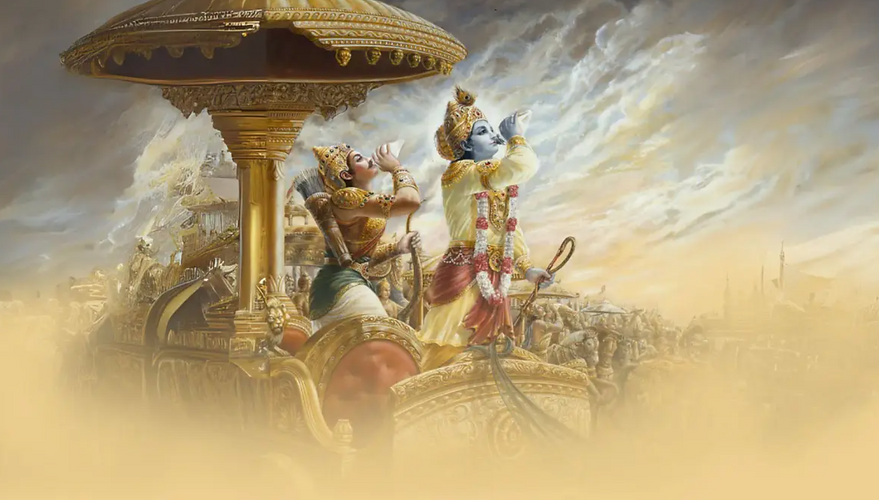
Bhagvad Gita Chapter 9
भगवद् गीता अध्याय ९
Bhagvad Gita Chapter 9 - Rāja-Vidyā Rāja-Guhya Yog
भगवद गीता का अध्याय ९ - राज-विद्या राज-गुह्य योग
Chapter 9 of the Bhagavad Gita, titled “Rāja-Vidyā Rāja-Guhya Yog”, translates to “The Yog of Royal Knowledge and Royal Secret.” This chapter is often considered the heart of the Gita, where Shri Krishna reveals the most profound spiritual truths in the simplest way.
Here, Shri Krishna describes the knowledge He is about to impart as the most sacred and secret, the king of all knowledge, which brings direct realization and is practiced with ease. Unlike earlier chapters that focus on karma (action) and jnana (knowledge), this chapter emphasizes bhakti (devotion) as the highest path. Shri Krishna reveals His true divine nature as the eternal source, sustainer, and destroyer of all creation. He explains that although He is present in every being and all things rest in Him, He remains unattached and unaffected.
A key insight in this chapter is the personal relationship between the devotee and the Divine. Shri Krishna assures that anyone, regardless of caste, gender, or background can attain Him through pure devotion. He emphasizes complete surrender, unwavering faith, and love as the keys to liberation.
Chapter 9 demystifies God’s nature, presenting Him as both immanent and transcendent. It highlights that sincere devotion, even in its simplest form - a flower, a leaf, or water offered with love, is enough to connect with the Divine. The chapter invites every soul into the sacred intimacy of knowing and loving God.
भगवद् गीता के अध्याय 9 का शीर्षक "राज-विद्या राज-गुह्य योग" है, जिसका अनुवाद "राजकीय ज्ञान और राजसी रहस्य का योग" है। इस अध्याय को अक्सर गीता का हृदय माना जाता है, जहाँ भगवान कृष्ण सबसे सरल तरीके से सबसे गहन आध्यात्मिक सत्यों को प्रकट करते हैं।
यहाँ, श्री कृष्ण उस ज्ञान का वर्णन करते हैं जो वे सबसे पवित्र और गुप्त, सभी ज्ञानों का राजा बताने वाले हैं, जो प्रत्यक्ष बोध लाता है और जिसका अभ्यास आसानी से किया जा सकता है। कर्म (क्रिया) और ज्ञान (ज्ञान) पर ध्यान केंद्रित करने वाले पिछले अध्यायों के विपरीत, यह अध्याय भक्ति (भक्ति) को सर्वोच्च मार्ग के रूप में महत्व देता है। कृष्ण अपनी सच्ची दिव्य प्रकृति को सभी सृष्टि के शाश्वत स्रोत, पालनकर्ता और संहारक के रूप में प्रकट करते हैं। वे बताते हैं कि यद्यपि वे प्रत्येक प्राणी में मौजूद हैं और सभी चीजें उनमें समाहित हैं, फिर भी वे अनासक्त और अप्रभावित रहते हैं।
इस अध्याय में एक महत्वपूर्ण अंतर्दृष्टि भक्त और ईश्वर के बीच व्यक्तिगत संबंध है। कृष्ण आश्वासन देते हैं कि कोई भी व्यक्ति - जाति, लिंग या पृष्ठभूमि की परवाह किए बिना - शुद्ध भक्ति के माध्यम से उन्हें प्राप्त कर सकता है। वह मुक्ति की कुंजी के रूप में पूर्ण समर्पण, अटूट विश्वास और प्रेम पर जोर देते हैं। अध्याय 9 ईश्वर की प्रकृति को उजागर करता है, उसे अंतर्निहित और पारलौकिक दोनों के रूप में प्रस्तुत करता है। यह इस बात पर प्रकाश डालता है कि सच्ची भक्ति, चाहे वह अपने सबसे सरल रूप में ही क्यों न हो - एक फूल, एक पत्ता या प्रेम से अर्पित किया गया जल - ईश्वर से जुड़ने के लिए पर्याप्त है। यह अध्याय प्रत्येक आत्मा को ईश्वर को जानने और उससे प्रेम करने की पवित्र अंतरंगता में आमंत्रित करता है।
श्रीभगवानुवाच:
इदं तु ते गुह्यतमं प्रवक्ष्याम्यनसूयवे |
ज्ञानं विज्ञानसहितं यज्ज्ञात्वा मोक्ष्यसेऽशुभात् || 1 ||
The Supreme Lord said: O Arjun, because you are free from envy, I shall now impart to you the most confidential knowledge and wisdom, which, once known, will liberate you from all inauspiciousness.
In this verse, Shri Krishna begins Chapter 9, the Raja Vidya Raja Guhya Yog (The Yog of Royal Knowledge and Royal Secret). He emphasizes that the knowledge He is about to reveal is the most secretive and profound. It is not just theoretical (jnana) but also practical (vijnana), meaning wisdom that can be directly experienced.
Shri Krishna selects Arjun for this sacred teaching because he is anasuya, free from envy. Envy and skepticism block spiritual wisdom. When the heart is pure and open, divine knowledge flows effortlessly. The essence of this knowledge is that it leads to moksh, liberation from suffering and the cycle of birth and death.
This shlok highlights the significance of faith, surrender, and receptivity in receiving divine wisdom. By understanding and applying this knowledge, one can transcend worldly limitations and attain eternal peace.
परम भगवान ने कहा: हे अर्जुन, चूँकि तुम ईर्ष्या से मुक्त हो, इसलिए अब मैं तुम्हें सबसे गोपनीय ज्ञान और बुद्धि प्रदान करूँगा, जिसे जानने के बाद, तुम सभी अशुभताओं से मुक्त हो जाओगे।
इस श्लोक में, कृष्ण अध्याय 9, राज विद्या राज गुह्य योग (राजकीय ज्ञान और राजसी रहस्य का योग) शुरू करते हैं। वह इस बात पर ज़ोर देते हैं कि वे जो ज्ञान प्रकट करने जा रहे हैं, वह सबसे गुप्त और गहन है। यह केवल सैद्धांतिक (ज्ञान) ही नहीं है, बल्कि व्यावहारिक (विज्ञान) भी है, जिसका अर्थ है ऐसा ज्ञान जिसे सीधे अनुभव किया जा सकता है।
श्री कृष्ण इस पवित्र शिक्षा के लिए अर्जुन को चुनते हैं क्योंकि वह अनसूया है - ईर्ष्या से मुक्त। ईर्ष्या और संदेह आध्यात्मिक ज्ञान को रोकते हैं। जब हृदय शुद्ध और खुला होता है, तो दिव्य ज्ञान सहजता से प्रवाहित होता है। इस ज्ञान का सार यह है कि यह मोक्ष की ओर ले जाता है - दुख और जन्म-मृत्यु के चक्र से मुक्ति।
यह श्लोक दिव्य ज्ञान प्राप्त करने में विश्वास, समर्पण और ग्रहणशीलता के महत्व पर प्रकाश डालता है। इस ज्ञान को समझने और प्रयोग करने से व्यक्ति सांसारिक सीमाओं से परे जा सकता है और शाश्वत शांति प्राप्त कर सकता है।
श्रीभगवानुवाच:
राजविद्या राजगुह्यं पवित्रमिदमुत्तमम् |
प्रत्यक्षावगमं धर्म्यं सुसुखं कर्तुमव्ययम् || 2 ||
This knowledge is the king of sciences, the king of secrets, the purest knowledge, and the highest. It is directly realizable, in accordance with righteousness, very easy to practice, and imperishable.
In this verse, Shri Krishna describes the supreme nature of the wisdom He is about to reveal. He calls it the Raja Vidya (king of all knowledge) and Raja Guhya (the greatest secret), signifying its unparalleled importance. This knowledge is not just theoretical but directly experiential (pratyaksha avagamam), meaning it can be realized within one's own consciousness.
Shri Krishna further explains that this wisdom is pavitram (pure), uttamam (supreme), and in harmony with righteousness (dharmyam). Unlike material pursuits, which require great effort, this path is susahkham, easily followed with joy and devotion. Most importantly, it is avyayam (imperishable), meaning it never diminishes and continues to uplift the soul eternally.
This verse invites seekers to embrace the highest spiritual truth, which leads to liberation and eternal bliss, making it the most valuable knowledge one can attain.
ह ज्ञान विज्ञानों का राजा, रहस्यों का राजा, शुद्धतम ज्ञान और सर्वोच्च है। यह प्रत्यक्ष रूप से प्राप्त करने योग्य, धर्म के अनुसार, अभ्यास करने में बहुत आसान और अविनाशी है।
इस श्लोक में, श्री कृष्ण उस ज्ञान की सर्वोच्च प्रकृति का वर्णन करते हैं जिसे वे प्रकट करने वाले हैं। वे इसे राज विद्या (सभी ज्ञान का राजा) और राज गुह्य (सबसे बड़ा रहस्य) कहते हैं, जो इसके अद्वितीय महत्व को दर्शाता है। यह ज्ञान केवल सैद्धांतिक नहीं है, बल्कि प्रत्यक्ष अनुभवात्मक (प्रत्यक्ष अवगमम) है, जिसका अर्थ है कि इसे किसी की अपनी चेतना के भीतर महसूस किया जा सकता है।
श्री कृष्ण आगे बताते हैं कि यह ज्ञान पवित्रम (शुद्ध), उत्तमम (सर्वोच्च) और धर्म के अनुरूप (धर्म्यम) है। भौतिक खोजों के विपरीत, जिसके लिए बहुत प्रयास की आवश्यकता होती है, यह मार्ग सुसहखम है - आनंद और भक्ति के साथ आसानी से पालन किया जाता है। सबसे महत्वपूर्ण बात यह है कि यह अव्यय (अविनाशी) है, जिसका अर्थ है कि यह कभी कम नहीं होता है और आत्मा को हमेशा के लिए ऊपर उठाता रहता है।
यह श्लोक साधकों को सर्वोच्च आध्यात्मिक सत्य को अपनाने के लिए आमंत्रित करता है, जो मुक्ति और शाश्वत आनंद की ओर ले जाता है, तथा इसे सबसे मूल्यवान ज्ञान बनाता है जिसे कोई भी प्राप्त कर सकता है।
अश्रद्दधानाः पुरुषा धर्मस्यास्य परन्तप |
अप्राप्य मां निवर्तन्ते मृत्युसंसारवर्त्मनि || 3 ||
O Arjun, those who lack faith in this dharma do not attain Me. They return to the cycle of birth and death in this material world.
In this verse, Shri Krishna emphasizes the importance of faith (shraddha) in attaining divine wisdom. He warns that those who lack faith in this supreme knowledge fail to reach Him and remain trapped in the endless cycle of birth and death (samsara).
Shri Krishna refers to Arjun as Parantapa (scorcher of foes), urging him to recognize the power of faith in spiritual progress. Without faith, one cannot grasp higher truths, no matter how profound they are. Skepticism and doubt keep the soul bound to suffering and material existence.
This verse teaches that surrender and devotion are essential in spiritual life. Mere intellectual understanding is not enough; one must wholeheartedly accept and practice this knowledge. Those who do so attain Shri Krishna, while those who reject it remain entangled in worldly illusions and rebirth. Hence, faith is the key to liberation (moksh).
हे अर्जुन, जो इस धर्म में विश्वास नहीं रखते, वे मुझे प्राप्त नहीं कर पाते। वे इस भौतिक संसार में जन्म-मृत्यु के चक्र में लौट जाते हैं।
इस श्लोक में, श्री कृष्ण दिव्य ज्ञान प्राप्त करने में विश्वास (श्रद्धा) के महत्व पर जोर देते हैं। वे चेतावनी देते हैं कि जो इस सर्वोच्च ज्ञान में विश्वास नहीं रखते, वे उन तक पहुँचने में असफल हो जाते हैं और जन्म-मृत्यु (संसार) के अंतहीन चक्र में फँसे रहते हैं।
श्री कृष्ण अर्जुन को परंतप (शत्रुओं को भस्म करने वाला) कहते हैं, तथा उसे आध्यात्मिक प्रगति में विश्वास की शक्ति को पहचानने का आग्रह करते हैं। विश्वास के बिना, कोई उच्च सत्य को नहीं समझ सकता, चाहे वे कितने भी गहरे क्यों न हों। संदेह और शंका आत्मा को दुख और भौतिक अस्तित्व से बाँधे रखते हैं।
यह श्लोक सिखाता है कि आध्यात्मिक जीवन में समर्पण और भक्ति आवश्यक है। केवल बौद्धिक समझ ही पर्याप्त नहीं है; व्यक्ति को पूरे दिल से इस ज्ञान को स्वीकार करना चाहिए और उसका अभ्यास करना चाहिए। जो ऐसा करते हैं, वे कृष्ण को प्राप्त करते हैं, जबकि जो इसे अस्वीकार करते हैं, वे सांसारिक मोह-माया और पुनर्जन्म में उलझे रहते हैं। इसलिए, विश्वास मुक्ति (मोक्ष) की कुंजी है।
मया ततमिदं सर्वं जगदव्यक्तमूर्तिना |
मत्स्थानि सर्वभूतानि न चाहं तेष्ववस्थितः || 4 ||
This entire universe is pervaded by Me in My unmanifested form. All beings dwell in Me, but I am not situated in them.
In this verse, Shri Krishna reveals His divine omnipresence. He explains that the entire universe is pervaded by Him in His unmanifest form (avyakta-murtina), meaning He exists beyond physical perception. Everything resides within Him, yet He remains transcendental and unaffected by the material world.
Shri Krishna’s presence is like space, it pervades everything but remains untouched by what exists within it. Similarly, all living beings depend on Him for existence, yet He remains independent. This profound statement breaks the illusion that God is limited to a particular form or place.
This shlok teaches the concept of Advaita (non-duality) and Maya (illusion), highlighting that while everything emerges from the Divine, the Divine remains beyond all limitations. Understanding this allows one to transcend material attachments and recognize the eternal presence of the Supreme Consciousness in all aspects of life.
यह संपूर्ण ब्रह्मांड मेरे अव्यक्त रूप में मुझसे व्याप्त है। सभी प्राणी मुझमें निवास करते हैं, लेकिन मैं उनमें स्थित नहीं हूँ।
श्री कृष्ण अपनी दिव्य सर्वव्यापकता को प्रकट करते हैं। वे बताते हैं कि संपूर्ण ब्रह्मांड उनके अव्यक्त रूप (अव्यक्त-मूर्तिना) में उनसे व्याप्त है, जिसका अर्थ है कि वे भौतिक अनुभूति से परे हैं। सब कुछ उनके भीतर रहता है, फिर भी वे पारलौकिक रहते हैं और भौतिक दुनिया से अप्रभावित रहते हैं।
श्री कृष्ण की उपस्थिति अंतरिक्ष की तरह है - यह सब कुछ में व्याप्त है, लेकिन इसके भीतर मौजूद चीज़ों से अछूता रहता है। इसी तरह, सभी जीवित प्राणी अस्तित्व के लिए उन पर निर्भर हैं, फिर भी वे स्वतंत्र रहते हैं। यह गहन कथन इस भ्रम को तोड़ता है कि ईश्वर किसी विशेष रूप या स्थान तक सीमित है।
यह श्लोक अद्वैत (गैर-द्वैत) और माया (भ्रम) की अवधारणा को सिखाता है, जो इस बात पर प्रकाश डालता है कि जबकि सब कुछ दिव्य से निकलता है, दिव्य सभी सीमाओं से परे रहता है। इसे समझने से व्यक्ति भौतिक आसक्तियों से परे जा सकता है और जीवन के सभी पहलुओं में सर्वोच्च चेतना की शाश्वत उपस्थिति को पहचान सकता है।
न च मत्स्थानि भूतानि पश्य मे योगमैश्वरम् |
भूतभृन्न च भूतस्थो ममात्मा भूतभावनः || 5 ||
And yet, the beings do not dwell in Me. Behold My divine mystery! Though I am the sustainer and creator of all beings, My Self remains separate from them.
Shri Krishna presents a divine paradox: while He previously stated that all beings reside in Him (9.4), He now declares that they do not truly reside in Him. This is His Yog Aishwaryam-His mystical divine power.
Shri Krishna, as the Supreme Being, supports and sustains all existence (bhuta-bhrit) while remaining detached from it. He is both immanent (within all) and transcendent (beyond all). Like the sun sustaining the planets without being tied to them, Shri Krishna pervades the universe but remains beyond material limitations.
This shlok teaches Maya (illusion), although the world appears real, it is ultimately temporary and dependent on Shri Krishna’s divine energy. By understanding this, one can transcend material bondage and realize the eternal nature of the Supreme. Shri Krishna’s divine play (leela) allows creation to function while He remains ever free and infinite.
और फिर भी, प्राणी मुझमें निवास नहीं करते। मेरे दिव्य रहस्य को देखो! यद्यपि मैं सभी प्राणियों का पालनहार और निर्माता हूँ, फिर भी मेरा स्व उनसे अलग रहता है।
श्री कृष्ण एक दिव्य विरोधाभास प्रस्तुत करते हैं: जबकि उन्होंने पहले कहा था कि सभी प्राणी उनमें निवास करते हैं (9.4), अब वे घोषणा करते हैं कि वे वास्तव में उनमें निवास नहीं करते हैं। यह उनका योग ऐश्वर्य है - उनकी रहस्यमय दिव्य शक्ति।
कृष्ण, सर्वोच्च प्राणी के रूप में, सभी अस्तित्व (भूत-भृत) का समर्थन और पोषण करते हैं जबकि वे इससे अलग रहते हैं। वे दोनों ही हैं (सभी के भीतर) और पारलौकिक (सभी से परे)। जैसे सूर्य ग्रहों को बिना उनसे बंधे रखता है, कृष्ण ब्रह्मांड में व्याप्त हैं लेकिन भौतिक सीमाओं से परे रहते हैं।
यह श्लोक माया (भ्रम) सिखाता है - यद्यपि दुनिया वास्तविक प्रतीत होती है, यह अंततः अस्थायी है और कृष्ण की दिव्य ऊर्जा पर निर्भर है। इसे समझकर, कोई भी भौतिक बंधन से परे जा सकता है और सर्वोच्च की शाश्वत प्रकृति का एहसास कर सकता है।श्री कृष्ण की दिव्य लीला सृष्टि को कार्य करने की अनुमति देती है जबकि वे सदैव स्वतंत्र और अनंत रहते हैं।
यथाकाशस्थितो नित्यं वायुः सर्वत्रगो महान् |
तथा सर्वाणि भूतानि मत्स्थानीत्युपधारय || 6 ||
Just as the great wind, moving everywhere, always remains in space, know that all beings reside in Me in the same manner.
Shri Krishna provides a beautiful analogy to explain His relationship with creation. Just as the wind moves freely within space yet does not limit or affect space itself, all living beings exist within Him but do not bind Him.
Shri Krishna remains beyond material existence while sustaining everything. The wind (vayu) symbolizes the ever-changing, moving nature of life, while space (akash) represents the unchanging, infinite divine presence. Similarly, although all beings and the universe are within Shri Krishna, He remains unaffected and transcendent.
This analogy helps one grasp the non-dual nature of reality. The material world operates within divine consciousness, but the Supreme remains untouched by its fluctuations. By meditating on this truth, one can develop detachment from worldly illusions and cultivate devotion (bhakti), recognizing Shri Krishna as the eternal foundation of all existence.
जिस प्रकार महान वायु, सर्वत्र गतिमान होकर सदैव अन्तरिक्ष में ही रहती है, उसी प्रकार जान लो कि सभी प्राणी मुझमें ही निवास करते हैं।
श्री कृष्ण सृष्टि के साथ अपने सम्बन्ध को समझाने के लिए एक सुन्दर सादृश्य प्रदान करते हैं। जिस प्रकार वायु अन्तरिक्ष में स्वतन्त्र रूप से गति करती है, फिर भी अन्तरिक्ष को सीमित या प्रभावित नहीं करती, उसी प्रकार सभी जीव उनके भीतर विद्यमान हैं, लेकिन उन्हें बाँधते नहीं हैं।
श्री कृष्ण सब कुछ धारण करते हुए भी भौतिक अस्तित्व से परे रहते हैं। वायु (वायु) जीवन की निरन्तर परिवर्तनशील, गतिशील प्रकृति का प्रतीक है, जबकि अन्तरिक्ष (आकाश) अपरिवर्तनशील, अनन्त दिव्य उपस्थिति का प्रतिनिधित्व करता है। इसी प्रकार, यद्यपि सभी प्राणी और ब्रह्माण्ड कृष्ण के भीतर हैं, फिर भी वे अप्रभावित और पारलौकिक बने रहते हैं।
यह सादृश्य वास्तविकता की अद्वैत प्रकृति को समझने में सहायता करता है। भौतिक जगत दिव्य चेतना के भीतर संचालित होता है, लेकिन सर्वोच्च इसके उतार-चढ़ाव से अछूता रहता है। इस सत्य पर ध्यान करने से, व्यक्ति सांसारिक भ्रमों से वैराग्य विकसित कर सकता है और भक्ति (भक्ति) विकसित कर सकता है, तथा कृष्ण को सभी अस्तित्व के शाश्वत आधार के रूप में पहचान सकता है।
सर्वभूतानि कौन्तेय प्रकृतिं यान्ति मामिकाम् |
कल्पक्षये पुनस्तानि कल्पादौ विसृजाम्यहम् || 7 ||
O Arjun, at the end of a cosmic cycle (kalpa), all living beings merge into My material nature (prakriti). When a new cycle begins, I manifest them again.
Shri Krishna explains the cyclical nature of creation and dissolution. At the end of each cosmic cycle (kalpa-kshay), all beings dissolve into His divine energy (prakriti), only to be recreated at the beginning of the next cycle (kalpa-adau). This process follows the eternal rhythm of the universe.
Here, Shri Krishna reveals Himself as the ultimate source of creation and destruction. While individual beings undergo birth and death, the Supreme Consciousness remains eternal, orchestrating this cosmic dance. This aligns with the Hindu concept of srishti (creation), sthiti (sustenance), and pralay (dissolution).
By understanding this truth, one can transcend fear and attachment to the material world. Just as waves rise and fall in the ocean, creation and destruction are natural cycles within Shri Krishna’s divine will. The wise surrender to this higher reality, seeking liberation (moksh) beyond material existence.
हे अर्जुन, एक ब्रह्मांडीय चक्र (कल्प) के अंत में, सभी जीव मेरी भौतिक प्रकृति (प्रकृति) में विलीन हो जाते हैं। जब एक नया चक्र शुरू होता है, तो मैं उन्हें फिर से प्रकट करता हूँ।
श्री कृष्ण सृजन और विघटन की चक्रीय प्रकृति की व्याख्या करते हैं। प्रत्येक ब्रह्मांडीय चक्र (कल्प-क्षय) के अंत में, सभी प्राणी उनकी दिव्य ऊर्जा (प्रकृति) में विलीन हो जाते हैं, केवल अगले चक्र (कल्प-अदौ) की शुरुआत में फिर से बनने के लिए। यह प्रक्रिया ब्रह्मांड की शाश्वत लय का अनुसरण करती है।
यहाँ, श्री कृष्ण खुद को सृजन और विनाश के अंतिम स्रोत के रूप में प्रकट करते हैं। जबकि व्यक्तिगत प्राणी जन्म और मृत्यु से गुजरते हैं, सर्वोच्च चेतना शाश्वत रहती है, इस ब्रह्मांडीय नृत्य का आयोजन करती है। यह सृष्टि (सृजन), स्थिति (पोषण), और प्रलय (विघटन) की हिंदू अवधारणा के अनुरूप है।
इस सत्य को समझकर, व्यक्ति भौतिक दुनिया के प्रति भय और आसक्ति से परे जा सकता है। जिस तरह समुद्र में लहरें उठती और गिरती हैं, उसी तरह सृजन और विनाश कृष्ण की दिव्य इच्छा के भीतर प्राकृतिक चक्र हैं। बुद्धिमान व्यक्ति इस उच्चतर वास्तविकता के प्रति समर्पण करते हैं तथा भौतिक अस्तित्व से परे मोक्ष की खोज करते हैं।
प्रकृतिं स्वामवष्टभ्य विसृजामि पुनः पुनः |
भूतग्राममिमं कृत्स्नमवशं प्रकृतेर्वशात् || 8 ||
Controlling My own material nature (prakriti), I repeatedly create all living beings, who are helplessly governed by it.
Shri Krishna continues explaining the cosmic cycle of creation and dissolution. He states that by His divine will, He activates prakriti (material nature) and manifests all beings repeatedly. Yet, these beings remain bound by the laws of nature, unable to act independently.
This verse highlights the role of maya (illusion) in keeping living beings entangled in the material world. While Shri Krishna is beyond prakriti, all beings are subject to its forces - birth, death, karma, and suffering. They act helplessly under its influence, unaware of the Supreme Reality.
Shri Krishna’s divine control over prakriti reinforces that He is not bound by creation, He simply wills it into existence. Those who realize this truth seek refuge in Him rather than being controlled by the ever-changing material world. Understanding this allows one to transcend maya and move toward spiritual liberation (moksh).
अपनी स्वयं की भौतिक प्रकृति (प्रकृति) को नियंत्रित करते हुए, मैं बार-बार सभी जीवित प्राणियों की रचना करता हूँ, जो असहाय रूप से इसके द्वारा शासित होते हैं।
श्री कृष्ण सृष्टि और प्रलय के ब्रह्मांडीय चक्र की व्याख्या करना जारी रखते हैं। वे कहते हैं कि अपनी दिव्य इच्छा से, वे प्रकृति (भौतिक प्रकृति) को सक्रिय करते हैं और सभी प्राणियों को बार-बार प्रकट करते हैं। फिर भी, ये प्राणी प्रकृति के नियमों से बंधे रहते हैं, स्वतंत्र रूप से कार्य करने में असमर्थ होते हैं।
यह श्लोक जीवों को भौतिक संसार में उलझाए रखने में माया (भ्रम) की भूमिका पर प्रकाश डालता है। जबकि श्री कृष्ण प्रकृति से परे हैं, सभी प्राणी इसकी शक्तियों-जन्म, मृत्यु, कर्म और दुख के अधीन हैं। वे सर्वोच्च वास्तविकता से अनजान होकर इसके प्रभाव में असहाय होकर कार्य करते हैं।
प्रकृति पर श्री कृष्ण का दिव्य नियंत्रण इस बात को पुष्ट करता है कि वे सृष्टि से बंधे नहीं हैं-वे बस इसे अस्तित्व में लाने की इच्छा रखते हैं। जो लोग इस सत्य को समझते हैं, वे हमेशा बदलती भौतिक दुनिया द्वारा नियंत्रित होने के बजाय उनकी शरण लेते हैं। इसे समझने से व्यक्ति माया से परे हो जाता है और आध्यात्मिक मुक्ति (मोक्ष) की ओर बढ़ता है।
न च मां तानि कर्माणि निबध्नन्ति धनञ्जय |
उदासीनवदासीनमसक्तं तेषु कर्मसु || 9 ||
O Arjun, these actions do not bind Me. I remain unattached and indifferent, as one who is neutral and uninvolved in these activities.
Shri Krishna explains that although He creates and sustains the universe, He remains beyond its influence. Unlike living beings, who are bound by their actions (karma),Shri Krishna remains detached (asakt), unaffected by the cosmic process.
This is the concept of divine neutrality (udāsīnavat). Just as the sun shines on everything without attachment, Shri Krishna enables creation without being entangled in it. He acts out of pure divine will, not personal desire or necessity.
For seekers, this verse teaches karma yog, acting selflessly without attachment to results. Just as Shri Krishna remains free despite being the source of all action, one can transcend bondage by surrendering actions to the Divine. By adopting this mindset, one moves beyond material suffering and aligns with Shri Krishna’s higher consciousness, ultimately attaining liberation (moksh).
हे अर्जुन, ये कर्म मुझे नहीं बांधते। मैं इन कर्मों में तटस्थ और असंलग्न व्यक्ति की तरह अनासक्त और उदासीन रहता हूँ।
श्री कृष्ण बताते हैं कि यद्यपि वे ब्रह्मांड का निर्माण और पालन करते हैं, फिर भी वे इसके प्रभाव से परे रहते हैं। जीवों के विपरीत, जो अपने कर्मों (कर्म) से बंधे होते हैं, श्री कृष्ण ब्रह्मांडीय प्रक्रिया से अप्रभावित, अनासक्त (असक्त) रहते हैं।
यह ईश्वरीय तटस्थता (उदासीनवत) की अवधारणा है। जिस प्रकार सूर्य बिना आसक्ति के हर चीज़ पर चमकता है, उसी प्रकार कृष्ण बिना किसी उलझन के सृजन को सक्षम बनाते हैं। वे व्यक्तिगत इच्छा या आवश्यकता से नहीं, बल्कि शुद्ध ईश्वरीय इच्छा से कार्य करते हैं।
साधकों के लिए, यह श्लोक कर्म योग सिखाता है - परिणामों से आसक्ति के बिना निस्वार्थ भाव से कार्य करना। जिस प्रकार श्री कृष्ण सभी कर्मों के स्रोत होने के बावजूद मुक्त रहते हैं, उसी प्रकार व्यक्ति कर्मों को ईश्वर को समर्पित करके बंधन से पार हो सकता है। इस मानसिकता को अपनाने से व्यक्ति भौतिक कष्टों से परे चला जाता है और श्री कृष्ण की उच्च चेतना के साथ जुड़ जाता है, अंततः मुक्ति (मोक्ष) प्राप्त करता है।
मयाध्यक्षेण प्रकृतिः सूयते सचराचरम् |
हेतुनानेन कौन्तेय जगद्विपरिवर्तते || 10 ||
Under My supervision, material nature (prakriti) creates all moving and non-moving beings. Because of this, O Arjun, the universe operates in cycles.
Shri Krishna reveals that although He remains detached from actions, the entire cosmos functions under His divine supervision (mayādhyakṣeṇa). Prakriti (material nature) is not independent; it acts according to His will, manifesting both sentient (chara) and non-sentient (achara) beings.
This verse establishes Shri Krishna as the ultimate controller, while prakriti is the medium through which creation unfolds. Just as a conductor directs an orchestra without playing each instrument, Shri Shri Krishna orchestrates universal functions without being directly involved.
The phrase jagad viparivartate (the world revolves) refers to the endless cycle of birth, death, and rebirth (samsara), governed by divine law. Understanding this dissolves the illusion of randomness in life, everything follows Krishna’s divine order. By surrendering to Him, one can transcend prakriti and attain liberation (moksh), freeing oneself from the cycles of existence.
मेरी देखरेख में, भौतिक प्रकृति (प्रकृति) सभी चल और अचल प्राणियों का निर्माण करती है। इसी कारण, हे अर्जुन, ब्रह्मांड चक्रों में संचालित होता है।
श्री कृष्ण बताते हैं कि यद्यपि वे कर्मों से विरक्त रहते हैं, फिर भी संपूर्ण ब्रह्मांड उनकी दिव्य देखरेख (मायाध्याक्षेण) के अधीन कार्य करता है। प्रकृति (भौतिक प्रकृति) स्वतंत्र नहीं है; यह उनकी इच्छा के अनुसार कार्य करती है, जो सत्व (चर) और अचेतन (आचार) दोनों प्राणियों को प्रकट करती है।
यह श्लोक कृष्ण को परम नियंत्रक के रूप में स्थापित करता है, जबकि प्रकृति वह माध्यम है जिसके माध्यम से सृष्टि प्रकट होती है। जिस प्रकार एक संचालक प्रत्येक वाद्य को बजाए बिना ऑर्केस्ट्रा का निर्देशन करता है, उसी प्रकार कृष्ण प्रत्यक्ष रूप से शामिल हुए बिना सार्वभौमिक कार्यों का संचालन करते हैं।
जगद् विपरीतते (दुनिया घूमती है) वाक्यांश जन्म, मृत्यु और पुनर्जन्म (संसार) के अंतहीन चक्र को संदर्भित करता है, जो दिव्य नियम द्वारा शासित है। इसे समझने से जीवन में यादृच्छिकता का भ्रम दूर हो जाता है - सब कुछ कृष्ण के दिव्य आदेश का पालन करता है। उनके प्रति समर्पण करके व्यक्ति प्रकृति से परे जा सकता है और स्वयं को भव चक्र से मुक्त करके मोक्ष प्राप्त कर सकता है।
अवजानन्ति मां मूढा मानुषीं तनुमाश्रितम् |
परं भावमजानन्तो मम भूतमहेश्वरम् || 11 ||
Foolish people disregard Me when I appear in a human form. They do not understand My transcendental nature as the Supreme Lord of all beings.
Shri Krishna highlights that ignorant people (mūḍhāḥ) fail to recognize His divine nature when He manifests in a human-like form. Seeing Him as just another mortal, they remain unaware of His supreme existence beyond birth and death.
This verse reflects the limitation of material perception. People judge Shri Krishna by His external appearance, failing to see His divinity (paraṁ bhāvam). Such misunderstanding stems from attachment to maya (illusion), which conceals true wisdom.
Shri Krishna, the Bhūta-Maheshvara (Lord of all beings), descends not due to karmic necessity but out of divine will to uplift humanity. Recognizing this truth is key to devotion (bhakti) and liberation (moksh). This verse encourages seekers to look beyond the material and perceive Shri Krishna’s divine essence, realizing that God is not limited by form but is the eternal Supreme Consciousness.
जब मैं मानव रूप में प्रकट होता हूँ, तो मूर्ख लोग मेरी उपेक्षा करते हैं। वे सभी प्राणियों के सर्वोच्च भगवान के रूप में मेरे पारलौकिक स्वभाव को नहीं समझते।
श्री कृष्ण इस बात पर प्रकाश डालते हैं कि अज्ञानी लोग (मूढ़) जब वे मानव-समान रूप में प्रकट होते हैं, तो उनके दिव्य स्वभाव को पहचानने में विफल हो जाते हैं। उन्हें एक और नश्वर के रूप में देखते हुए, वे जन्म और मृत्यु से परे उनके सर्वोच्च अस्तित्व से अनजान रहते हैं।
यह श्लोक भौतिक बोध की सीमा को दर्शाता है। लोग कृष्ण को उनके बाहरी रूप से आंकते हैं, उनकी दिव्यता (परं भावम्) को देखने में विफल रहते हैं। ऐसी गलतफहमी माया (भ्रम) से लगाव से उत्पन्न होती है, जो सच्चे ज्ञान को छुपाती है।
श्री कृष्ण, भूत-महेश्वर (सभी प्राणियों के भगवान), कर्म की आवश्यकता के कारण नहीं बल्कि मानवता के उत्थान के लिए दिव्य इच्छा से अवतरित होते हैं। इस सत्य को पहचानना भक्ति (भक्ति) और मुक्ति (मोक्ष) की कुंजी है। यह श्लोक साधकों को भौतिकता से परे देखने तथा कृष्ण के दिव्य सार को समझने के लिए प्रोत्साहित करता है, तथा यह बोध कराता है कि ईश्वर रूप तक सीमित नहीं है, बल्कि वह शाश्वत परम चेतना है।
मोघाशा मोघकर्माणो मोघज्ञाना विचेतसः |
राक्षसीमासुरीं चैव प्रकृतिं मोहिनीं श्रिताः || 12 ||
Those with vain hopes, futile actions, and false knowledge are deluded. They take refuge in a demonic and atheistic nature, which misleads them.
Shri Krishna describes those who fail to recognize His divine nature. Their desires (moghāśā), efforts (moghakarmaṇāḥ), and knowledge (moghajñānāḥ) are all in vain because they are disconnected from the ultimate truth.
Such individuals remain trapped in illusion (mohinīṁ prakṛtim), influenced by rākṣasī (demonic) and āsurī (atheistic) tendencies. The rākṣas nature manifests as aggression and selfishness, while the āsura nature reflects disbelief and material obsession. These qualities prevent them from seeing Shri Krishna’s presence in all aspects of life.
This verse warns against ego-driven pursuits and ignorance. True fulfillment comes only through surrender to the Divine, not through material success or intellectual arrogance. By choosing devotion (bhakti) over illusion (māyā), one can transcend these lower tendencies and align with Shri Krishna’s eternal wisdom, leading to liberation (moksh).
व्यर्थ आशा, व्यर्थ कर्म और मिथ्या ज्ञान वाले लोग भ्रमित होते हैं। वे राक्षसी और नास्तिक स्वभाव की शरण लेते हैं, जो उन्हें गुमराह करता है।
श्री कृष्ण उन लोगों का वर्णन करते हैं जो उनके दिव्य स्वभाव को पहचानने में विफल रहते हैं। उनकी इच्छाएँ (मोघाशा), प्रयास (मोघकर्मणाः) और ज्ञान (मोघज्ञानः) सभी व्यर्थ हैं क्योंकि वे परम सत्य से विमुख हैं।
ऐसे व्यक्ति राक्षसी (राक्षसी) और आसुरी (नास्तिक) प्रवृत्तियों से प्रभावित होकर भ्रम (मोहिनीं प्रकृतिम्) में फँसे रहते हैं। राक्षस स्वभाव आक्रामकता और स्वार्थ के रूप में प्रकट होता है, जबकि आसुर स्वभाव अविश्वास और भौतिक जुनून को दर्शाता है। ये गुण उन्हें जीवन के सभी पहलुओं में कृष्ण की उपस्थिति को देखने से रोकते हैं।
यह श्लोक अहंकार से प्रेरित खोज और अज्ञानता के खिलाफ चेतावनी देता है। सच्ची पूर्णता केवल ईश्वर के प्रति समर्पण से ही मिलती है, भौतिक सफलता या बौद्धिक अहंकार से नहीं। माया के बजाय भक्ति को चुनकर, व्यक्ति इन निम्न प्रवृत्तियों से ऊपर उठ सकता है और श्री कृष्ण के शाश्वत ज्ञान के साथ जुड़ सकता है, जिससे मुक्ति (मोक्ष) प्राप्त होती है।
महात्मानस्तु मां पार्थ दैवीं प्रकृतिमाश्रिताः |
भजन्त्यनन्यमनसो ज्ञात्वा भूतादिमव्ययम् || 13 ||
But O Arjun, great souls (mahatmas), who take refuge in My divine nature, worship Me with undivided devotion, knowing Me as the imperishable origin of all beings.
After describing those who are deluded by illusion (maya), Shri Krishna now speaks about the mahatmas, noble souls who recognize His true nature. Unlike materialistic people, these great beings surrender to His divine energy (daivīṁ prakṛtim), rising above lower tendencies.
The mahatmas understand Shri
Krishna as bhūtādim (the source of all beings) and avyayam (imperishable). With unwavering faith and single-minded devotion (ananya-manaso), they worship Him, not seeking material gains but divine connection.
This verse highlights the difference between worldly-minded people and spiritually awakened ones. True devotees see Shri Krishna as the eternal truth beyond birth and death. By surrendering to Him, they transcend the cycle of karma and attain liberation (moksh). Shri Krishna invites everyone to follow the path of devotion (bhakti) and realize their divine nature, leading to eternal peace and fulfillment.
लेकिन हे अर्जुन, महान आत्माएँ (महात्मा), जो मेरे दिव्य स्वरूप की शरण लेते हैं, मुझे सभी प्राणियों का अविनाशी मूल जानकर अनन्य भक्ति से मेरी पूजा करते हैं।
भ्रम (माया) से भ्रमित लोगों का वर्णन करने के बाद, कृष्ण अब महात्माओं के बारे में बात करते हैं - महान आत्माएँ जो उनके वास्तविक स्वरूप को पहचानती हैं। भौतिकवादी लोगों के विपरीत, ये महान प्राणी उनकी दिव्य ऊर्जा (दैवी प्रकृतिम्) के प्रति समर्पण करते हैं, निम्न प्रवृत्तियों से ऊपर उठते हैं।
महात्मा कृष्ण को भूतादिम (सभी प्राणियों का स्रोत) और अव्यय (अविनाशी) के रूप में समझते हैं। अटूट विश्वास और एकनिष्ठ भक्ति (अनन्य-मनसो) के साथ, वे भौतिक लाभ की तलाश में नहीं बल्कि दिव्य संबंध की तलाश में उनकी पूजा करते हैं।
यह श्लोक सांसारिक सोच वाले लोगों और आध्यात्मिक रूप से जागृत लोगों के बीच अंतर को उजागर करता है। सच्चे भक्त कृष्ण को जन्म और मृत्यु से परे शाश्वत सत्य के रूप में देखते हैं। उनके प्रति समर्पण करके, वे कर्म के चक्र से परे हो जाते हैं और मुक्ति (मोक्ष) प्राप्त करते हैं। श्री कृष्ण सभी को भक्ति के मार्ग पर चलने और अपने दिव्य स्वरूप का अनुभव करने के लिए आमंत्रित करते हैं, जिससे शाश्वत शांति और पूर्णता प्राप्त होती है।
सततं कीर्तयन्तो मां यतन्तश्च दृढव्रताः |
नमस्यन्तश्च मां भक्त्या नित्ययुक्ता उपासते || 14 ||
Always chanting My glories, striving with determination, and bowing to Me in devotion, these great souls worship Me constantly with steadfast faith.
Shri Krishna describes the qualities of true devotees. They continuously glorify Him (satatam kīrtayantaḥ), meaning they keep His name and divine qualities in their hearts at all times. Their devotion is not passive, they actively strive (yatantaḥ) with unwavering determination (dṛḍha-vratāḥ).
Their worship is not occasional but constant (nitya-yuktāḥ), indicating their deep connection with Shri Krishna. By bowing with humility (namasyantaḥ), they surrender their ego and embrace divine love. Their path is bhakti (devotion), which leads them to ultimate union with Krishna.
This verse teaches that true spiritual progress comes through relentless devotion and remembrance of the Divine. It encourages seekers to cultivate unwavering faith, devotion, and surrender, making Shri Krishna the center of their lives. Such dedication leads to spiritual liberation (moksh) and eternal bliss.
मेरी महिमा का सदैव कीर्तन करते हुए, दृढ़ निश्चय के साथ प्रयास करते हुए, तथा भक्तिपूर्वक मुझे नमन करते हुए, ये महान आत्माएँ दृढ़ विश्वास के साथ निरंतर मेरी पूजा करती हैं।
श्री कृष्ण सच्चे भक्तों के गुणों का वर्णन करते हैं। वे निरंतर उनकी महिमा करते हैं (सततं कीर्तयन्त:), अर्थात् वे हर समय उनके नाम तथा दिव्य गुणों को अपने हृदय में रखते हैं। उनकी भक्ति निष्क्रिय नहीं होती - वे अविचल निश्चय (दृढ़-व्रता:) के साथ सक्रिय रूप से प्रयास करते हैं (यतन्त:)।
उनकी पूजा कभी-कभार नहीं बल्कि निरंतर (नित्य-युक्ता:) होती है, जो कृष्ण के साथ उनके गहरे संबंध को दर्शाती है। नम्रता के साथ झुककर (नमस्यन्त:), वे अपने अहंकार को त्याग देते हैं तथा दिव्य प्रेम को अपना लेते हैं। उनका मार्ग भक्ति है, जो उन्हें श्री कृष्ण के साथ परम मिलन की ओर ले जाती है।
यह श्लोक सिखाता है कि सच्ची आध्यात्मिक प्रगति अथक भक्ति तथा ईश्वर के स्मरण से होती है। यह साधकों को अविचल विश्वास, भक्ति तथा समर्पण विकसित करने के लिए प्रोत्साहित करता है, तथा कृष्ण को अपने जीवन का केन्द्र बनाता है। ऐसा समर्पण आध्यात्मिक मुक्ति (मोक्ष) और शाश्वत आनंद की ओर ले जाता है।
ज्ञानयज्ञेन चाप्यन्ये यजन्तो मामुपासते |
एकत्वेन पृथक्त्वेन बहुधा विश्वतोमुखम् || 15 ||
Others worship Me through the sacrifice of knowledge. Some see Me as one with everything, some see Me as separate, and others worship Me in various forms.
Shri Krishna explains that different seekers approach Him in different ways. Some worship Him through jnana-yajna (the sacrifice of knowledge), meaning they seek divine wisdom and realization. This represents the jnana marg (path of knowledge), where understanding Shri Krishna’s true nature is itself an act of worship.
People perceive the Divine in various ways:
-
Ekatven – as one, believing in the non-dualistic (Advaita) concept that everything is Brahman.
-
Pṛthaktven – as separate, seeing Shri Krishna as a personal deity distinct from creation.
-
Bahudhā viśvato-mukham – in multiple forms, recognizing Shri Krishna’s presence in all aspects of the universe.
This verse highlights that all sincere paths ultimately lead to Shri Krishna, whether through knowledge, devotion, or worship in different forms. He embraces all who seek Him, encouraging spiritual seekers to follow the path best suited to their nature.
अन्य लोग ज्ञान के यज्ञ के माध्यम से मेरी पूजा करते हैं। कुछ लोग मुझे सब कुछ के साथ एक के रूप में देखते हैं, कुछ मुझे अलग रूप में देखते हैं, और अन्य लोग विभिन्न रूपों में मेरी पूजा करते हैं।
श्री कृष्ण बताते हैं कि अलग-अलग साधक अलग-अलग तरीकों से उनसे संपर्क करते हैं। कुछ लोग ज्ञान-यज्ञ (ज्ञान के यज्ञ) के माध्यम से उनकी पूजा करते हैं, जिसका अर्थ है कि वे दिव्य ज्ञान और प्राप्ति की तलाश करते हैं। यह ज्ञान मार्ग (ज्ञान का मार्ग) का प्रतिनिधित्व करता है, जहाँ कृष्ण के वास्तविक स्वरूप को समझना ही पूजा का कार्य है।
लोग ईश्वर को विभिन्न तरीकों से समझते हैं:
* एकत्वेन - एक के रूप में, अद्वैतवादी (अद्वैत) अवधारणा में विश्वास करते हुए कि सब कुछ ब्रह्म है।
* प्रथक्त्वेन - अलग रूप में, कृष्ण को सृष्टि से अलग एक व्यक्तिगत देवता के रूप में देखना।
* बहुधा विश्वतो-मुखम - कई रूपों में, ब्रह्मांड के सभी पहलुओं में कृष्ण की उपस्थिति को पहचानना।
यह श्लोक इस बात पर प्रकाश डालता है कि सभी ईमानदार मार्ग अंततः कृष्ण की ओर ले जाते हैं, चाहे ज्ञान, भक्ति या विभिन्न रूपों में पूजा के माध्यम से। वे उन सभी को गले लगाते हैं जो उन्हें खोजते हैं, तथा आध्यात्मिक साधकों को उनके स्वभाव के अनुकूल मार्ग पर चलने के लिए प्रोत्साहित करते हैं।
अहं क्रतुरहं यज्ञः स्वधाऽहमहमौषधम् |
मन्त्रोऽहमहमेवाज्यमहमग्निरहं हुतम् || 16 ||
I am the Vedic ritual, I am the sacrifice, I am the offering to the ancestors, I am the medicinal herb, I am the sacred chant, I am the clarified butter, I am the fire, and I am the oblation.
Shri Krishna declares that He is the essence of all sacred offerings and rituals. Every form of worship, whether through yajna (sacrifices), swadha (offerings to ancestors), or mantras (sacred chants), ultimately reaches Him. By listing these elements - fire (agni), clarified butter (ajyam), and oblations (hutam). He shows that the divine pervades all aspects of worship.
This verse reinforces the idea that all religious practices, regardless of tradition, are manifestations of Shri Krishna. Whether one follows karma yog (action), jnana yog (wisdom), or bhakti yog (devotion), all paths lead to Him.
Shri Krishna’s message is to recognize His presence in everything and offer all actions as an expression of love and devotion. By doing so, one transcends the mechanical nature of rituals and attains true spiritual realization, seeing divinity in all aspects of life.
मैं वैदिक अनुष्ठान हूँ, मैं यज्ञ हूँ, मैं पितरों को अर्पित किया जाने वाला प्रसाद हूँ, मैं औषधीय जड़ी-बूटी हूँ, मैं पवित्र मंत्र हूँ, मैं घी हूँ, मैं अग्नि हूँ, और मैं आहुति हूँ।
श्री कृष्ण घोषणा करते हैं कि वे सभी पवित्र आहुतियों और अनुष्ठानों का सार हैं। पूजा का हर रूप, चाहे वह यज्ञ (बलिदान), स्वधा (पितरों को अर्पित किया जाने वाला प्रसाद) या मंत्र (पवित्र मंत्र) के माध्यम से हो, अंततः उन्हीं तक पहुँचता है। इन तत्वों - अग्नि (अग्नि), घी (अज्याम्) और आहुति (हुतम) को सूचीबद्ध करके वे दर्शाते हैं कि ईश्वर पूजा के सभी पहलुओं में व्याप्त है।
यह श्लोक इस विचार को पुष्ट करता है कि सभी धार्मिक प्रथाएँ, चाहे वे किसी भी परंपरा से संबंधित हों, कृष्ण की अभिव्यक्तियाँ हैं। चाहे कोई कर्म योग (कार्य), ज्ञान योग (बुद्धि), या भक्ति योग (भक्ति) का पालन करे, सभी मार्ग उन्हीं की ओर ले जाते हैं।
श्री कृष्ण का संदेश है कि हर चीज़ में उनकी उपस्थिति को पहचानें और सभी कार्यों को प्रेम और भक्ति की अभिव्यक्ति के रूप में प्रस्तुत करें। ऐसा करने से व्यक्ति अनुष्ठानों की यांत्रिक प्रकृति से ऊपर उठ जाता है और जीवन के सभी पहलुओं में दिव्यता को देखकर सच्ची आध्यात्मिक अनुभूति प्राप्त करता है।
पिताहमस्य जगतो माता धाता पितामहः |
वेद्यं पवित्रमोंकार ऋक् साम यजुरेव च || 17 ||
I am the father of this universe, the mother, the sustainer, and the grandfather. I am the object of knowledge, the purifier, and the sacred syllable Om. I am also the Rig, Sama, and Yajur Vedas.
In this verse, Shri Krishna reveals His all-encompassing nature. He is both the father (pitā) and mother (mātā), symbolizing creation and nourishment. As dhātā (sustainer), He upholds the universe, and as pitāmaha (grandfather), He represents the eternal wisdom passed through generations.
Shri Krishna also declares Himself as the ultimate goal of knowledge (vedyam), the purifier (pavitram), and the sacred sound Om, which pervades the cosmos. By identifying with the Vedas - Rig, Sama, and Yajur. He establishes Himself as the source of divine wisdom.
This verse emphasizes that Shri Krishna is present in all aspects of existence - creation, sustenance, and spiritual knowledge. Understanding this deepens one’s devotion, guiding seekers toward the realization that worshiping Him is the ultimate path to wisdom and liberation (moksh).
मैं इस ब्रह्मांड का पिता, माता, पालनकर्ता और दादा हूँ। मैं ज्ञान का विषय, शुद्ध करने वाला और पवित्र अक्षर ओम हूँ। मैं ऋग, साम और यजुर वेद भी हूँ।
इस श्लोक में, श्री कृष्ण अपनी सर्वव्यापी प्रकृति को प्रकट करते हैं। वे पिता और माता दोनों हैं, जो सृजन और पोषण का प्रतीक हैं। धाता (पालक) के रूप में, वे ब्रह्मांड को बनाए रखते हैं, और पितामह (दादा) के रूप में, वे पीढ़ियों से चली आ रही शाश्वत बुद्धि का प्रतिनिधित्व करते हैं।
श्री कृष्ण स्वयं को ज्ञान का अंतिम लक्ष्य (वेद्यम), शुद्ध करने वाला (पवित्रम) और पवित्र ध्वनि ओम के रूप में भी घोषित करते हैं, जो ब्रह्मांड में व्याप्त है। वेदों-ऋग, साम और यजुर-के साथ पहचान करके वे स्वयं को दिव्य ज्ञान के स्रोत के रूप में स्थापित करते हैं।
यह श्लोक इस बात पर जोर देता है कि कृष्ण अस्तित्व के सभी पहलुओं-सृजन, पोषण और आध्यात्मिक ज्ञान में मौजूद हैं। इसे समझने से व्यक्ति की भक्ति गहरी होती है, तथा साधकों को इस बोध की ओर मार्गदर्शन मिलता है कि उनकी पूजा करना ही ज्ञान और मुक्ति (मोक्ष) का अंतिम मार्ग है।
गतिर्भर्ता प्रभुः साक्षी निवासः शरणं सुहृत् |
प्रभवः प्रलयः स्थानं निधानं बीजमव्ययम् || 18 ||
I am the goal, the sustainer, the master, the witness, the abode, the refuge, and the dearest friend. I am the creation, dissolution, foundation, the resting place, and the imperishable seed.
Shri Krishna describes His infinite nature, emphasizing that He is everything one seeks in life. As gatih (the ultimate goal), He is the destination of all spiritual paths. As bhartā (sustainer), He nourishes all beings. As prabhuḥ (master), He governs the universe, yet as sākṣī (witness), He remains unattached.
He is the eternal shelter (nivāsaḥ), the refuge (śaraṇam), and the closest well-wisher (suhṛt). He is both the creator (prabhavaḥ) and destroyer (pralayaḥ), the foundation (sthānaṃ), and the ultimate resting place (nidhānaṃ). As the imperishable seed (bījam avyayam), He is the source of all existence.
This verse reassures seekers that Shri Krishna is always present, guiding and protecting them. Surrendering to Him brings peace, as He alone is the unchanging truth amidst life’s uncertainties, leading one toward liberation (moksh).
मैं लक्ष्य, पालनकर्ता, स्वामी, साक्षी, निवास, शरणस्थल और सबसे प्रिय मित्र हूँ। मैं ही सृष्टि, प्रलय, आधार, विश्रामस्थल और अविनाशी बीज हूँ।
श्री कृष्ण अपने अनंत स्वरूप का वर्णन करते हुए इस बात पर बल देते हैं कि वे ही वह सब कुछ हैं जिसकी तलाश कोई भी व्यक्ति जीवन में करता है। गतिः (परम लक्ष्य) के रूप में, वे सभी आध्यात्मिक मार्गों के गंतव्य हैं। भर्ता (पालक) के रूप में, वे सभी प्राणियों का पोषण करते हैं। प्रभुः (स्वामी) के रूप में, वे ब्रह्मांड को नियंत्रित करते हैं, फिर भी साक्षी (साक्षी) के रूप में, वे अनासक्त रहते हैं।
वे शाश्वत आश्रय (निवासः), शरण (शरणम्) और निकटतम शुभचिंतक (सुहृत) हैं। वे सृष्टिकर्ता (प्रभवः) और संहारक (प्रलयः), आधार (स्थानम्) और अंतिम विश्राम स्थल (निधानम्) दोनों हैं। अविनाशी बीज (बीजम् अव्ययम्) के रूप में, वे सभी अस्तित्व का स्रोत हैं। यह श्लोक साधकों को आश्वस्त करता है कि श्री कृष्ण हमेशा मौजूद हैं, उनका मार्गदर्शन और सुरक्षा कर रहे हैं। उनके प्रति समर्पण करने से शांति मिलती है, क्योंकि जीवन की अनिश्चितताओं के बीच वे ही अपरिवर्तनीय सत्य हैं, जो व्यक्ति को मुक्ति (मोक्ष) की ओर ले जाते हैं।
तपाम्यहमहं वर्षं निगृह्णाम्युत्सृजामि च |
अमृतं चैव मृत्युश्च सदसच्चाहमर्जुन || 19 ||
I give heat, and I send forth and withhold the rain. I am immortality as well as death. O Arjun, I am both the being and the non-being.
Shri Krishna reveals His control over nature and existence. As the source of heat (tapāmi), He provides warmth and energy. He also controls rain (varṣaṃ), bringing fertility or drought according to divine will. This symbolizes the cyclic nature of creation and destruction.
He declares Himself as both amṛtam (immortality) and mṛtyuḥ (death), signifying that He governs both life and its end. This duality reflects the balance of existence - creation and dissolution, joy and sorrow, birth and rebirth.
Shri Krishna also describes Himself as sat (being) and asat (non-being), representing both the manifested and unmanifested aspects of the universe. Everything originates from Him, whether visible or invisible.
This verse teaches that Shri Krishna pervades all aspects of life - creation, destruction, existence, and beyond. Surrendering to Him allows one to transcend material illusions and attain liberation (moks).
मैं गर्मी देता हूँ, और मैं वर्षा भेजता हूँ और रोकता हूँ। मैं अमरता भी हूँ और मृत्यु भी। हे अर्जुन, मैं अस्तित्व और अ-अस्तित्व दोनों हूँ।
श्री कृष्ण प्रकृति और अस्तित्व पर अपना नियंत्रण प्रकट करते हैं। ऊष्मा (तपामि) के स्रोत के रूप में, वे गर्मी और ऊर्जा प्रदान करते हैं। वे वर्षा (वर्षा) को भी नियंत्रित करते हैं, जो ईश्वरीय इच्छा के अनुसार उर्वरता या सूखा लाती है। यह सृजन और विनाश की चक्रीय प्रकृति का प्रतीक है।
वे स्वयं को अमृतम (अमरता) और मृत्यु: (मृत्यु) दोनों के रूप में घोषित करते हैं, जिसका अर्थ है कि वे जीवन और उसके अंत दोनों को नियंत्रित करते हैं। यह द्वैत अस्तित्व के संतुलन को दर्शाता है - सृजन और विघटन, आनंद और दुःख, जन्म और पुनर्जन्म।
श्री कृष्ण स्वयं को सत् (अस्तित्व) और असत् (अस्तित्व) के रूप में भी वर्णित करते हैं, जो ब्रह्मांड के प्रकट और अव्यक्त दोनों पहलुओं का प्रतिनिधित्व करते हैं। सब कुछ उनसे उत्पन्न होता है, चाहे दृश्य हो या अदृश्य।
यह श्लोक सिखाता है कि कृष्ण जीवन के सभी पहलुओं में व्याप्त हैं - सृजन, विनाश, अस्तित्व और उससे परे। उनके प्रति समर्पण करने से व्यक्ति भौतिक मोह से परे जाकर मुक्ति (मोक्ष) प्राप्त कर सकता है।
त्रैविद्या मां सोमपाः पूतपापा यज्ञैरिष्ट्वा स्वर्गतिं प्रार्थयन्ते |
ते पुण्यमासाद्य सुरेन्द्रलोकम् अश्नन्ति दिव्यान्दिवि देवभोगान् || 20 ||
Those who follow the three Vedas, drink soma, and are purified from sin worship Me through sacrifices, seeking entry into heaven. After attaining the world of the gods, they enjoy divine pleasures.
Shri Krishna describes those who follow Vedic rituals, particularly the performance of sacrifices (yajñas), as a means to attain heaven (svarg). These seekers, known as traividyāḥ (followers of the three Vedas - Rig, Yajur, and Sama), purify themselves through rituals and offerings.
By drinking soma (a sacred drink used in Vedic rituals), they become pūtapāpāḥ (cleansed of sins) and reach higher celestial realms like Indraloka (surendra-lokam). There, they enjoy divine pleasures (divyān devabhogān). However, these enjoyments are temporary, as they are based on accumulated merit (puṇya), which eventually depletes.
Shri Krishna subtly implies that while Vedic rituals grant temporary rewards, true liberation (moksh) comes only through devotion (bhakti). He encourages Arjun to transcend material desires and seek eternal bliss by surrendering to Him rather than aiming for fleeting heavenly pleasures.
जो लोग तीनों वेदों का पालन करते हैं, सोम पीते हैं और पाप से शुद्ध हो जाते हैं, वे स्वर्ग में प्रवेश पाने के लिए यज्ञों के माध्यम से मेरी पूजा करते हैं। देवताओं के लोक को प्राप्त करने के बाद, वे दिव्य सुखों का आनंद लेते हैं।
श्री कृष्ण वैदिक अनुष्ठानों, विशेष रूप से बलिदान (यज्ञ) के प्रदर्शन का पालन करने वालों को स्वर्ग (स्वर्ग) प्राप्त करने के साधन के रूप में वर्णित करते हैं। ये साधक, जिन्हें त्रैविद्या: (तीन वेदों- ऋग, यजुर और साम के अनुयायी) के रूप में जाना जाता है, अनुष्ठानों और प्रसाद के माध्यम से खुद को शुद्ध करते हैं।
सोम (वैदिक अनुष्ठानों में इस्तेमाल किया जाने वाला एक पवित्र पेय) पीने से, वे पूतपाप: (पापों से शुद्ध) हो जाते हैं और इंद्रलोक (सुरेंद्र-लोक) जैसे उच्च दिव्य लोकों में पहुँच जाते हैं। वहाँ, वे दिव्य सुखों (दिव्यं देवभोगन) का आनंद लेते हैं। हालाँकि, ये आनंद अस्थायी हैं, क्योंकि वे संचित पुण्य (पुण्य) पर आधारित हैं, जो अंततः समाप्त हो जाते हैं। कृष्ण सूक्ष्मता से यह संकेत देते हैं कि वैदिक अनुष्ठान अस्थायी पुरस्कार प्रदान करते हैं, जबकि सच्ची मुक्ति (मोक्ष) केवल भक्ति के माध्यम से ही मिलती है। वह अर्जुन को भौतिक इच्छाओं से ऊपर उठने और क्षणभंगुर स्वर्गीय सुखों को लक्ष्य बनाने के बजाय भगवान के प्रति समर्पण करके शाश्वत आनंद की तलाश करने के लिए प्रोत्साहित करते हैं।
ते तं भुक्त्वा स्वर्गलोकं विशालं क्षीणे पुण्ये मर्त्यलोकं विशन्ति |
एवं त्रयीधर्ममनुप्रपन्नाःगतागतं कामकामा लभन्ते || 21 ||
After enjoying the vast heavenly realms, when their merit is exhausted, they return to the mortal world. Thus, those who follow Vedic rituals and seek desires are trapped in the cycle of birth and death.
Shri Krishna explains the temporary nature of heaven attained through Vedic rituals. Those who perform yajñas and accumulate puṇya (merit) reach celestial realms (svarga-lokaṁ), where they enjoy divine pleasures. However, once their good karma depletes (kṣīṇe puṇye), they fall back to the earthly realm (martyalokaṁ), restarting the cycle of birth and death (gatāgataṁ).
This verse highlights the impermanence of material rewards. While trayi-dharma (ritualistic worship of the three Vedas) grants temporary pleasures, it does not lead to liberation (moksh). Those driven by desires (kāma-kāmāḥ) remain bound to the cycle of samsara, unable to attain eternal peace.
Shri Krishna subtly encourages Arjun to rise above these temporary gains and seek bhakti (devotion). True fulfillment comes from surrendering to Him, which leads to liberation beyond the temporary joys of heaven.
विशाल स्वर्गीय क्षेत्रों का आनंद लेने के बाद, जब उनका पुण्य समाप्त हो जाता है, तो वे नश्वर दुनिया में लौट आते हैं। इस प्रकार, जो लोग वैदिक अनुष्ठानों का पालन करते हैं और इच्छाओं की तलाश करते हैं, वे जन्म और मृत्यु के चक्र में फंस जाते हैं।
श्री कृष्ण वैदिक अनुष्ठानों के माध्यम से प्राप्त स्वर्ग की अस्थायी प्रकृति की व्याख्या करते हैं। जो लोग यज्ञ करते हैं और पुण्य (पुण्य) जमा करते हैं, वे दिव्य लोकों (स्वर्ग-लोक) में पहुँचते हैं, जहाँ वे दिव्य सुखों का आनंद लेते हैं। हालाँकि, एक बार जब उनके अच्छे कर्म समाप्त हो जाते हैं (क्षीणे पुण्ये), तो वे सांसारिक क्षेत्र (मर्त्यलोक) में वापस आ जाते हैं, जहाँ जन्म और मृत्यु का चक्र फिर से शुरू हो जाता है (गतागतम्)।
यह श्लोक भौतिक पुरस्कारों की नश्वरता पर प्रकाश डालता है। जबकि त्रयी-धर्म (तीन वेदों की अनुष्ठानिक पूजा) अस्थायी सुख प्रदान करता है, यह मुक्ति (मोक्ष) की ओर नहीं ले जाता है। जो लोग इच्छाओं (काम-कामाः) से प्रेरित होते हैं, वे संसार के चक्र में बंधे रहते हैं, और शाश्वत शांति प्राप्त करने में असमर्थ होते हैं। कृष्ण ने अर्जुन को इन अस्थायी लाभों से ऊपर उठने और भक्ति की खोज करने के लिए सूक्ष्म रूप से प्रोत्साहित किया। सच्ची तृप्ति उनके प्रति समर्पण से आती है, जो स्वर्ग के अस्थायी आनंद से परे मुक्ति की ओर ले जाती है।
अनन्याश्चिन्तयन्तो मां ये जनाः पर्युपासते |
तेषां नित्याभियुक्तानां योगक्षेमं वहाम्यहम् || 22 ||
To those who constantly think of Me with exclusive devotion and worship Me, I provide what they lack and preserve what they have.
Shri Krishna assures His devotees that if they surrender to Him with unwavering faith (ananyāś cintayantaḥ), He personally takes care of their needs. Unlike those who seek temporary material gains through Vedic rituals, true devotees (nitya-abhi-yuktānām) place complete trust in Him.
Yog-kṣema refers to both attainment (yog) of what one needs and protection (kṣema) of what one already has. Shri Krishna promises that those who dedicate themselves to Him will never be left wanting, as He ensures their well-being, both materially and spiritually.
This verse teaches that surrender and devotion to Shri Krishna free one from anxiety about worldly concerns. Instead of struggling for temporary gains, true devotees receive divine care and ultimately attain moksh (liberation). Shri Krishna encourages Arjun to choose devotion over material pursuits, assuring him of divine protection and fulfillment.
जो लोग अनन्य भक्ति के साथ निरंतर मेरा चिंतन करते हैं और मेरी पूजा करते हैं, मैं उनकी कमी को पूरा करता हूँ और जो उनके पास है उसकी रक्षा करता हूँ।
श्री कृष्ण अपने भक्तों को आश्वस्त करते हैं कि यदि वे अटूट विश्वास (अनन्याश्चिन्तयन्तः) के साथ उनके प्रति समर्पित हो जाते हैं, तो वे व्यक्तिगत रूप से उनकी आवश्यकताओं का ध्यान रखते हैं। वैदिक अनुष्ठानों के माध्यम से अस्थायी भौतिक लाभ की तलाश करने वालों के विपरीत, सच्चे भक्त (नित्य-अभि-युक्तानाम्) उन पर पूरा भरोसा रखते हैं।
योग-क्षेम का अर्थ है किसी की ज़रूरत की प्राप्ति (योग) और जो उसके पास पहले से है उसकी सुरक्षा (क्षेम)। श्री कृष्ण वादा करते हैं कि जो लोग खुद को उनके प्रति समर्पित करते हैं, वे कभी भी अभावग्रस्त नहीं रहेंगे, क्योंकि वे उनकी भलाई सुनिश्चित करते हैं - भौतिक और आध्यात्मिक दोनों तरह से।
यह श्लोक सिखाता है कि श्री कृष्ण के प्रति समर्पण और भक्ति व्यक्ति को सांसारिक चिंताओं की चिंता से मुक्त करती है। अस्थायी लाभों के लिए संघर्ष करने के बजाय, सच्चे भक्त दिव्य देखभाल प्राप्त करते हैं और अंततः मोक्ष (मुक्ति) प्राप्त करते हैं। कृष्ण अर्जुन को भौतिक खोजों के बजाय भक्ति चुनने के लिए प्रोत्साहित करते हैं, उन्हें दिव्य सुरक्षा और पूर्ति का आश्वासन देते हैं।
येऽप्यन्यदेवता भक्ता यजन्ते श्रद्धयान्विताः |
तेऽपि मामेव कौन्तेय यजन्त्यविधिपूर्वकम् || 23 ||
Even those devotees who worship other deities with faith actually worship Me, O Arjun, but in an improper way.
Shri Krishna explains that all forms of worship ultimately reach Him, as He is the Supreme Being behind all gods. Devotees who worship other deities with sincerity are still indirectly worshiping Him, but their approach is avidhi-pūrvakam (improper or incomplete). This means they do not realize that Shri Krishna is the ultimate recipient of all devotion.
While different deities grant temporary material rewards, Shri Krishna alone bestows eternal liberation (moksh). Worshiping other gods within the material realm keeps one bound to samsara (the cycle of birth and death). However, those who recognize Shri Krishna as the supreme goal transcend these limitations.
This verse emphasizes that sincere devotion, when directed toward Shri Krishna, leads to true spiritual fulfillment. It urges seekers to go beyond partial understanding and recognize Him as the ultimate divine reality, ensuring liberation rather than temporary gains.
हे कौन्तेय, जो भक्त श्रद्धापूर्वक अन्य देवताओं की पूजा करते हैं, वे भी वास्तव में मेरी पूजा करते हैं, लेकिन अनुचित तरीके से।
श्री कृष्ण बताते हैं कि सभी प्रकार की पूजा अंततः उन्हीं तक पहुँचती है, क्योंकि वे सभी देवताओं के पीछे सर्वोच्च सत्ता हैं। जो भक्त अन्य देवताओं की ईमानदारी से पूजा करते हैं, वे अभी भी अप्रत्यक्ष रूप से उनकी पूजा कर रहे हैं, लेकिन उनका दृष्टिकोण अविधि-पूर्वकम (अनुचित या अधूरा) है। इसका मतलब है कि वे यह नहीं समझते कि कृष्ण सभी भक्ति के अंतिम प्राप्तकर्ता हैं।
जबकि विभिन्न देवता अस्थायी भौतिक पुरस्कार प्रदान करते हैं, श्री कृष्ण अकेले शाश्वत मुक्ति (मोक्ष) प्रदान करते हैं। भौतिक क्षेत्र में अन्य देवताओं की पूजा करने से व्यक्ति संसार (जन्म और मृत्यु के चक्र) से बंधा रहता है। हालाँकि, जो लोग कृष्ण को सर्वोच्च लक्ष्य के रूप में पहचानते हैं, वे इन सीमाओं को पार कर जाते हैं।
यह श्लोक इस बात पर जोर देता है कि जब सच्ची भक्ति कृष्ण की ओर निर्देशित होती है, तो वह सच्ची आध्यात्मिक पूर्ति की ओर ले जाती है। यह साधकों से आंशिक समझ से परे जाने और उन्हें अंतिम दिव्य वास्तविकता के रूप में पहचानने का आग्रह करता है, जो अस्थायी लाभ के बजाय मुक्ति सुनिश्चित करता है।
अहं हि सर्वयज्ञानां भोक्ता च प्रभुरेव च |
न तु मामभिजानन्ति तत्त्वेनातश्च्यवन्ति ते || 24 ||
I am the sole enjoyer and the Lord of all sacrifices. But those who fail to understand My true nature fall back into the cycle of birth and death.
Shri Krishna declares that He is the ultimate recipient (bhoktā) and controller (prabhuḥ) of all yajñas (sacrifices). While people may worship different deities for material gains, the results of all sacrifices ultimately reach Him. However, those who do not recognize this truth remain trapped in samsara (the cycle of birth and rebirth).
This verse highlights the distinction between temporary rewards and eternal liberation (moksh). Worshiping deities for material benefits grants fleeting results, whereas devotion to Shri Krishna leads to ultimate freedom.
Shri Krishna urges Arjun to transcend ritualistic worship and embrace true wisdom. By realizing Shri Krishna as the supreme being, one aligns with the eternal divine order. Those who fail to grasp this deeper truth (tattvena na abhijānanti) remain bound to temporary cycles, missing the chance for spiritual liberation.
मैं ही एकमात्र भोक्ता और सभी यज्ञों का स्वामी हूँ। लेकिन जो लोग मेरे वास्तविक स्वरूप को समझने में विफल रहते हैं, वे जन्म और मृत्यु के चक्र में वापस चले जाते हैं।
श्री कृष्ण घोषणा करते हैं कि वे सभी यज्ञों (यज्ञों) के अंतिम प्राप्तकर्ता (भोक्ता) और नियंत्रक (प्रभु) हैं। जबकि लोग भौतिक लाभ के लिए विभिन्न देवताओं की पूजा कर सकते हैं, सभी यज्ञों का फल अंततः उन्हीं तक पहुँचता है। हालाँकि, जो लोग इस सत्य को नहीं पहचानते हैं वे संसार (जन्म और पुनर्जन्म के चक्र) में फँसे रहते हैं।
यह श्लोक अस्थायी पुरस्कारों और शाश्वत मुक्ति (मोक्ष) के बीच के अंतर को उजागर करता है। भौतिक लाभों के लिए देवताओं की पूजा करने से क्षणभंगुर परिणाम मिलते हैं, जबकि कृष्ण की भक्ति से परम मुक्ति मिलती है।
श्री कृष्ण अर्जुन से कर्मकांडीय पूजा से परे जाने और सच्चे ज्ञान को अपनाने का आग्रह करते हैं। कृष्ण को सर्वोच्च प्राणी के रूप में महसूस करके, व्यक्ति शाश्वत दिव्य व्यवस्था के साथ जुड़ जाता है। जो लोग इस गहन सत्य (तत्वेन न अभिजानन्ति) को समझने में विफल रहते हैं, वे अस्थायी चक्रों में बंधे रहते हैं, आध्यात्मिक मुक्ति का मौका चूक जाते हैं।
यान्ति देवव्रता देवान्पितॄन्यान्ति पितृव्रताः |
भूतानि यान्ति भूतेज्या यान्ति मद्याजिनोऽपि माम् || 25 ||
Those who worship the demigods go to the demigods. Those who worship ancestors go to the ancestors. Those who worship spirits go to the spirits. But those who worship Me come to Me.
Shri Krishna explains the different paths taken by souls based on their faith and worship. People attain the destination aligned with their devotion:
-
Deva-vratāḥ (worshippers of demigods) reach the celestial realms of those gods.
-
Pitṛ-vratāḥ (worshippers of ancestors) attain the ancestral worlds.
-
Bhūta-ijyāḥ (those who worship spirits and lower beings) are reborn among them.
-
Mad-yājinaḥ (those devoted to Shri Krishna) attain Him, leading to liberation (moksh).
This verse highlights the law of spiritual progression: one's destination is determined by their consciousness and devotion. While worship of other entities grants temporary rewards, devotion to Shri Krishna leads to eternal union with Him. He encourages Arjun to choose the highest path, exclusive devotion (bhakti) which grants liberation from the cycle of birth and death.
जो देवताओं की पूजा करते हैं, वे देवताओं के पास जाते हैं। जो पितरों की पूजा करते हैं, वे पितरों के पास जाते हैं। जो आत्माओं की पूजा करते हैं, वे आत्माओं के पास जाते हैं। लेकिन जो मेरी पूजा करते हैं, वे मेरे पास आते हैं।
श्री कृष्ण अपनी आस्था और पूजा के आधार पर आत्माओं द्वारा अपनाए गए विभिन्न मार्गों की व्याख्या करते हैं। लोग अपनी भक्ति के अनुरूप गंतव्य को प्राप्त करते हैं:
* देव-व्रता: (देवताओं के उपासक) उन देवताओं के दिव्य लोकों को प्राप्त करते हैं।
* पितृ-व्रता: (पितरों के उपासक) पितृ लोक को प्राप्त करते हैं।
* भूत-इज्या: (जो आत्माओं और निम्न प्राणियों की पूजा करते हैं) उनके बीच पुनर्जन्म लेते हैं।
* मद-याजिन: (कृष्ण के प्रति समर्पित लोग) उन्हें प्राप्त करते हैं, जिससे मुक्ति (मोक्ष) प्राप्त होती है।
यह श्लोक आध्यात्मिक प्रगति के नियम पर प्रकाश डालता है: किसी व्यक्ति का गंतव्य उसकी चेतना और भक्ति द्वारा निर्धारित होता है। जहाँ अन्य सत्ताओं की पूजा से अस्थायी लाभ मिलता है, वहीं कृष्ण की भक्ति से उनके साथ शाश्वत मिलन होता है। वे अर्जुन को सर्वोच्च मार्ग - अनन्य भक्ति - चुनने के लिए प्रोत्साहित करते हैं, जो जन्म और मृत्यु के चक्र से मुक्ति प्रदान करता है।
पत्रं पुष्पं फलं तोयं यो मे भक्त्या प्रयच्छति |
तदहं भक्त्युपहृतमश्नामि प्रयतात्मनः || 26 ||
Whoever offers Me a leaf, a flower, a fruit, or water with devotion, I accept that offering made with love and a pure heart.
Shri Krishna emphasizes that true devotion (bhakti) is more important than elaborate rituals or material offerings. Even the simplest gifts—a leaf (patram), a flower (pushpam), a fruit (phalam), or water (toyam) are accepted by Him when offered with love and sincerity.
This verse highlights that Shri Krishna does not seek wealth or grandeur but the purity of a devotee’s heart (prayatātmanaḥ). It reassures that anyone, regardless of status or means, can connect with Him through devotion. Unlike worship focused on material gains, bhakti yog leads directly to divine union.
Shri Krishna’s acceptance (aśnāmi, meaning "I eat") signifies an intimate, loving relationship between the devotee and the Divine. This verse encourages Arjun and all seekers to surrender with love, knowing that Shri Krishna values devotion above all else, granting His grace and ultimate liberation (moksh).
जो कोई भी मुझे भक्तिपूर्वक एक पत्ता, एक फूल, एक फल या जल अर्पित करता है, मैं प्रेम और शुद्ध हृदय से की गई उस भेंट को स्वीकार करता हूँ।
श्री कृष्ण इस बात पर जोर देते हैं कि सच्ची भक्ति (भक्ति) विस्तृत अनुष्ठानों या भौतिक भेंटों से अधिक महत्वपूर्ण है। यहाँ तक कि सबसे सरल उपहार - एक पत्ता (पत्रम), एक फूल (पुष्पम), एक फल (फलम), या जल (तोयम) - प्रेम और ईमानदारी से अर्पित किए जाने पर वे स्वीकार करते हैं।
यह श्लोक इस बात पर प्रकाश डालता है कि श्री कृष्ण धन या वैभव की तलाश नहीं करते हैं, बल्कि भक्त के हृदय की पवित्रता (प्रयत्नात्मानः) चाहते हैं। यह आश्वस्त करता है कि कोई भी व्यक्ति, चाहे उसकी स्थिति या साधन कुछ भी हों, भक्ति के माध्यम से उनसे जुड़ सकता है। भौतिक लाभों पर केंद्रित पूजा के विपरीत, भक्ति योग सीधे दिव्य मिलन की ओर ले जाता है।
श्री कृष्ण की स्वीकृति (अश्नामि, जिसका अर्थ है "मैं खाता हूँ") भक्त और ईश्वर के बीच एक अंतरंग, प्रेमपूर्ण संबंध को दर्शाता है। यह श्लोक अर्जुन को - तथा सभी साधकों को - प्रेमपूर्वक समर्पण करने के लिए प्रोत्साहित करता है, तथा यह ज्ञान प्रदान करता है कि कृष्ण भक्ति को अन्य सभी चीजों से अधिक महत्व देते हैं, तथा अपनी कृपा से परम मुक्ति (मोक्ष) प्रदान करते हैं।
यत्करोषि यदश्नासि यज्जुहोषि ददासि यत् |
यत्तपस्यसि कौन्तेय तत्कुरुष्व मदर्पणम् || 27 ||
Whatever you do, whatever you eat, whatever you offer in sacrifice, whatever you give, and whatever austerities you perform - O Kaunteya, do it as an offering to Me.
Shri Krishna instructs Arjun to dedicate all actions to Him, transforming everyday activities into acts of devotion. This includes:
-
Karma (actions) – Perform duties selflessly.
-
Aśnāsi (eating) – Consume food with gratitude as an offering.
-
Juhoshi (sacrifices) – Conduct rituals with devotion.
-
Dadāsi (charity) – Give with a pure heart.
-
Tapasya (austerities) – Practice self-discipline as devotion.
By offering everything to Shri Krishna (mad-arpanam), actions become sacred and free from selfish motives. This path of karma yog leads to inner purification and liberation (moksh). It teaches that spirituality is not separate from daily life - every thought, word, and deed can be a step toward the Divine when done with surrender. Shri Krishna reassures that true devotion lies in intent, not complexity, encouraging Arjun to act with love and dedication.
हे कौन्तेय, तुम जो कुछ भी करते हो, जो कुछ भी खाते हो, जो कुछ भी बलि चढ़ाते हो, जो कुछ भी देते हो, और जो कुछ भी तप करते हो - उसे मुझे अर्पण करके करो।
श्री कृष्ण अर्जुन को सभी कर्मों को उन्हें समर्पित करने का निर्देश देते हैं, रोजमर्रा की गतिविधियों को भक्ति के कार्यों में बदल देते हैं। इसमें शामिल हैं:
* कर्म (क्रियाएँ) - निस्वार्थ भाव से कर्तव्य निभाना।
* अश्नासि (खाना) - कृतज्ञता के साथ भोजन को अर्पण के रूप में ग्रहण करना।
* जुहोशी (बलिदान) - भक्ति के साथ अनुष्ठान करना।
* ददासि (दान) - शुद्ध हृदय से देना।
* तपस्या (तपस्या) - भक्ति के रूप में आत्म-अनुशासन का अभ्यास करना।
सब कुछ श्री कृष्ण को अर्पित करने (मद-अर्पणम) से कर्म पवित्र हो जाते हैं और स्वार्थी उद्देश्यों से मुक्त हो जाते हैं। कर्म योग का यह मार्ग आंतरिक शुद्धि और मुक्ति (मोक्ष) की ओर ले जाता है। यह सिखाता है कि आध्यात्मिकता दैनिक जीवन से अलग नहीं है - समर्पण के साथ किए जाने पर हर विचार, शब्द और कर्म ईश्वर की ओर एक कदम हो सकता है। श्री कृष्ण यह आश्वासन देते हैं कि सच्ची भक्ति जटिलता में नहीं, बल्कि इरादे में निहित होती है, तथा अर्जुन को प्रेम और समर्पण के साथ कार्य करने के लिए प्रोत्साहित करते हैं।
शुभाशुभफलैरेवं मोक्ष्यसे कर्मबन्धनैः |
संन्यासयोगयुक्तात्मा विमुक्तो मामुपैष्यसि || 28 ||
In this way, you will be freed from the bondage of karma, both good and bad results. With your mind steadfast in renunciation, you will be liberated and will come to Me.
Shri Krishna assures Arjun that by dedicating all actions to Him (mad-arpanam), one is freed from the results of karma, whether good (śubha) or bad (aśubha). Normally, actions bind the soul to samsara (the cycle of birth and death), but offering everything to Shri Krishna leads to liberation.
A person practicing sannyāsa-yog (the yog of renunciation) acts selflessly, without attachment to rewards. Such a soul attains vimukti (freedom) and ultimately reaches Shri Krishna’s divine abode. Unlike those who seek material gains or temporary heavens, a devotee practicing this surrender attains moksh (eternal liberation).
This verse teaches that true renunciation is not abandoning actions but surrendering their fruits to Shri Krishna. By cultivating detachment and devotion, one transcends dualities and merges with the Supreme, attaining eternal bliss.
इस प्रकार तुम अच्छे और बुरे दोनों प्रकार के कर्मों के बंधन से मुक्त हो जाओगे। त्याग में मन को स्थिर करके तुम मुक्त हो जाओगे और मेरे पास आ जाओगे।
श्री कृष्ण अर्जुन को आश्वस्त करते हैं कि सभी कर्मों को उन्हें समर्पित करने (मद-अर्पणम) से, व्यक्ति कर्म के परिणामों से मुक्त हो जाता है, चाहे वह अच्छा (शुभ) हो या बुरा (अशुभ)। आम तौर पर, कर्म आत्मा को संसार (जन्म और मृत्यु के चक्र) में बांधते हैं, लेकिन श्री कृष्ण को सब कुछ अर्पित करने से मुक्ति मिलती है।
संन्यास-योग (त्याग का योग) का अभ्यास करने वाला व्यक्ति बिना किसी पुरस्कार के आसक्ति के, निस्वार्थ भाव से कार्य करता है। ऐसी आत्मा विमुक्ति (मुक्ति) प्राप्त करती है और अंततः कृष्ण के दिव्य निवास तक पहुँचती है। भौतिक लाभ या अस्थायी स्वर्ग की तलाश करने वालों के विपरीत, इस समर्पण का अभ्यास करने वाला भक्त मोक्ष (शाश्वत मुक्ति) प्राप्त करता है।
यह श्लोक सिखाता है कि सच्चा त्याग कर्मों का त्याग नहीं बल्कि उनके फलों को श्री कृष्ण को समर्पित करना है। वैराग्य और भक्ति का विकास करके, व्यक्ति द्वैत से परे हो जाता है और परमपिता परमात्मा में विलीन हो जाता है, तथा शाश्वत आनंद प्राप्त करता है।
समोऽहं सर्वभूतेषु न मे द्वेष्योऽस्ति न प्रियः |
ये भजन्ति तु मां भक्त्या मयि ते तेषु चाप्यहम् || 29 ||
I am equal to all beings; I neither favor nor hate anyone. But those who worship Me with devotion dwell in Me, and I too dwell in them.
Shri Krishna declares His impartiality, emphasizing that He treats all beings equally (samaḥ sarva-bhūteṣu). Unlike worldly rulers who have preferences, Shri Krishna harbors neither hatred (dveṣyaḥ) nor favoritism (priyaḥ).
However, those who worship Him with sincere devotion (bhakti) establish a special, intimate connection. While Shri Krishna is present in everyone, He reciprocates love with those who surrender wholeheartedly. Such devotees dwell in Him (mayi te), meaning they experience His divine presence, and He resides in them (teṣhu chāpyaham), guiding and protecting them.
This verse highlights the power of bhakti yog, it transforms an impersonal relationship with the Divine into a personal and loving one. Shri Krishna reassures Arjun that devotion transcends all barriers, and anyone, regardless of background, can attain divine union by surrendering with love and faith.
मैं सभी प्राणियों के लिए समान हूँ; मैं न तो किसी का पक्ष लेता हूँ और न ही किसी से घृणा करता हूँ। लेकिन जो लोग भक्तिपूर्वक मेरी पूजा करते हैं, वे मुझमें निवास करते हैं, और मैं भी उनमें निवास करता हूँ।
श्री कृष्ण अपनी निष्पक्षता की घोषणा करते हैं, इस बात पर जोर देते हुए कि वे सभी प्राणियों के साथ समान व्यवहार करते हैं (समः सर्वभूतेषु)। सांसारिक शासकों के विपरीत, जिनकी प्राथमिकताएँ होती हैं, कृष्ण न तो घृणा (द्वेष्यः) रखते हैं और न ही पक्षपात (प्रियः)।
हालाँकि, जो लोग उनकी सच्ची भक्ति (भक्ति) के साथ पूजा करते हैं, वे एक विशेष, अंतरंग संबंध स्थापित करते हैं। जबकि श्री कृष्ण सभी में मौजूद हैं, वे उन लोगों के साथ प्रेम का आदान-प्रदान करते हैं जो पूरे दिल से समर्पण करते हैं। ऐसे भक्त उनमें निवास करते हैं (मयि ते), जिसका अर्थ है कि वे उनकी दिव्य उपस्थिति का अनुभव करते हैं, और वे उनमें निवास करते हैं (तेषु चाप्यहम), उनका मार्गदर्शन और सुरक्षा करते हैं।
यह श्लोक भक्ति योग की शक्ति पर प्रकाश डालता है - यह ईश्वर के साथ एक अवैयक्तिक संबंध को एक व्यक्तिगत और प्रेमपूर्ण संबंध में बदल देता है।श्री कृष्ण अर्जुन को आश्वस्त करते हैं कि भक्ति सभी बाधाओं को पार कर जाती है, और कोई भी व्यक्ति, चाहे उसकी पृष्ठभूमि कुछ भी हो, प्रेम और विश्वास के साथ समर्पण करके दिव्य मिलन प्राप्त कर सकता है।
अपि चेत्सुदुराचारो भजते मामनन्यभाक् |
साधुरेव स मन्तव्यः सम्यग्व्यवसितो हि सः || 30 ||
Even if a person of very bad conduct worships Me with exclusive devotion, he should be regarded as saintly, for he is properly resolved.
Shri Krishna gives hope to all, declaring that even the most sinful person (su-durācāraḥ) can be considered saintly (sādhuḥ) if they turn to Him with unwavering devotion (ananya-bhāk). This teaching breaks conventional judgment based on past actions, focusing instead on one’s present surrender and intention.
The phrase samyak-vyavasitaḥ means "properly resolved," implying that a devotee, despite past misdeeds, has chosen the right path toward transformation.Shri Krishna assures that bhakti (devotion) purifies the heart and leads to spiritual elevation.
This verse is a call to compassion, urging people not to judge others based on their past but to recognize the power of divine grace. It also reassures Arjun that sincere devotion, not past karma, determines one's spiritual destiny, emphasizing Shri Krishna’s unconditional acceptance of all who seek Him with true faith.
यदि कोई बहुत बुरे आचरण वाला व्यक्ति भी अनन्य भक्ति के साथ मेरी पूजा करता है, तो उसे संत माना जाना चाहिए, क्योंकि वह उचित रूप से संकल्पित है।
श्री कृष्ण सभी को आशा देते हैं, यह घोषणा करते हुए कि सबसे पापी व्यक्ति (सु-दुरचारः) भी संत (साधुः) माना जा सकता है यदि वे अटूट भक्ति (अनन्य-भक्त) के साथ उनकी ओर मुड़ते हैं। यह शिक्षा पिछले कर्मों के आधार पर पारंपरिक निर्णय को तोड़ती है, इसके बजाय व्यक्ति के वर्तमान समर्पण और इरादे पर ध्यान केंद्रित करती है।
वाक्यांश सम्यक-व्यवस्थितः का अर्थ है "उचित रूप से संकल्पित", जिसका अर्थ है कि एक भक्त ने, पिछले कुकर्मों के बावजूद, परिवर्तन की ओर सही मार्ग चुना है। कृष्ण आश्वासन देते हैं कि भक्ति (भक्ति) हृदय को शुद्ध करती है और आध्यात्मिक उत्थान की ओर ले जाती है।
यह श्लोक करुणा का आह्वान है, जो लोगों से दूसरों के अतीत के आधार पर उनका न्याय न करने बल्कि ईश्वरीय कृपा की शक्ति को पहचानने का आग्रह करता है। यह अर्जुन को आश्वस्त करता है कि पिछले कर्म नहीं, बल्कि सच्ची भक्ति ही व्यक्ति के आध्यात्मिक भाग्य का निर्धारण करती है, तथा कृष्ण द्वारा उन सभी को बिना शर्त स्वीकार करने पर जोर देता है जो उन्हें सच्ची आस्था के साथ खोजते हैं।
क्षिप्रं भवति धर्मात्मा शश्वच्छान्तिं निगच्छति |
कौन्तेय प्रतिजानीहि न मे भक्तः प्रणश्यति || 31 ||
He quickly becomes righteous and attains lasting peace. O Kaunteya, declare it boldly that My devotee never perishes.
Shri Krishna reassures Arjun that even if a person has been sinful in the past, once they surrender with devotion, they rapidly (kṣipraṁ) become virtuous (dharmātmā) and attain eternal peace (śāśvat śānti). Bhakti (devotion) transforms one's character, cleansing all past misdeeds.
By saying pratijānīhi (declare boldly), Shri Krishna commands Arjun to proclaim this truth fearlessly. This verse assures that no devotee (bhaktaḥ) will ever be lost or abandoned (na praṇaśyati). Unlike karmic law, where people suffer for past actions, Shri Krishna’s grace transcends such limitations, uplifting even the fallen.
This message inspires hope and inclusion, emphasizing that anyone, regardless of past mistakes, can attain divine grace through sincere devotion. It encourages Arjun and all seekers, to trust in Shri Krishna’s protection, knowing that surrendering to Him leads to ultimate liberation (moksh).
वह शीघ्र ही धर्मात्मा बन जाता है और स्थायी शांति प्राप्त करता है। हे कौन्तेय, साहसपूर्वक घोषणा करो कि मेरा भक्त कभी नष्ट नहीं होता।
श्री कृष्ण अर्जुन को आश्वस्त करते हैं कि भले ही कोई व्यक्ति अतीत में पापी रहा हो, एक बार जब वे भक्ति के साथ समर्पण कर देते हैं, तो वे शीघ्र ही (क्षिप्रं) पुण्यात्मा बन जाते हैं (धर्मात्मा) और शाश्वत शांति प्राप्त करते हैं (शाश्वत शांति)। भक्ति (भक्ति) व्यक्ति के चरित्र को बदल देती है, पिछले सभी दुष्कर्मों को साफ कर देती है।
प्रतिजानीहि (साहसपूर्वक घोषणा) कहकर, कृष्ण अर्जुन को इस सत्य को निर्भयता से घोषित करने का आदेश देते हैं। यह श्लोक आश्वस्त करता है कि कोई भी भक्त (भक्तः) कभी भी खोया या त्यागा नहीं जाएगा (न प्रणश्यति)। कर्म नियम के विपरीत, जहां लोग पिछले कर्मों के लिए पीड़ित होते हैं, कृष्ण की कृपा ऐसी सीमाओं को पार करती है, यहां तक कि गिरे हुए लोगों का भी उत्थान करती है। यह संदेश आशा और समावेश को प्रेरित करता है, इस बात पर जोर देता है कि कोई भी व्यक्ति, पिछली गलतियों के बावजूद, सच्ची भक्ति के माध्यम से दिव्य कृपा प्राप्त कर सकता है। यह अर्जुन और सभी साधकों को कृष्ण की सुरक्षा पर भरोसा करने के लिए प्रोत्साहित करता है, यह जानते हुए कि उनके प्रति समर्पण करने से परम मुक्ति (मोक्ष) मिलती है।
मां हि पार्थ व्यपाश्रित्य येऽपि स्युः पापयोनयः |
स्त्रियो वैश्यास्तथा शूद्रास्तेऽपि यान्ति परां गतिम् || 32 ||
O Parth, even those born in sinful wombs, if they take refuge in Me, can attain the supreme destination.
Shri Krishna emphasizes that devotion (bhakti) is open to all, regardless of birth or social status. In Vedic society, certain groups faced social or spiritual limitations, but Shri Krishna declares that anyone who surrenders to Him (vyapāśritya) can attain the highest spiritual goal (parāṁ gatim).
The reference to pāpa-yonayaḥ (sinful birth) does not imply inherent inferiority but recognizes societal prejudices. Shri Shri Krishna breaks these barriers, affirming that divine grace transcends all distinctions.
This verse is a powerful message of inclusivity. It assures that Shri Krishna’s love is unconditional and that all beings have the right to spiritual liberation (moksh). Devotion is the true measure of one's spiritual progress, not caste, gender, or birth. By surrendering to Shri Krishna, even those considered socially disadvantaged can attain eternal bliss, reinforcing the universality of bhakti yog.
हे पार्थ, पापमय गर्भ में जन्म लेने वाले भी यदि मेरी शरण में आ जाएं, तो वे परम गति को प्राप्त कर सकते हैं।
श्री कृष्ण इस बात पर जोर देते हैं कि भक्ति सभी के लिए खुली है, चाहे उनका जन्म या सामाजिक स्थिति कुछ भी हो। वैदिक समाज में, कुछ समूहों को सामाजिक या आध्यात्मिक सीमाओं का सामना करना पड़ता था, लेकिन कृष्ण घोषणा करते हैं कि जो कोई भी उनके प्रति समर्पण करता है (व्यापाश्रित्य) वह सर्वोच्च आध्यात्मिक लक्ष्य (परं गतिम्) प्राप्त कर सकता है।
पाप-योनयः (पापमय जन्म) का संदर्भ अंतर्निहित हीनता को नहीं दर्शाता है, बल्कि सामाजिक पूर्वाग्रहों को पहचानता है।श्री कृष्ण इन बाधाओं को तोड़ते हैं, यह पुष्टि करते हुए कि ईश्वरीय कृपा सभी भेदभावों से परे है।
यह श्लोक समावेशिता का एक शक्तिशाली संदेश है। यह आश्वासन देता है कि कृष्ण का प्रेम बिना शर्त है और सभी प्राणियों को आध्यात्मिक मुक्ति (मोक्ष) का अधिकार है। भक्ति किसी की आध्यात्मिक प्रगति का सही माप है, न कि जाति, लिंग या जन्म। श्री कृष्ण के प्रति समर्पण करके, सामाजिक रूप से वंचित माने जाने वाले लोग भी शाश्वत आनंद प्राप्त कर सकते हैं, जिससे भक्ति योग की सार्वभौमिकता को बल मिलता है।
किं पुनर्ब्राह्मणाः पुण्या भक्ता राजर्षयस्तथा |
अनित्यमसुखं लोकमिमं प्राप्य भजस्व माम् || 33 ||
How much more, then, for the righteous Brahmins and the devoted royal sages! Having come into this temporary and joyless world, engage in My devotion.
After assuring that even those from humble backgrounds can attain liberation through devotion, Shri Krishna now emphasizes that spiritually inclined individuals—such as brāhmanas (wise sages) and rāja-ṛiṣhis (royal saints) are even more naturally suited for the path of bhakti. If those facing greater obstacles can attain Him, how much easier it is for the righteous!
Shri Krishna reminds Arjun that the material world (loka) is impermanent (anityam) and filled with suffering (asukham). Since worldly pleasures are fleeting, true fulfillment lies in surrendering to Him through devotion (bhajasva mām).
This verse encourages seekers to prioritize spiritual progress over temporary material pursuits. It affirms that regardless of one's status, dedicating oneself to Shri Krishna is the highest purpose, leading to eternal bliss beyond the temporary struggles of life.
तो फिर, धर्मात्मा ब्राह्मणों और समर्पित राजर्षियों के लिए तो और भी अधिक! इस क्षणभंगुर और आनंदहीन संसार में आकर मेरी भक्ति में लग जाओ।
यह आश्वासन देने के बाद कि साधारण पृष्ठभूमि वाले लोग भी भक्ति के माध्यम से मुक्ति प्राप्त कर सकते हैं, कृष्ण अब इस बात पर जोर देते हैं कि आध्यात्मिक रूप से इच्छुक व्यक्ति - जैसे कि ब्राह्मण (बुद्धिमान ऋषि) और राजर्षि (राजसी संत) - भक्ति के मार्ग के लिए और भी अधिक स्वाभाविक रूप से उपयुक्त हैं। यदि अधिक बाधाओं का सामना करने वाले लोग उन्हें प्राप्त कर सकते हैं, तो धर्मात्माओं के लिए यह कितना आसान है!
श्री कृष्ण अर्जुन को याद दिलाते हैं कि भौतिक संसार (लोक) अनित्यम (अनित्यम) और दुख (असुखम) से भरा है। चूँकि सांसारिक सुख क्षणभंगुर हैं, इसलिए सच्ची तृप्ति भक्ति (भजस्व माम्) के माध्यम से उनके प्रति समर्पण करने में निहित है।
यह श्लोक साधकों को अस्थायी भौतिक खोजों की तुलना में आध्यात्मिक प्रगति को प्राथमिकता देने के लिए प्रोत्साहित करता है। यह इस बात की पुष्टि करता है कि किसी की स्थिति चाहे जो भी हो, स्वयं को कृष्ण के प्रति समर्पित करना सर्वोच्च उद्देश्य है, जो जीवन के अस्थायी संघर्षों से परे शाश्वत आनंद की ओर ले जाता है।
मन्मना भव मद्भक्तो मद्याजी मां नमस्कुरु |
मामेवैष्यसि सत्यं ते प्रतिजाने प्रियोऽसि मे || 34 ||
Fix your mind on Me, be devoted to Me, worship Me, and bow down to Me. In this way, you will surely come to Me. I promise you this because you are very dear to Me.
Shri Krishna concludes Chapter 9 with this powerful verse, summarizing the essence of bhakti yog. He gives four simple instructions:
-
Man-manā bhava – Keep your mind focused on Shri Krishna.
-
Mad-bhaktaḥ – Be devoted to Him with love.
-
Mad-yājī – Worship Him with sincerity.
-
Māṁ namaskuru – Bow to Him in surrender.
By following these, Shri Krishna guarantees that the devotee will attain Him (mām eva eṣyasi). He reassures Arjun (pratijāne) with divine authority that this is a certain truth. The phrase priyo ’si me (you are dear to Me) highlights Shri Krishna’s love for His devotees.
This verse embodies ananya-bhakti (exclusive devotion) and teaches that pure love for Shri Krishna leads to liberation. It is a direct, personal call for surrender, ensuring divine grace and eternal bliss
अपना मन मुझमें लगाओ, मुझमें समर्पित रहो, मेरी पूजा करो और मुझे प्रणाम करो। इस तरह तुम अवश्य ही मेरे पास आओगे। मैं तुमसे यह वादा करता हूँ क्योंकि तुम मुझे बहुत प्रिय हो।
श्री कृष्ण अध्याय 9 का समापन इस शक्तिशाली श्लोक के साथ करते हैं, जो भक्ति योग के सार को सारांशित करता है। वे चार सरल निर्देश देते हैं:
1. मन-मना भव - अपना मन कृष्ण पर केंद्रित रखो।
2. मद-भक्त: - प्रेम से उनके प्रति समर्पित रहो।
3. मद-याजी - उनकी ईमानदारी से पूजा करो।
4. माण नमस्कुरु - समर्पण भाव से उन्हें प्रणाम करो।
इनका पालन करके, कृष्ण गारंटी देते हैं कि भक्त उन्हें प्राप्त करेगा (मां एव एश्यसि)। वे दिव्य अधिकार से अर्जुन (प्रतिजाने) को आश्वस्त करते हैं कि यह एक निश्चित सत्य है। प्रियोऽसि मे (तुम मुझे प्रिय हो) वाक्यांश कृष्ण के अपने भक्तों के प्रति प्रेम को उजागर करता है।
यह श्लोक अनन्य-भक्ति (अनन्य भक्ति) का प्रतीक है और सिखाता है कि कृष्ण के प्रति शुद्ध प्रेम मुक्ति की ओर ले जाता है। यह समर्पण के लिए एक प्रत्यक्ष, व्यक्तिगत आह्वान है, जो ईश्वरीय कृपा और शाश्वत आनंद सुनिश्चित करता है
Conclusion of Bhagavad Gita – Chapter 9: Raja-Vidya Raja-Guhya Yog
(The Yog of Royal Knowledge and the Supreme Secret)
Chapter 9 of the Bhagavad Gita delivers one of the most profound spiritual messages - the supremacy of devotion (bhakti yog) as the easiest and most direct path to liberation. Shri Krishna reveals that He is the ultimate reality, pervading all existence yet remaining beyond it. He is both the creator and the sustainer of the universe, yet He is detached from all actions.
A key takeaway from this chapter is Shri Krishna’s assurance that He accepts even the simplest offerings if given with love, whether it is a leaf, a flower, or water. This highlights that devotion is not about grand rituals but about sincerity and surrender. He further declares that all beings, regardless of birth, gender, or social status, can attain Him through unwavering devotion. This is a radical departure from the rigid caste-based spiritual hierarchy of ancient times.
Shri Krishna also emphasizes the impermanence of the material world, urging Arjun (and all seekers) to transcend fleeting pleasures and focus on eternal union with the Divine. The chapter concludes with Shri Krishna’s ultimate promise:
“Fix your mind on Me, be devoted to Me, worship Me, bow to Me, and you shall surely come to Me.”
Thus, Chapter 9 serves as a heartwarming assurance from Shri Krishna that He is always available to those who seek Him with love and faith. It establishes bhakti as the supreme path, accessible to all, leading to eternal peace and liberation (moksh).
भगवद गीता का निष्कर्ष - अध्याय 9: राज-विद्या राज-गुह्य योग
(राजकीय ज्ञान और सर्वोच्च रहस्य का योग)
भगवद गीता का अध्याय 9 सबसे गहन आध्यात्मिक संदेशों में से एक है - भक्ति (भक्ति योग) की सर्वोच्चता मुक्ति का सबसे आसान और सबसे सीधा मार्ग है। कृष्ण बताते हैं कि वे परम वास्तविकता हैं, जो सभी अस्तित्व में व्याप्त हैं, फिर भी उससे परे हैं। वे ब्रह्मांड के निर्माता और पालनकर्ता दोनों हैं, फिर भी वे सभी कार्यों से अलग हैं।
इस अध्याय से एक महत्वपूर्ण सीख कृष्ण का आश्वासन है कि वे सबसे सरल प्रसाद भी स्वीकार करते हैं, अगर प्रेम से दिया जाए - चाहे वह पत्ता हो, फूल हो या पानी। यह इस बात पर प्रकाश डालता है कि भक्ति भव्य अनुष्ठानों के बारे में नहीं है, बल्कि ईमानदारी और समर्पण के बारे में है। वे आगे घोषणा करते हैं कि सभी प्राणी, जन्म, लिंग या सामाजिक स्थिति की परवाह किए बिना, अटूट भक्ति के माध्यम से उन्हें प्राप्त कर सकते हैं। यह प्राचीन काल के कठोर जाति-आधारित आध्यात्मिक पदानुक्रम से एक क्रांतिकारी प्रस्थान है। श्री कृष्ण भौतिक संसार की नश्वरता पर भी जोर देते हैं, अर्जुन (और सभी साधकों) से क्षणभंगुर सुखों से ऊपर उठकर ईश्वर के साथ शाश्वत मिलन पर ध्यान केंद्रित करने का आग्रह करते हैं। अध्याय का समापन कृष्ण के अंतिम वचन के साथ होता है: "अपना मन मुझ पर लगाओ, मेरे प्रति समर्पित रहो, मेरी पूजा करो, मुझे प्रणाम करो, और तुम निश्चित रूप से मेरे पास आओगे।" इस प्रकार, अध्याय 9 कृष्ण की ओर से एक दिल को छू लेने वाला आश्वासन है कि वे हमेशा उन लोगों के लिए उपलब्ध हैं जो उन्हें प्रेम और विश्वास के साथ खोजते हैं। यह भक्ति को सर्वोच्च मार्ग के रूप में स्थापित करता है, जो सभी के लिए सुलभ है, जो शाश्वत शांति और मुक्ति (मोक्ष) की ओर ले जाता है।